
Last updated November 23, 2026
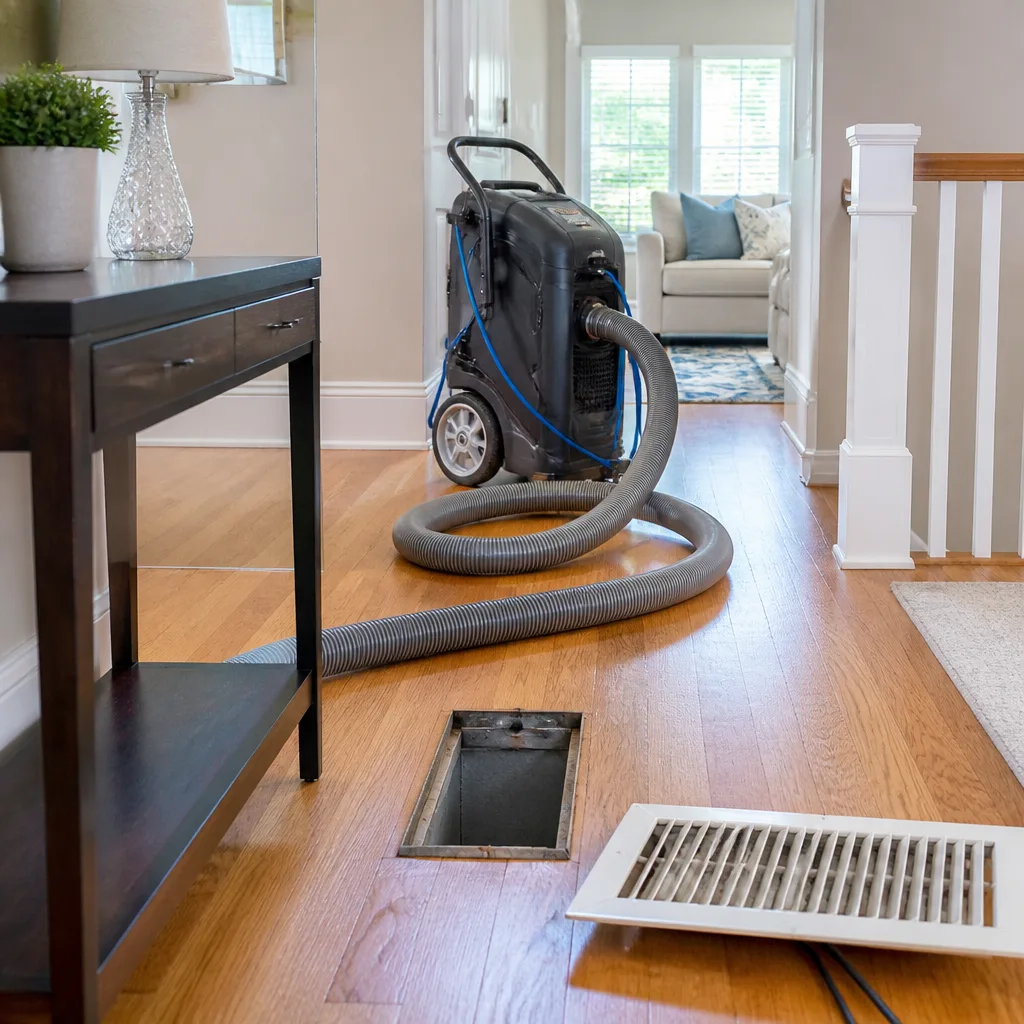 Whole-home duct cleaning
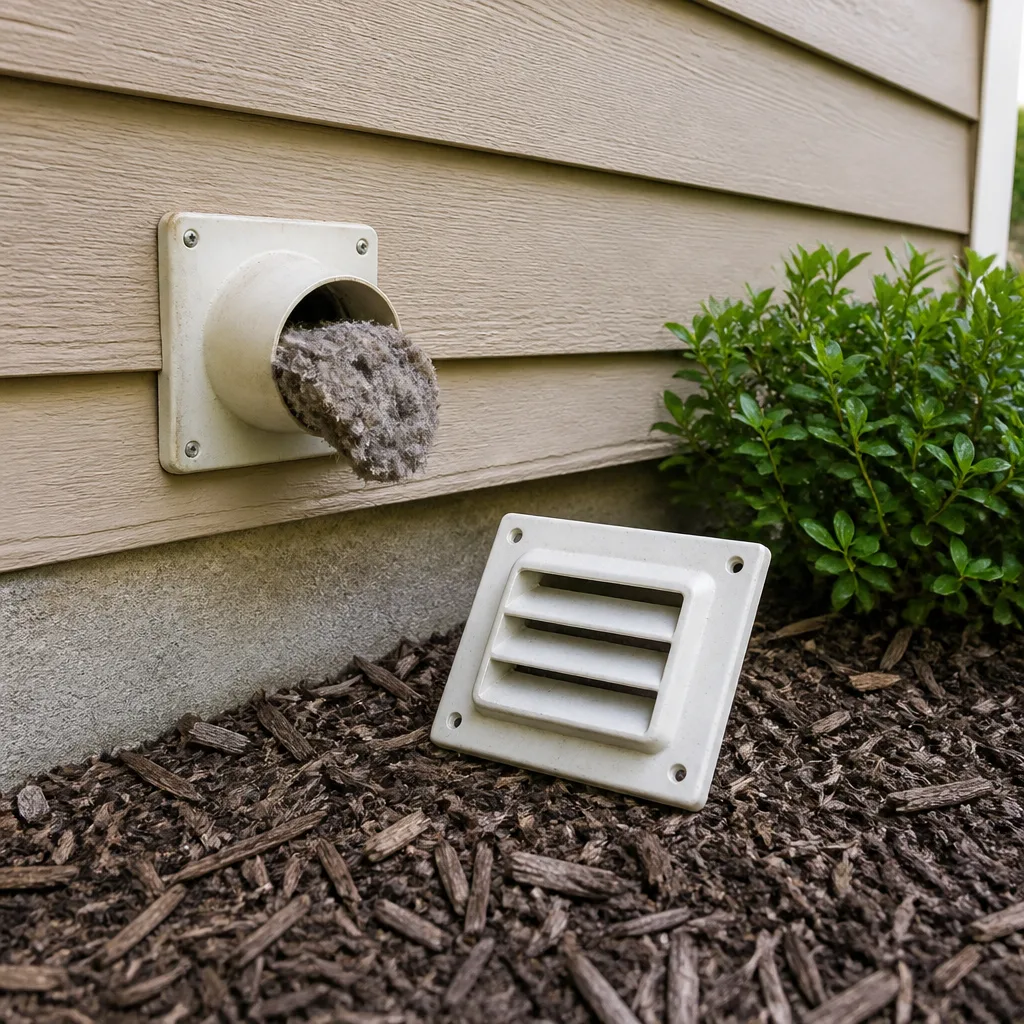 Dryer vent cleaning
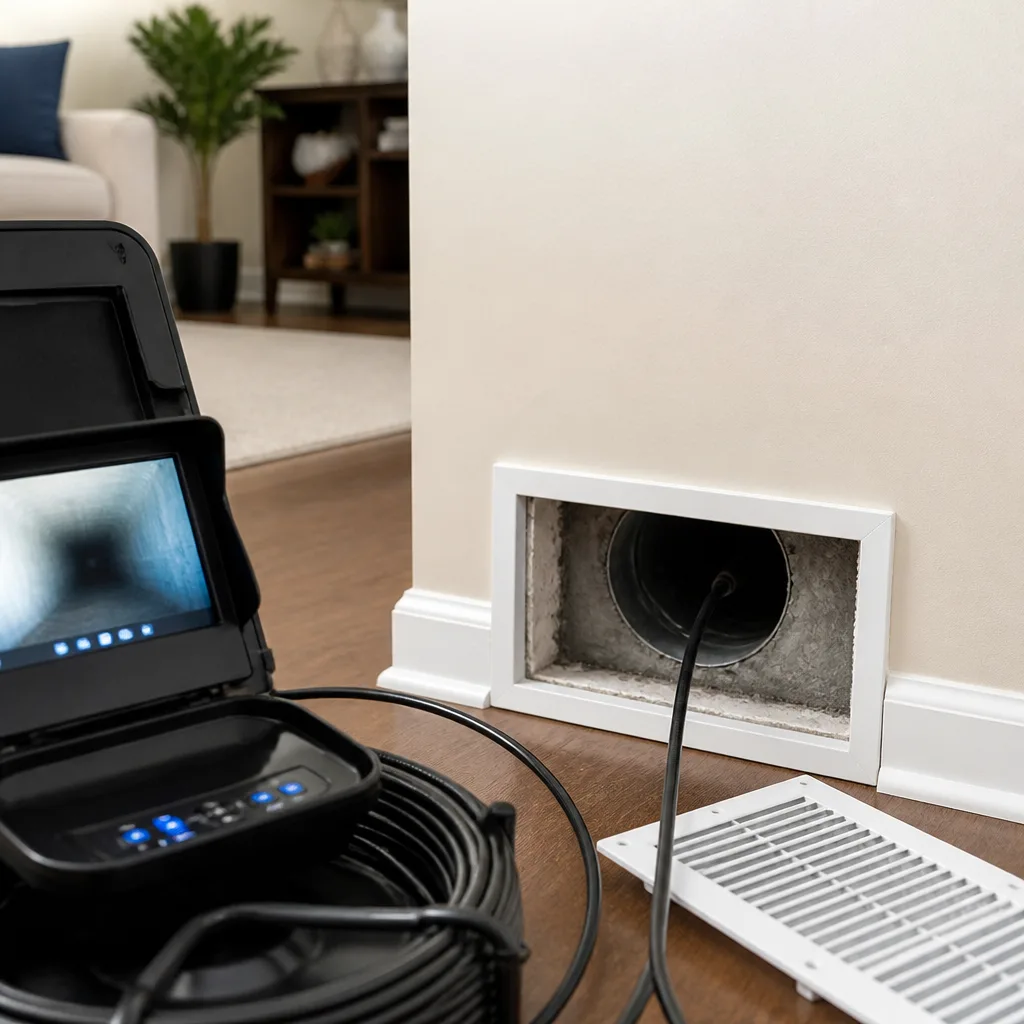 Camera inspection
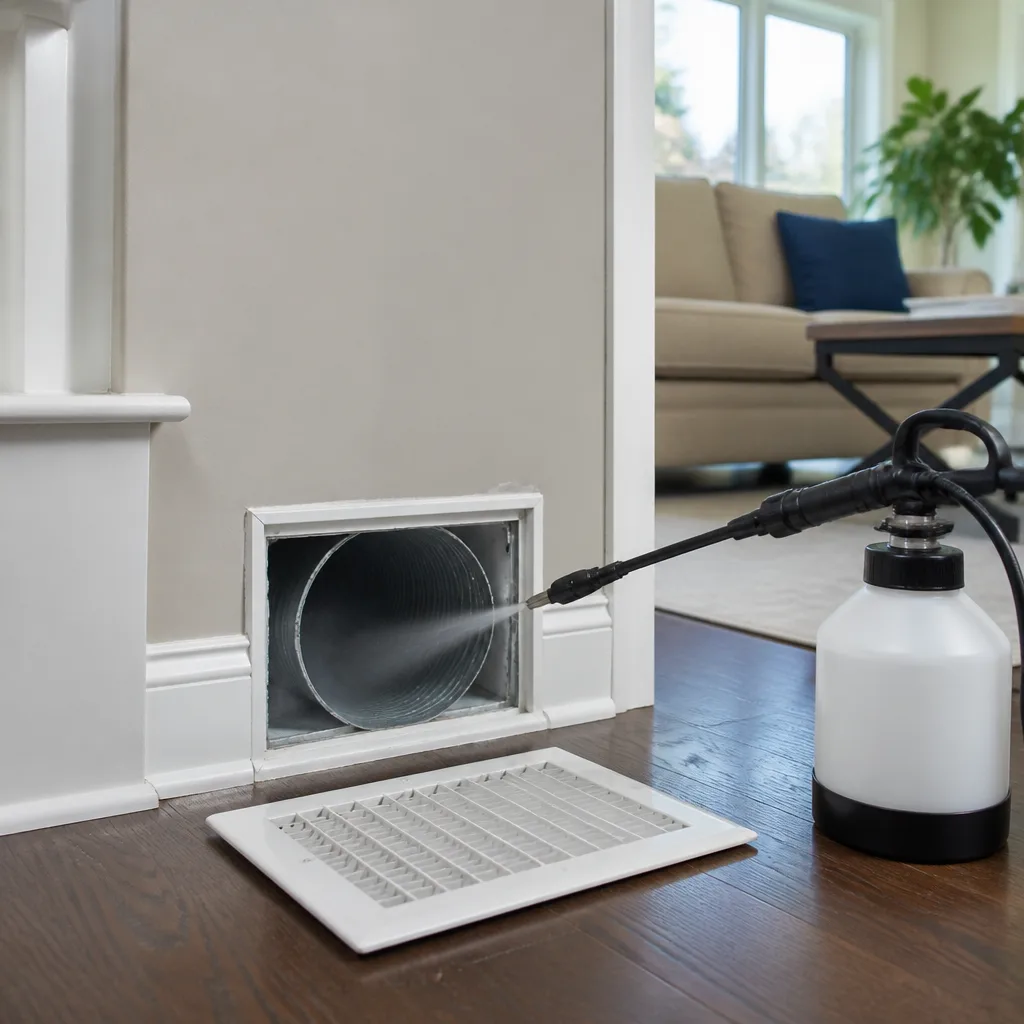 Sanitizing & deodorizing
Whole-system duct and dryer vent check with before-and-after photos - you see exactly what came out of your vents
That "$99 whole-house special" is a bait ad - the real number appears once they are in your hallway, or the "clean" is a shop-vac at the register. We photograph the inside of your ducts before and after instead.
Air Duct Cleaning Warning Signs: A Taylorsville Homeowner’s Reference Guide
Most warning-sign checklists send you to the supply registers with a flashlight. Dust on the grille, they say, means it’s time to clean your ducts. But by the time dust is visible on the register face, the buildup behind it has been accumulating for months. Long before anything shows on the grille, your home gives you earlier signals. Your dusting rag fills up faster. One bedroom feels two degrees warmer than the living room no matter what the thermostat says. Filter changes come around quicker than the schedule says they should.
This guide walks through the early indicators we’ve learned to read in our work around Taylorsville, then shows you how to tell duct contamination apart from other HVAC problems and when the signs point to something a standard cleaning won’t fix.
Quick Answer
The earliest reliable signs of a duct system that’s loading up are usually indirect: more frequent dusting on horizontal surfaces, one or two rooms that won’t hold temperature with the rest of the house, a filter that clogs faster than its rated interval, and static crackle at the register when the blower starts. Musty or metallic odors, mold growth visible inside a register boot, and pest activity are late-stage signs and need a professional inspection rather than a standard cleaning. In Taylorsville, homes near the Jordan River corridor, close to I-215, or with pets and older carpet tend to show these signs sooner than others.
Styles & brands we work with
- Whole-home duct cleaning
- Dryer vent cleaning
- Camera inspection
- Sanitizing & deodorizing
Table of Contents
- The Early Warning Signs Most Homeowners Miss
- Duct Contamination or Something Else? How to Tell
- Taylorsville Triggers That Speed Up the Timeline
- The Smell Diagnostic: Musty, Metallic, Burning, Chemical
- When the Signs Point Beyond a Standard Cleaning
- How a Proper Diagnostic Inspection Works
- Common Mistakes to Avoid
- Frequently Asked Questions
The Early Warning Signs Most Homeowners Miss
Dust on a register is the last signal in a sequence, not the first. The indicators that show up 60 to 90 days earlier are almost always about performance rather than appearance. They show up as small changes to how your house behaves, and because none of them are dramatic on their own, they’re easy to write off.
Here’s the sequence we look for, roughly in order of how early the signs tend to appear in a Taylorsville home:
- Filter loading faster than its rated interval. A 90-day filter that looks gray and matted at 50 or 60 days is telling you something is loose in the airstream. Dust has to come from somewhere, and the filter is doing its job by catching it. The question is where it’s coming from.
- Inconsistent room temperatures. The room that never quite matches the thermostat, or the bedroom that runs warm while the hallway is fine. Restricted airflow from lined ducts, loose insulation, or blocked runs shows up first as a temperature spread, then later as a comfort complaint.
- Static crackle at the registers. Listen when your blower first starts. A snap or crackle at the supply grille or the return is often a sign of reduced static pressure, which is airflow trying to push through a restriction somewhere in the system.
- More frequent dusting. A towel or rag that filled up over two weeks and now needs replacing every week is a measurable change in your home’s dust load. It’s not a decoration problem. It’s a source problem.
- Reduced airflow at specific registers. Hold a tissue to each supply grille in the house. If one or two registers barely move the tissue while others are strong, that’s a duct-level restriction rather than a blower problem.
- Creaking or popping at startup. Not always a duct sign, but worth noting. Sheet metal shifts as pressure changes, and popping that gets louder over months can indicate a duct seal has opened up.
None of these individually means the ducts need cleaning next week. Together, in a Taylorsville home, they form a pattern. Once you’re tracking three or more at once, scheduling an inspection is a reasonable next step.
If you want the fuller picture of what a proper cleaning covers, our Taylorsville Air Duct Cleaning overview is a good starting point.
Duct Contamination or Something Else? How to Tell
This is the question most guides skip, and it’s the one that matters most. Not every dusty, uncomfortable house has dirty ducts. Some of them have a failing condensing coil, a system that’s undersized for the home, or leaking duct connections that are pulling attic or crawlspace air into the airstream. Cleaning ducts when the real problem is a coil is a waste of your money. Cleaning ducts when the real problem is duct leakage gives you a temporary improvement that fades within a season.
Here’s how we separate the two in a Taylorsville home:
- If dust appears mainly at supply registers with strong airflow: usually duct contamination. The blower is pushing debris through the branch runs and it’s landings at the grille.
- If dust appears at the return register first, before supply: the return side is loading up, and the coil or blower cabinet may also be contaminated.
- If one room is cold in summer and hot in winter while the rest is fine: more likely a duct leakage, disconnected run, or blocked damper than dirt.
- If the whole house is hot in summer and the coil ices over: usually low refrigerant or airflow restriction at the coil, not the ducts.
- If the humidity inside stays high and windows sweat: often a coil or drain issue. Duct cleaning alone won’t fix it.
- If dust is uniform everywhere and worse after a recent remodel: drywall dust and construction debris that got pulled into the system. A cleaning is genuinely the right call.
Our technicians have up to 13 years of experience and can tell the difference on a site visit inside of an hour. What we won’t do is sell a cleaning when a different repair is the actual fix. That’s why our inspections look at the coil, the blower cabinet, the plenum, and the return trunk, not just the branch runs.
When a cleaning is the right answer, we come prepared for the full job. Our air duct cleaning service uses Rotobrush rotary brush systems and Nikro HEPA vacuum extraction so that what gets dislodged is also captured.
Taylorsville Triggers That Speed Up the Timeline
Warning-sign timelines aren’t the same in every house. Where you live in Taylorsville changes how quickly the early signals become visible. Three local factors matter more than most homeowners expect.
Homes near the Jordan River corridor
The Jordan River runs along the western edge of Taylorsville, and homes within a mile or so of the corridor sit in a slightly wetter microclimate than the bench areas further east. Higher ambient moisture means ducts that aren’t well sealed can take on condensation during shoulder seasons when warm daytime air cools overnight. That moisture is what turns ordinary dust into a biological problem. Musty odors and mold growth inside the duct wall show up faster in these homes than in drier parts of the valley.
Homes near I-215
The I-215 corridor runs along Taylorsville’s southern and eastern edges. Homes close to the freeway pull in diesel particulate and road dust through the intake and return side whenever the system is running. Diesel particulate is fine enough that it passes standard filters and coats duct walls over time. Homes within a few blocks of I-215 tend to need filter changes and duct inspections sooner than homes up on the western bench.
Homes with pets and older carpet
Pet dander and carpet fibers are two of the most common loads on a return system in Taylorsville. Carpet installed more than 10 or 12 years ago starts to shed backing fibers as it wears. Those fibers travel through the return and stick to duct walls, where they become a base layer for everything else. If your home has both cats or dogs and older carpet, treat the recommended cleaning interval as a floor, not a ceiling.
Air that’s come through the system and into your living space is the point of all this. When a home needs more than cleaning, HVAC cleaning gets at the coil, blower cabinet, and drain pan where fine particulate tends to settle.
The Smell Diagnostic: Musty, Metallic, Burning, Chemical
Your nose can tell you a lot about your ducts, and it can tell you how urgent the problem is. Not every odor means “call a duct cleaner.” Some mean “call a technician today.” Here’s how we read the four smells homeowners mention to us most often.
Musty odor
Musty means moisture, and moisture in a duct system usually means biological growth. It’s the most common biological signal in Taylorsville homes near the Jordan River corridor and in older homes where the supply plenum sweats during the shoulder seasons. This is a scheduled-service smell, not an emergency, but it does mean a standard dry cleaning may not be enough. A sanitizing step that addresses mold and bacteria is typically part of the fix.
Metallic odor
Metallic smells are usually the sheet metal duct work itself, especially when it’s new or recently disturbed. They can also come from debris that’s reacted with moisture and oxidized against the zinc coating on galvanized duct. This is the least urgent of the four, but it’s worth an inspection if it’s paired with any of the early warning signs above.
Burning odor
Burning smells from a vent are the one to take seriously. If the smell is coming from supply registers while the furnace or heat pump is running, shut the system down and call a technician for an HVAC inspection right away. It can indicate an overheating blower motor, a failing heat exchanger, or a wiring problem. Do not run the system and wait. This is a heating system issue, not a duct cleaning issue, and a trained professional needs to look at it before the system runs again.
Chemical odor
Chemical smells, especially a sweet or acrid smell near the air handler, can point to refrigerant leaks, electrical insulation breaking down, or a blower motor that’s overheating. Treat these like a burning smell: shut the system down and get a technician out to inspect the equipment before any duct cleaning is scheduled.
In short: musty and metallic are scheduled service. Burning and chemical are same-day HVAC technician calls. In Taylorsville, we can usually advise you over the phone which bucket a smell falls into.
When the Signs Point Beyond a Standard Cleaning
Some warning signs show a duct system that’s been compromised, not just loaded with dust. Those are the cases where a standard cleaning helps but doesn’t solve the problem on its own. Here’s how to tell the difference before you call.
Mold growth
Visible mold inside a register boot or along the supply plenum is usually a moisture problem that predates the mold. Look for dark staining, fuzzy patches, or a chalky white or greenish coating on the duct liner. If you can see mold inside the duct at the register, the source of moisture is still active and needs to be addressed along with the sanitizing step. Cleaning mold without fixing the moisture source lets it come back within a season.
Pest infiltration
Mice, insects, and occasionally birds find their way into return trunks and branch runs more often than homeowners expect, especially in older Taylorsville homes where the crawlspace is accessible from the outside. Signs include droppings inside the register boot, a scratching sound when the system runs, and gnaw marks on flexible duct where it enters the trunk. This is a case where a cleaning, a repair, and a sealing of the access points are all needed together.
Compromised insulation
Flexible duct with an interior liner that’s torn, sagging, or separated from the core is a contamination source in itself. Every time the blower runs, a small amount of the liner sheds into the airstream. Clean-over-torn-liner is a wasted cleaning. The liner needs to be repaired or the run replaced, then the system cleaned.
These are the reasons we offer cleaning, repair, and sealing under one provider. When an inspection turns up torn liner or a disconnected run, we can fix it and finish the cleaning in the same visit rather than sending you to a second contractor. Sealing also has the practical benefit of letting the system hold pressure so the next cleaning goes deeper and the next filter change interval gets longer.
How a Proper Diagnostic Inspection Works
An inspection is how you turn a pile of possible warning signs into a specific plan. Here’s what a real diagnostic visit should involve, in order. If a company shows up, shines a flashlight on one register, and quotes you a cleaning, that’s not an inspection.
- System walkthrough with the homeowner. We ask what you’ve noticed: which rooms are off, how often you’re dusting, when the filter was last changed, and any odors. Your observations are data, and they help direct the inspection.
- Filter and return side assessment. Check the air handler filter for loading pattern and check the return trunk for debris buildup and visible contamination.
- Register-by-register airflow check. Every supply register gets a tissue or anemometer test to find restricted runs. Weak registers get traced back to the trunk.
- Coil and blower cabinet inspection. The coil face is checked for dust mat and biological growth, and the blower wheel is checked for balance weight accumulation. A blower that’s out of balance is both an airflow problem and a noise problem.
- Camera inspection of the branch runs. A flexible inspection camera is fed through a supply run and a return run to look for torn liner, separated joints, debris piles, and pest evidence that you can’t see from the grille.
- Duct leakage check at accessible joints. A smoke pencil or a hand-held pressure check at the register boot and plenum connections shows whether the system is bleeding air into the attic or crawlspace.
- Written findings and a plan. You get a summary of what’s contaminated, what’s damaged, what’s fine, and what the recommended next step is. Cleaning, repair, sealing, or “nothing needed right now” are all valid outcomes.
When cleaning is needed, the process uses Abatement Technologies HEPA containment equipment on-site to protect your indoor air while the work is happening. That’s the difference between cleaning a duct system and cleaning a duct system without filling your home with what comes out of it.
Common Mistakes to Avoid
- Waiting for visible dust on the registers before acting. By the time dust is on the grille, the buildup behind it has been there for months. Track your filter loading and dusting frequency instead, and you’ll catch the problem 60 to 90 days sooner.
- Assuming one room’s discomfort means “dirty ducts.” A single hot bedroom in a Taylorsville home is more often a duct leakage or a blocked damper than a contamination problem. Cleaning won’t fix either one.
- Ignoring the burning smell and running the system anyway. A burning odor from a supply vent while the heat is running is a stop-the-system signal, not a schedule-it-for-next-week signal. Shut it down and call a technician.
- Hiring on a per-vent price quote alone. Bid-per-vent quotes encourage companies to rush each register and skip the plenum and return trunk work. A per-system price agreed in writing beforehand is the honest way to buy the job.
- Skipping the sealing step after cleaning. Ducts that are cleaned but not sealed leak air into attics and crawlspaces and pull dust back in within a season. Cleaning and sealing belong together.
- Letting a company clean without HEPA containment. Rotary brush cleaning with a shop-vac-grade extractor at the truck stirs up what’s in the duct and recirculates fine particulate into the home. Look for HEPA-level containment on the equipment list.
- Overlooking the dryer vent. It’s a separate safety issue, not part of the HVAC airstream, and it accumulates lint the same way ducts accumulate dust. It’s worth checking at the same visit.
See the difference
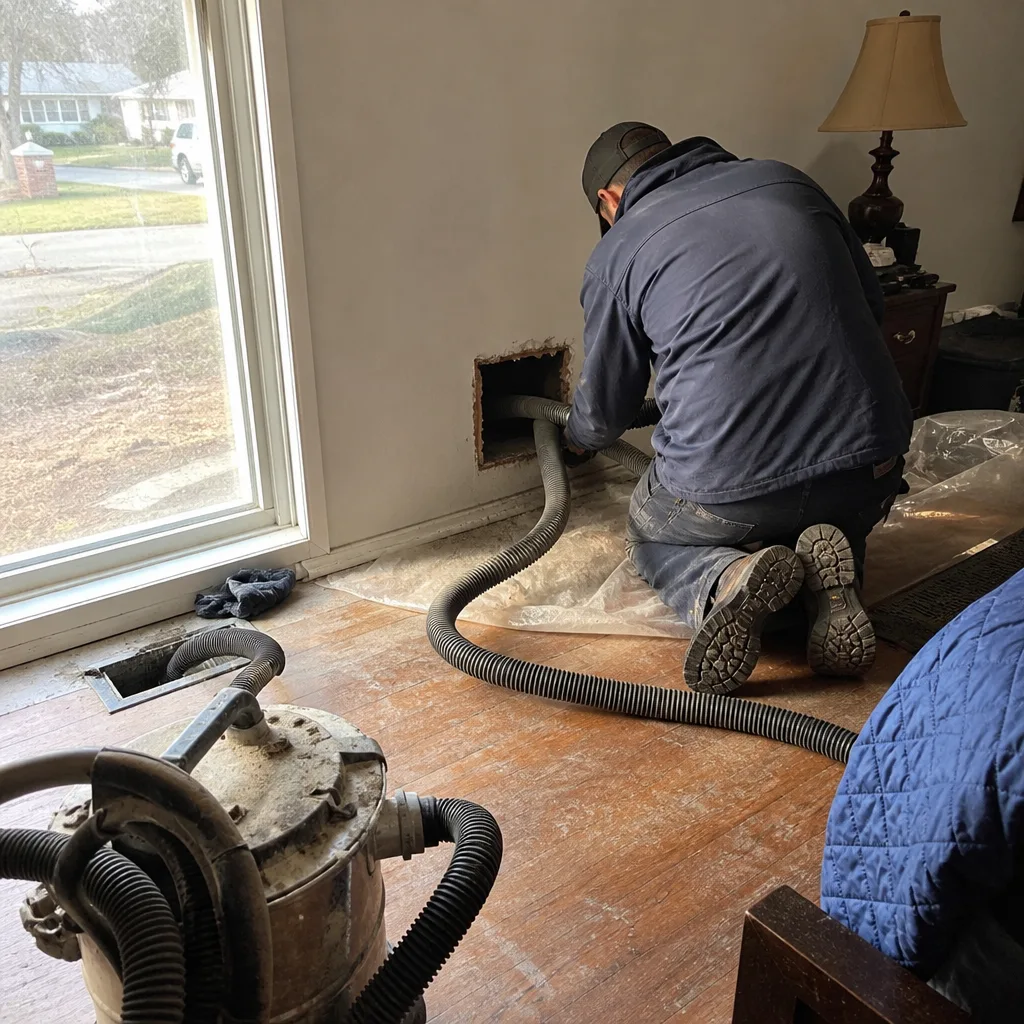 Before
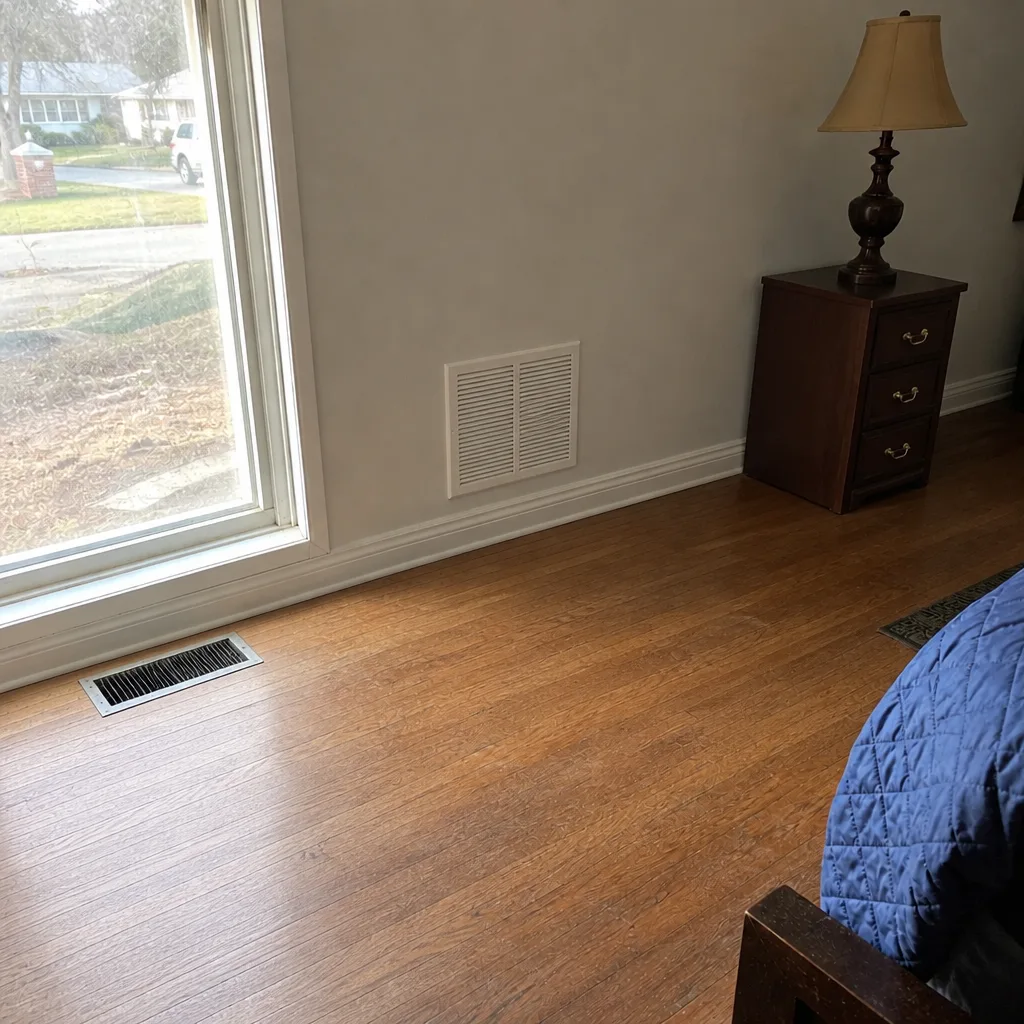 After
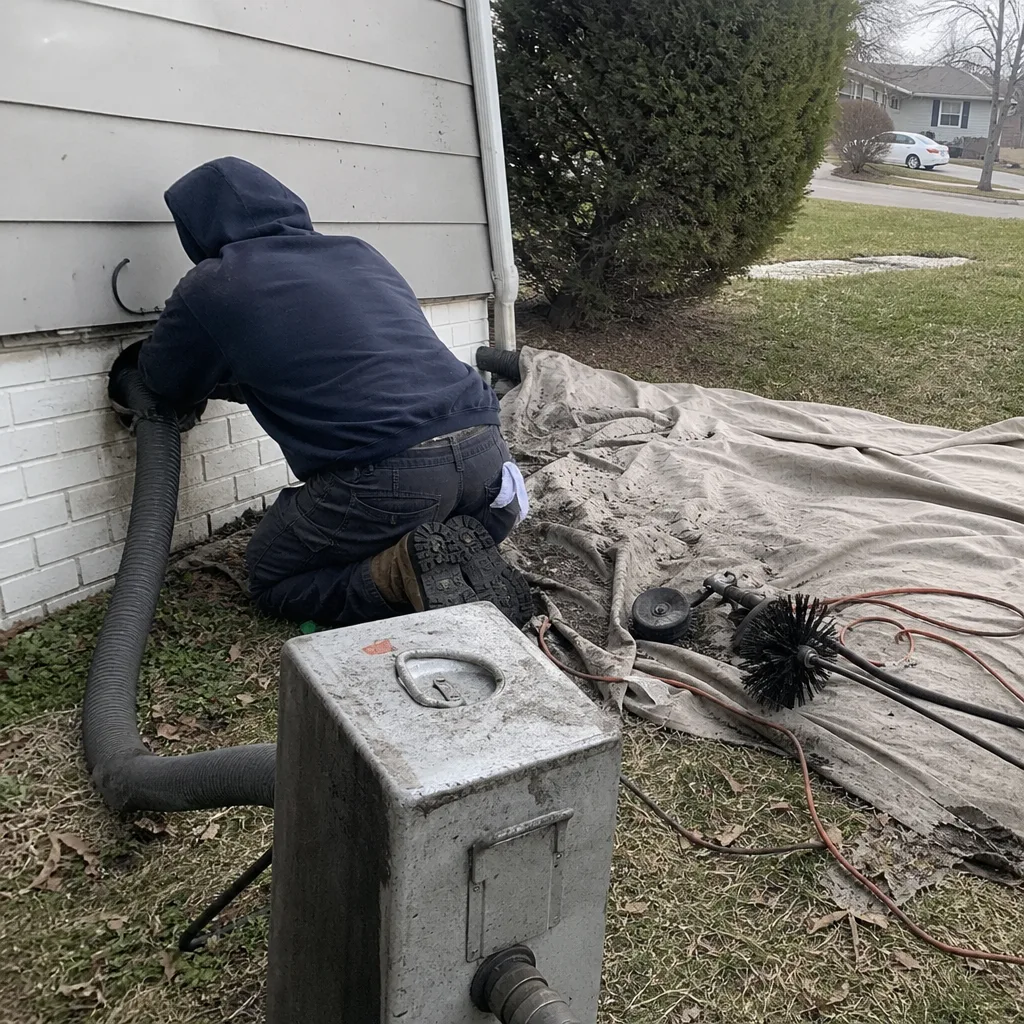 Before
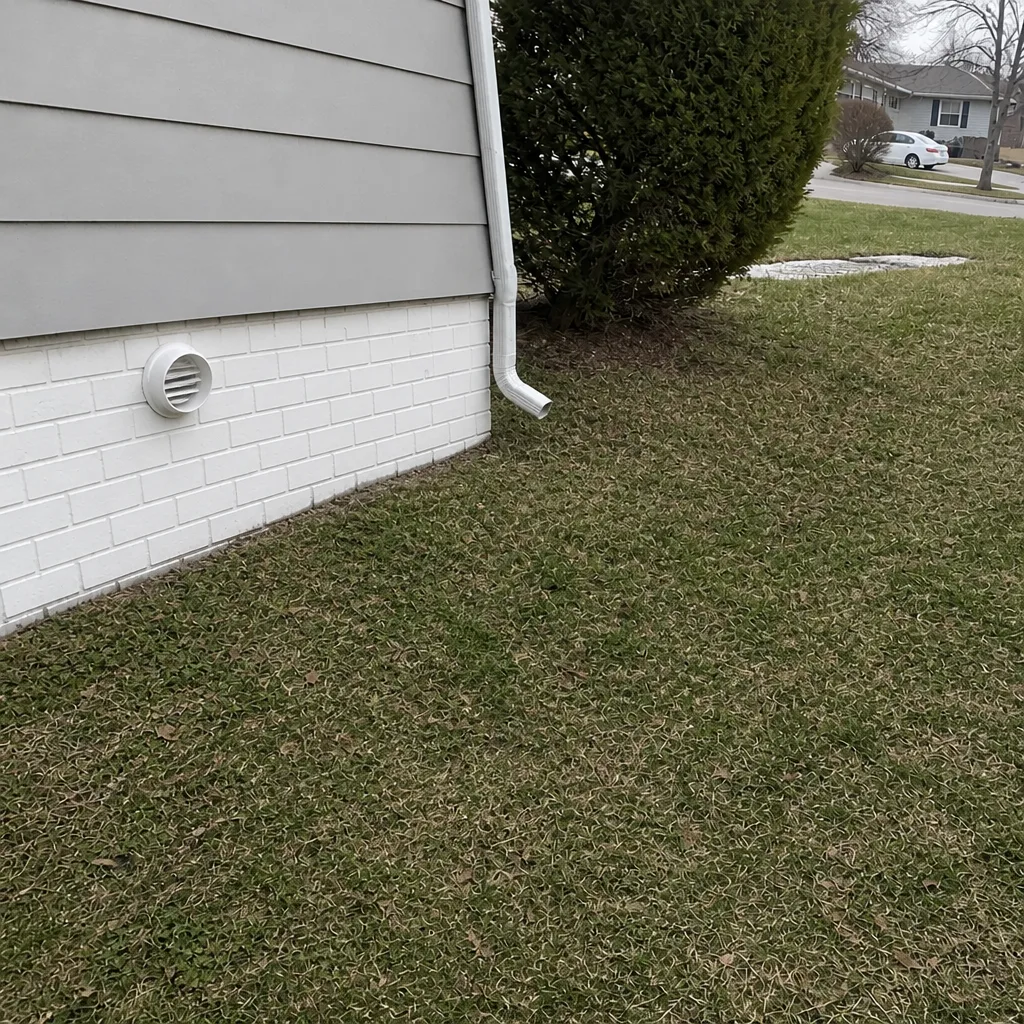 After
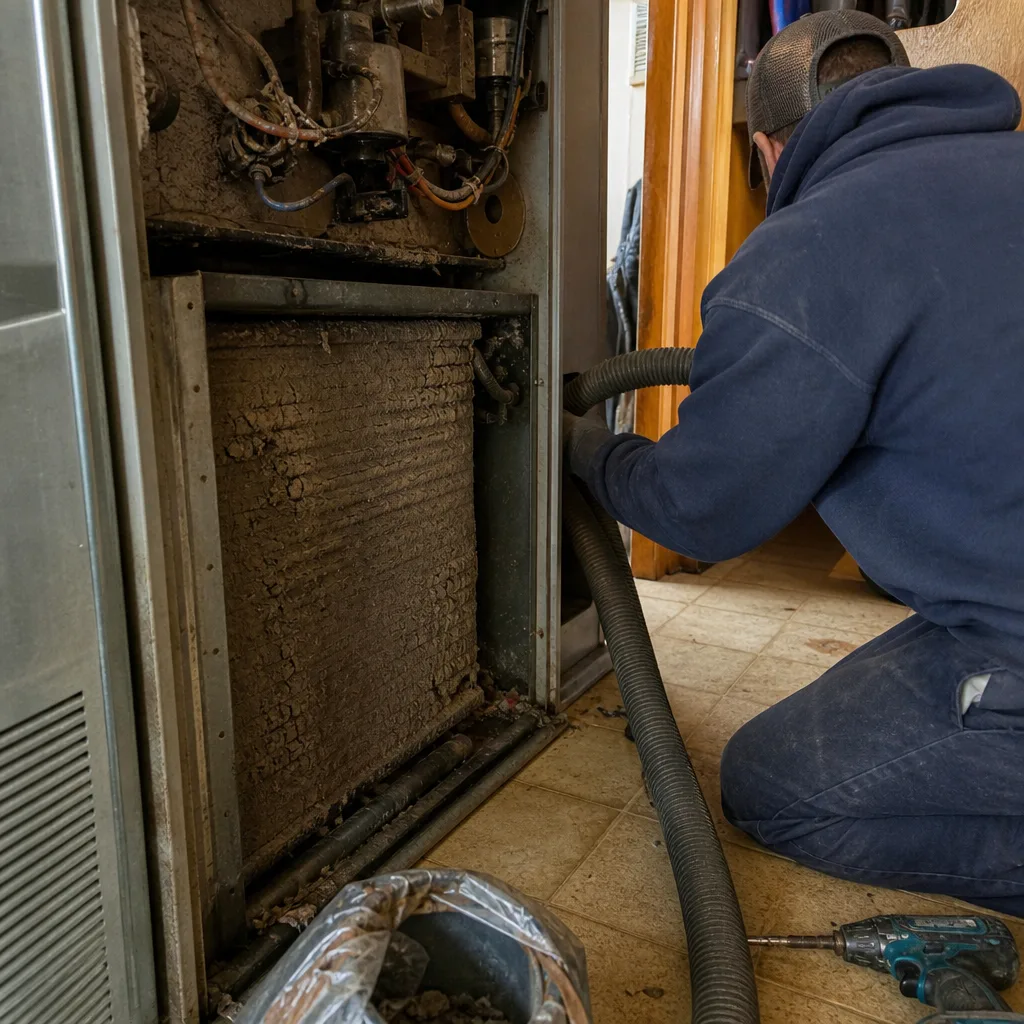 Before
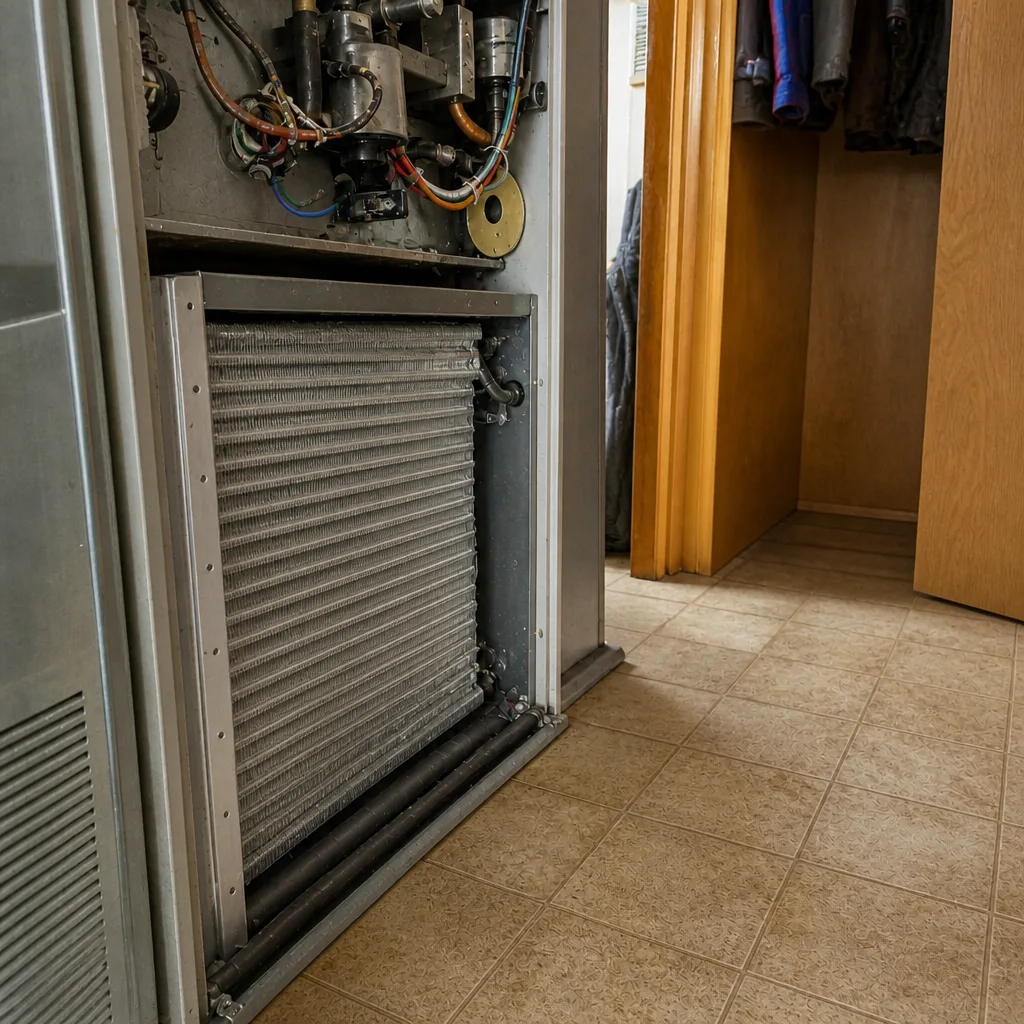 After
When to Call a Professional
Call a professional when three or more of the early warning signs are showing up at once, when a musty odor persists after a filter change, when you can see mold inside a register boot, when there’s pest evidence in the return trunk, or when your heat or cooling is running but the room it serves never quite gets comfortable. Those last two are often signs of duct damage rather than simple contamination, and they need an inspection with a camera, not a guess from the living room. Burning and chemical smells should go straight to an HVAC technician on a same-day basis.
Taylorsville Air Duct Cleaning offers free estimates in Taylorsville and can schedule a diagnostic inspection for most homes within a day or two. Call (855) 658-5265. We answer 24/7. Fast dispatch from 7am to 7pm, Sunday through Friday.
For dryer safety specifically, our dryer vent cleaning pairs well with a duct inspection visit so you’re covering both lint and duct contamination in one go.
Frequently Asked Questions
The earliest signals are almost always indirect: a filter that clogs faster than its rated interval, one room that won’t hold temperature while the rest of the house is fine, a faint static crackle at the register when the blower starts, and dusting frequency creeping up. Visible dust on the grille is a later sign and often points to months of buildup behind it. Call (855) 658-5265 for a free inspection estimate if you’re seeing three or more of those signs at once.
Whole-system pricing depends on how many registers and returns the home has, the length of the runs, and whether sealing or sanitizing is needed. We price per system, not per vent, and give you the number in writing before the work starts. Call (855) 658-5265 for an exact quote. Estimates are free.
Cheap quotes usually cover less work: fewer registers, no return trunk, no plenum, no containment equipment, and a shop-vac-grade vacuum instead of HEPA extraction. Some are also teaser numbers that grow once the technician is inside the home. The honest comparison is the written scope of work, not the headline price. Call (855) 658-5265 and we’ll walk you through what our scope covers.
Ask for before-and-after photos of your own ducts, not a stock photo album. A camera inspection before and after shows the plenum, the return trunk, and a representative branch run. Our process includes both. Call (855) 658-5265 to schedule an inspection and see the format we use.
Most homes land somewhere between every three and every five years, but pets, older carpet, recent remodeling, and proximity to I-215 or the Jordan River corridor shorten that interval. Filter loading rate is the best gauge for your specific home: when it starts clogging well before its rated interval, it’s time. Call (855) 658-5265 to talk through your situation.
Cleaning, repair, and sealing, all under one provider. When an inspection turns up a torn liner, a disconnected run, or a boot that’s lost its seal, we fix it on the same visit rather than sending you to a second contractor. We also install Aprilaire and Honeywell air quality products for homeowners who want to keep the system cleaner over the long term. Call (855) 658-5265 for a free estimate.
The Bottom Line
Dust on the register is the last sign, not the first. Track your filter loading, room temperatures, and dusting frequency, and you’ll catch duct problems 60 to 90 days before anything shows on the grille. In Taylorsville, homes near the Jordan River corridor, close to I-215, and those with pets and older carpet tend to show signs sooner. Learn to tell duct contamination apart from coil, airflow, and leakage problems, and know when a musty smell, mold growth, or pest evidence means you need repair and sealing along with the cleaning. Rotobrush rotary agitation, Nikro HEPA extraction, and Abatement Technologies containment protect your indoor air through every step.
If you’re seeing any of these signs in your Taylorsville home, don’t wait for the register to tell you what your filter and thermostat have been saying for weeks. Call (855) 658-5265 for a free estimate. We answer 24/7. Fast dispatch from 7am to 7pm, Sunday through Friday.
Written by the team at Taylorsville Air Duct Cleaning.