
Last updated November 23, 2026
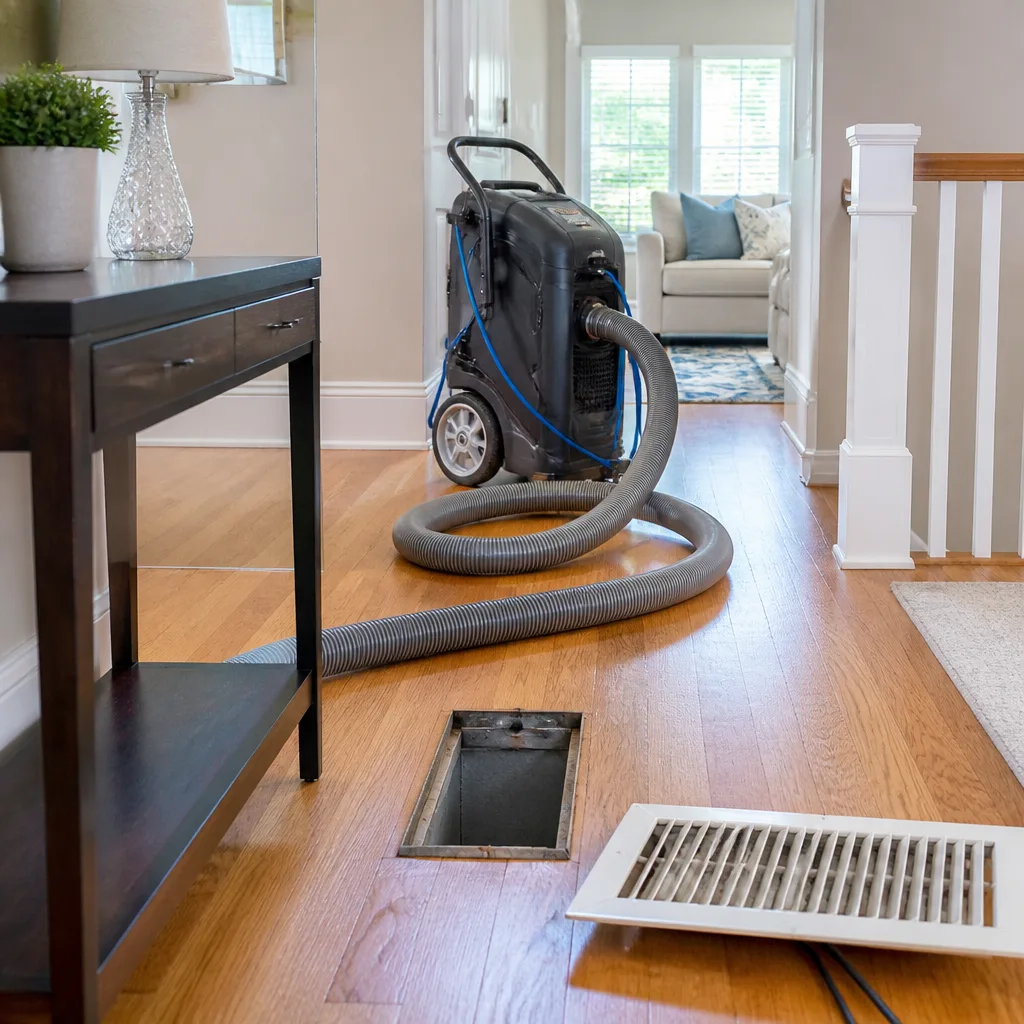 Whole-home duct cleaning
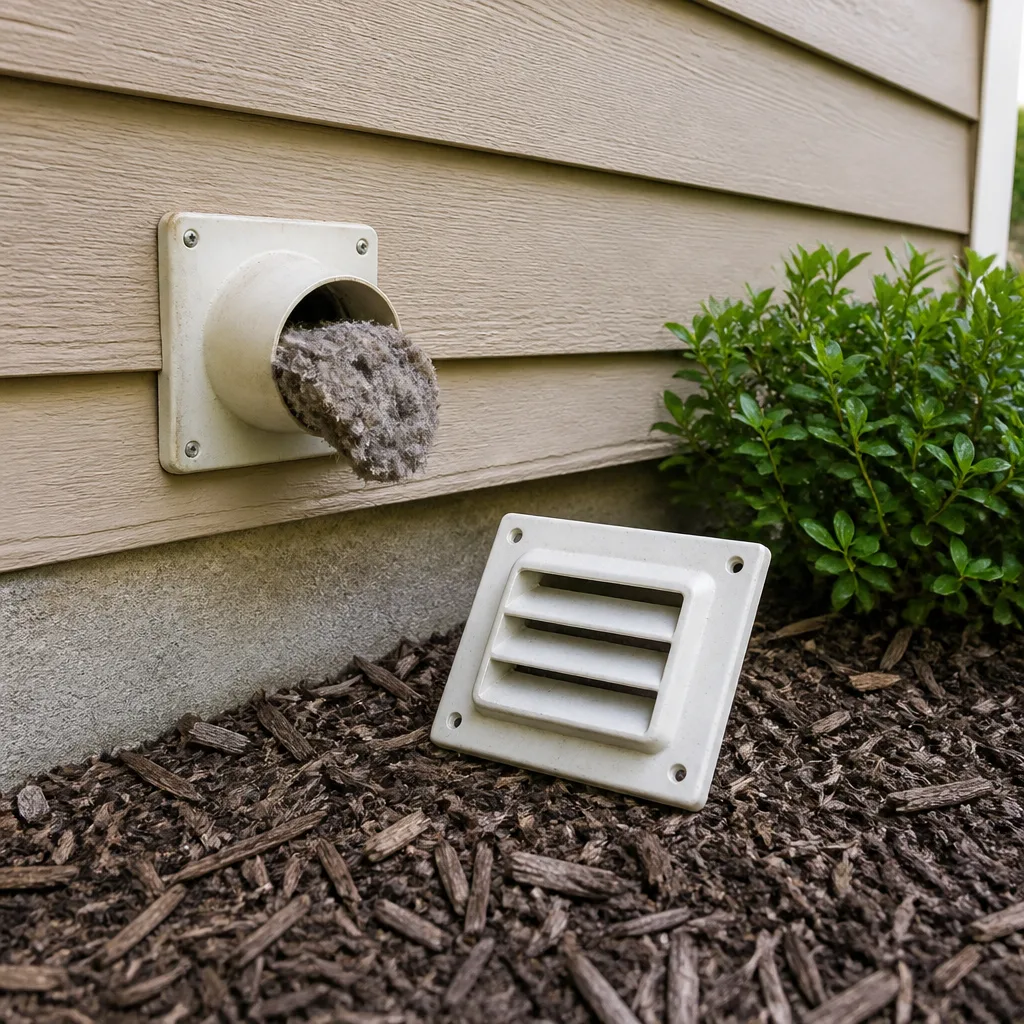 Dryer vent cleaning
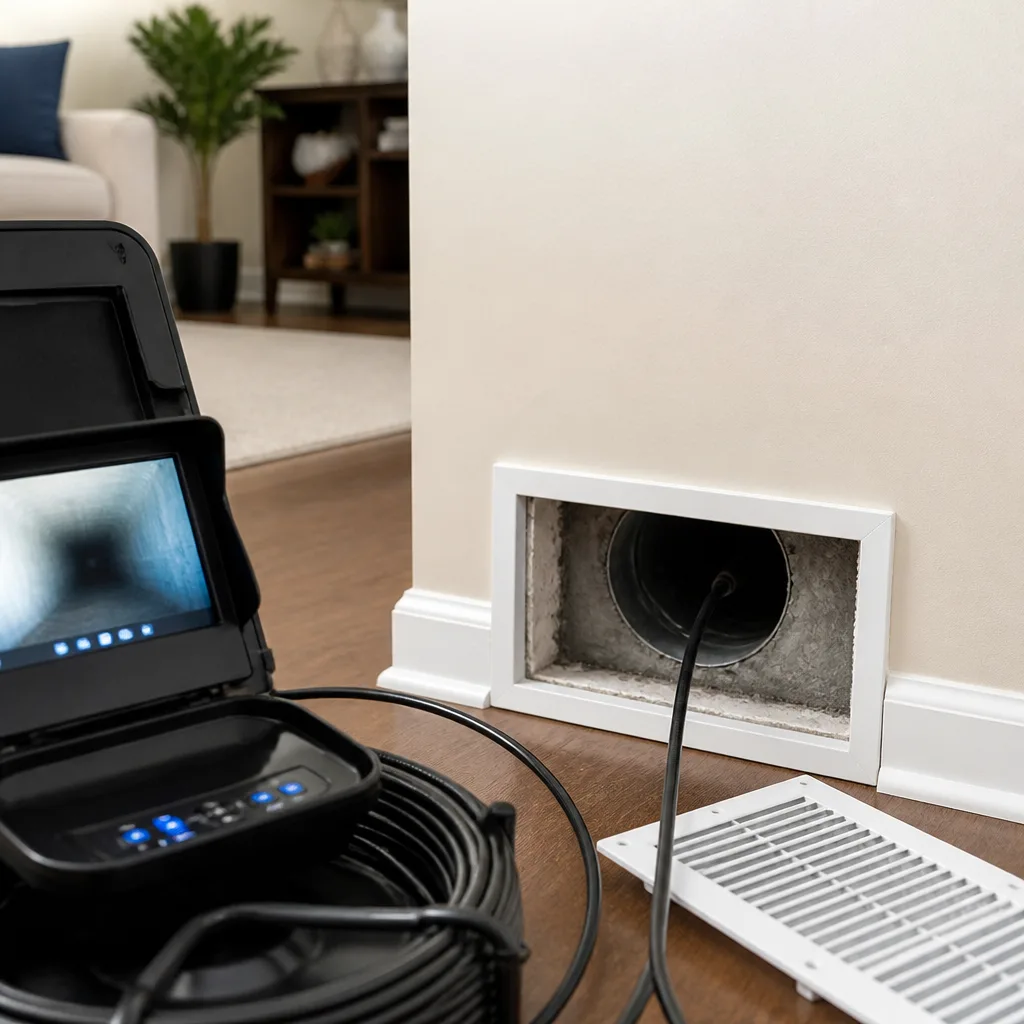 Camera inspection
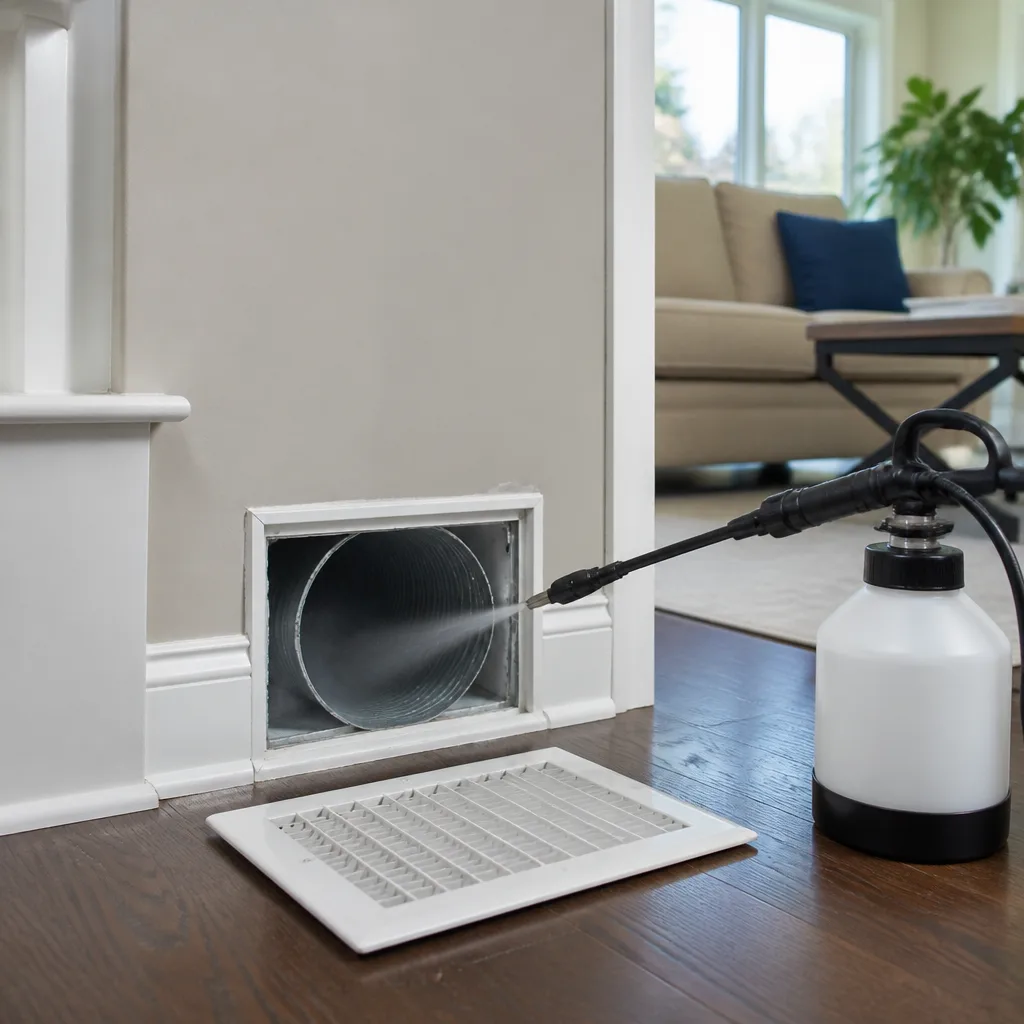 Sanitizing & deodorizing
Whole-system duct and dryer vent check with before-and-after photos - you see exactly what came out of your vents
That "$99 whole-house special" is a bait ad - the real number appears once they are in your hallway, or the "clean" is a shop-vac at the register. We photograph the inside of your ducts before and after instead.
Air Duct Cleaning Troubleshooting in Taylorsville: Common Problems and How to Fix Them
If you cleaned your ducts six months ago and dust is already coating your vents again, the ducts probably weren’t your actual problem. Something upstream in the system still is. That’s the trap with duct troubleshooting: the symptoms homeowners notice first are almost never located where the problem lives. A musty smell that returns after cleaning, a bedroom that never warms up, a return grille that clogs faster than the others, dust that reappears on the register blades within weeks – each of these points to a different root cause, and guessing wrong means paying for the wrong fix. This guide is a diagnostic sequence, not a checklist. We’ll walk through how to read the evidence your home is already giving you, how to separate contamination problems from filtration problems from pressure problems, and how to know when a professional in Taylorsville needs to be involved.
Quick Answer
Most duct problems in Taylorsville fall into three categories: contamination (dust, debris, or biological growth inside the ducts), filtration failure (a filter or filter housing that’s letting dust past), and pressure imbalance (leaks, blockages, or undersized returns that starve some rooms of air). Cleaning fixes the first only. A musty smell after cleaning almost always means a moisture source outside the ducts. Uneven room temperatures usually mean duct integrity, not duct cleanliness. Diagnosing which category you’re in before you spend anything is the whole game.
Styles & brands we work with
- Whole-home duct cleaning
- Dryer vent cleaning
- Camera inspection
- Sanitizing & deodorizing
Table of Contents
- The Diagnostic Sequence: Read the Symptom Before You Pay for a Fix
- Contamination vs. Filtration vs. Pressure: Telling the Three Problems Apart
- The One Test You Can Do Before Calling Anyone
- How to Read Your Return Grilles as a Diagnostic Tool
- Why Musty Smells Return After Cleaning
- What Uneven Room Temperatures Actually Tell You
- How Taylorsville Homes and Climate Shape the Problem
- Why Equipment Grade Changes the Outcome
The Diagnostic Sequence: Read the Symptom Before You Pay for a Fix
Troubleshooting works best as an ordered sequence. Skip a step and you risk buying a solution for a problem you haven’t confirmed. Here’s the order we use:
- Establish the symptom precisely. “The air feels bad” is not a symptom. “The upstairs hallway smells like a wet basement every time the heat kicks on” is a symptom – and it points to a moisture source, not dust.
- Check the filter first, always. A clogged or wrong-MERV filter is the single most common cause of reduced airflow and can mimic almost every other duct problem. Before you suspect the ducts, confirm the filter is clean, correctly sized, and not collapsed.
- Do the cloth test. A white cloth taped over a supply register for 24 hours reveals what’s actually traveling through the system (more on this below).
- Inspect the return grilles. Buildup pattern, color, and location tell you where air is leaking in.
- Measure room-to-room temperature differences. A laser thermometer at each register, run on a steady day, separates a delivery problem from a contamination problem.
- Only then decide whether cleaning, sealing, repair, or a filtration upgrade is the right fix.
In our experience across Taylorsville, most homeowners who call us have already skipped straight to step six – they’ve decided they need cleaning before they’ve confirmed the ducts are the source. That’s the misdiagnosis this guide is built to prevent. Running the first five steps costs you nothing but an evening and a roll of tape, and it often redirects the money to where it actually fixes something.
Contamination vs. Filtration vs. Pressure: Telling the Three Problems Apart
The three root causes look similar from the living room but behave very differently. Here’s how to tell them apart using evidence already in your home.
Contamination problem
The ducts themselves hold accumulated dust, construction debris, pet hair, or biological growth. The signature is a persistent musty or dusty smell tied to the HVAC running, visible buildup on the register blades, and dust settling evenly across every room regardless of filter changes. Cleaning solves this. If the contamination includes mold or bacteria, sanitizing is a separate step that addresses the biological layer cleaning alone doesn’t reach.
Filtration problem
The ducts may be fine, but the filter system is failing. The signature is dust visible on the return grille interior – the face of the grille where air enters – while supply registers stay relatively clean. That indicates the filter is bypassing air around its edges, or the MERV rating is too low for the load. Filter changes don’t fix it because the problem isn’t the filter itself, it’s how the filter sets in its housing. A proper filtration solution involves a filter cabinet that seals against bypass, not another filter swap.
Pressure problem
The system is losing air somewhere, or starving some rooms. The signature is uneven temperatures, weak airflow at registers far from the air handler, or a whistling sound at certain vents. Cleaning doesn’t touch this. Sealing and repair do. Static pressure issues also make filters load faster and dust settle unevenly, so a pressure problem can look like a contamination problem until you look at the temperature spread across rooms.
If you’re not sure which of the three you’re facing, run the cloth test below. It’s the fastest way to rule out one of the three before you spend money.
The One Test You Can Do Before Calling Anyone
Tape a clean white cloth over a supply register and let the system run normally for 24 hours. When you remove it, what you’re holding is a sample of what the system is blowing into your rooms.
How to run the test correctly
- Use a plain white cotton cloth or a clean white paper towel – anything that will show contrast against dark dust.
- Secure it fully across the supply register face with painter’s tape, leaving no gaps at the edges so all air passes through the cloth.
- Run the HVAC on normal schedule for a full day. Don’t turn the system off – the point is to capture what’s circulating during real use.
- Remove the cloth and inspect it in daylight.
How to interpret the cloth
- Light, uniform gray tint – normal background filtration. Nothing to fix.
- Heavy dark buildup with coarse particles – contamination problem. The ducts are holding debris the filter isn’t catching.
- Fine black or sooty film – could point to a combustion or exhaust issue. Stop diagnosing and call a professional; this one isn’t a dust problem.
- Sticky or damp feel to the cloth – moisture in the airstream. That’s a humidity source somewhere in the system, not a cleaning issue.
- Cloth spots unevenly – heavy at one side, light at the other – duct leak or airflow imbalance. Pressure problem, not contamination problem.
This test is cheap and it doesn’t require any equipment you don’t already have. If the results are ambiguous, that’s the moment to call for an inspection rather than guess.
How to Read Your Return Grilles as a Diagnostic Tool
Return grilles are the intake side of the system, and they tell a more honest story than supply vents. The pattern of buildup – where it sits, what color it is, how it feels – separates filter bypass from duct leaks from high static pressure.
What to look for
- Dust ring around the grille edge but clean in the center – filter bypass. Air is sneaking around the filter housing instead of through the filter. The fix is a sealed filter cabinet, not a better filter.
- Uniform gray buildup across the grille face – normal. Change the filter on schedule.
- Buildup concentrated on one edge or one side – a duct leak near that grille or a pressure imbalance pulling air unevenly. Pressure problem.
- Dark, oily, or sooty residue – not household dust. Get a professional inspection.
- Visible fiberglass or insulation fibers on the grille – a duct liner is breaking down inside the run. This is a duct repair issue, not a cleaning issue.
Check every return grille in the home, not just the one nearest the air handler. Comparing them side by side instantly shows whether the buildup is uniform (filtration or background dust) or localized (pressure or leak). In Taylorsville, where many homes run both heating and cooling across a wide seasonal swing, we often see returns that load unevenly depending on which side of the house the duct run serves – a pattern that cleaning alone won’t fix because the underlying imbalance remains.
Why Musty Smells Return After Cleaning
A musty smell that comes back after a professional cleaning almost always means the moisture source is outside the ducts. Cleaning removes the biological growth living on the duct surfaces. If the moisture that fed that growth is still present, it will return – usually within weeks to a few months depending on the season.
The four usual moisture sources
- Coil drain pan. The air conditioning coil condenses water during cooling season. If the drain pan holds standing water or the drain line clogs, that water sits in the airstream and feeds growth. Cleaning the ducts doesn’t stop it.
- Humidifier. Whole-house humidifiers run during heating season. A humidifier that’s over-delivering, or one that’s been left running into summer, adds moisture the system wasn’t designed to handle.
- Crawlspace intrusion. Return ducts often pull air from crawlspaces or through unsealed floor penetrations. A damp crawlspace becomes a moisture source the HVAC happily delivers to every room.
- Duct condensation. Ducts that run through unconditioned space in a Taylorsville home can condense moisture on their exterior during cooling season if insulation has failed. The moisture wicks inward and feeds growth from the outside.
Here’s the honest part: no cleaning company can fix a musty smell by cleaning alone. If repeated cleaning isn’t holding, the right next step is identifying the moisture source – and that may mean a crawlspace inspection, a humidifier service, or a duct insulation repair before another cleaning visit makes sense. Sanitizing can knock down the biological layer while the moisture fix is sorted out, but it isn’t a substitute for fixing the source.
What Uneven Room Temperatures Actually Tell You
Uneven temperatures are almost always a duct integrity problem, not a duct cleanliness problem. Cleaning won’t fix a room that runs three to five degrees warmer than the rest of the house. Sealing or repair will.
The two failure modes to look for
- Duct leakage. Air escapes from a joint or seam before it reaches the room. The signature is a room that’s under-delivered regardless of what’s happening in the system, plus visible dust streaks near duct seams where leaking air deposits particles.
- Duct undersizing or blockage. The run to that room is either too small for the airflow or has a partial obstruction, crushed section, or closed damper. The signature is weak airflow at the register even when the rest of the house is blowing strong.
Both of these look like “the ducts need cleaning” from the outside, and cleaning solves neither. The diagnostic is straightforward: run the system until it reaches steady temperature, take a reading at every supply register with a laser thermometer, and note which rooms are off. If the off-rooms cluster on one side of the house or on one branch run, you’re looking at a leak or an undersized run in that branch – which is exactly the kind of thing that needs sealing and repair rather than cleaning. In Taylorsville, where the seasonal swing between heating and cooling is wide and duct systems run hard in both modes, seal failures at joints are common and frequently show up as room-to-room temperature spread rather than a big single-room failure.
How Taylorsville Homes and Climate Shape the Problem
Taylorsville sits in the Salt Lake Valley, and that matters for duct troubleshooting in a few concrete ways. The valley’s winter inversions trap cold air and particulate matter close to the ground; a duct system that’s already leaking or bypassing draws more outdoor particulate past the filters during those stretches. Homes here also tend to run forced-air heating and cooling for large portions of the year, which means the duct system gets more runtime per year than in a mild climate – more hours for any leak to deposit dust and more hours for a filtration weakness to show up as visible buildup.
The housing stock effect
Taylorsville covers a mix of older and newer homes, and the duct systems reflect that. Older homes often have fiberglass-lined duct interiors that degrade over decades – the liner breaks down and fibers enter the airstream, which is a repair issue, not a cleaning issue. Newer homes more often have simple galvanized or flex duct with joints that can leak if they weren’t properly sealed at install. Between the two, the pattern of problems you’ll see in a Taylorsville home depends heavily on the age of the duct system itself, which is why a visual inspection matters before any assumption about cleaning.
Why neighborhood air quality matters for filtration
Dry valley air holds a lot of fine particulate – dust from soil, from construction, and from the surrounding mountain edges. In a Taylorsville home with a filtration weakness, that fine particulate that bypasses the filter is what ends up as visible buildup on the return grilles. If your home sits downwind of active construction or in a stretch with more dust than average, a properly sealed filter cabinet makes a bigger difference than running on a higher-MERV filter that loads too fast.
Why Equipment Grade Changes the Outcome
Once you’ve confirmed the problem is contamination and you’re ready for cleaning, the equipment matters more than most homeowners expect. A rotary brush system like Rotobrush physically agitates the duct surfaces while extracting debris – it’s the same class of equipment used in commercial duct cleaning. A consumer-grade vacuum doesn’t agitate anything; it just pulls on the duct face and leaves the settled layer intact.
What proper containment looks like
The other half of professional-grade cleaning is what’s airborne. Dislodged particulate has to be captured, not recirculated into the living space during the job. We use Abatement Technologies HEPA containment equipment on site specifically because containment is the step that separates a cleaning that improves the air from one that leaves a fine dust film everywhere. A HEPA vacuum extraction system like Nikro captures particles down to 0.3 microns, which is the standard that matters if anyone in the home has allergies or asthma.
Equipment also decides whether the visit can be a repair visit or a cleaning-only visit. Rotobrush agitation plus HEPA extraction can be extended with duct sealing on the same job, using Guardsman products to close the leaks and defects the inspection uncovered. That’s the equipment rationale for a full-service visit: one pass of the system, one set of findings, no second contractor called out to fix what the cleaning couldn’t. You can read more about our equipment-driven approach on the Taylorsville Air Duct Cleaning page, and about how we handle the standard air duct cleaning work in Taylorsville.
Common Mistakes to Avoid
- Cleaning the ducts when the filter is the problem. Buying a cleaning when the real issue is filter bypass wastes the cleaning budget. Check the filter and the return-grille pattern before you schedule anything.
- Assuming a musty smell means the ducts need cleaning. In our experience it usually means there’s a moisture source in the coil pan, humidifier, or crawlspace. Cleaning addresses the growth, not the source, and it will return.
- Choosing a cleaning based on the lowest coupon price. The cheap-visit model works because the quoted price covers a superficial pass, not the dislodged-particulate containment and agitation that actually fixes a contamination problem. Ask what equipment will be on site.
- Skipping the dryer vent because “it’s separate from the ducts.” It’s a fire-safety system, and it needs the same kind of attention as the duct network. We cover it as part of the same visit scope for that reason – dryer vent cleaning is not a separate errand on a different day.
- Buying a high-MERV filter as the entire solution. A filter that’s loaded in a month or that bypasses its housing doesn’t filter. The housing has to seal, or the filter is decorative.
- Assuming a temperature imbalance is a cleaning problem. Uneven rooms mean leak, blockage, or undersized run. Cleaning doesn’t touch any of those.
- Not asking for before-and-after photos. You shouldn’t have to trust the technician’s word on what was inside the ducts. Photos are the record.
See the difference
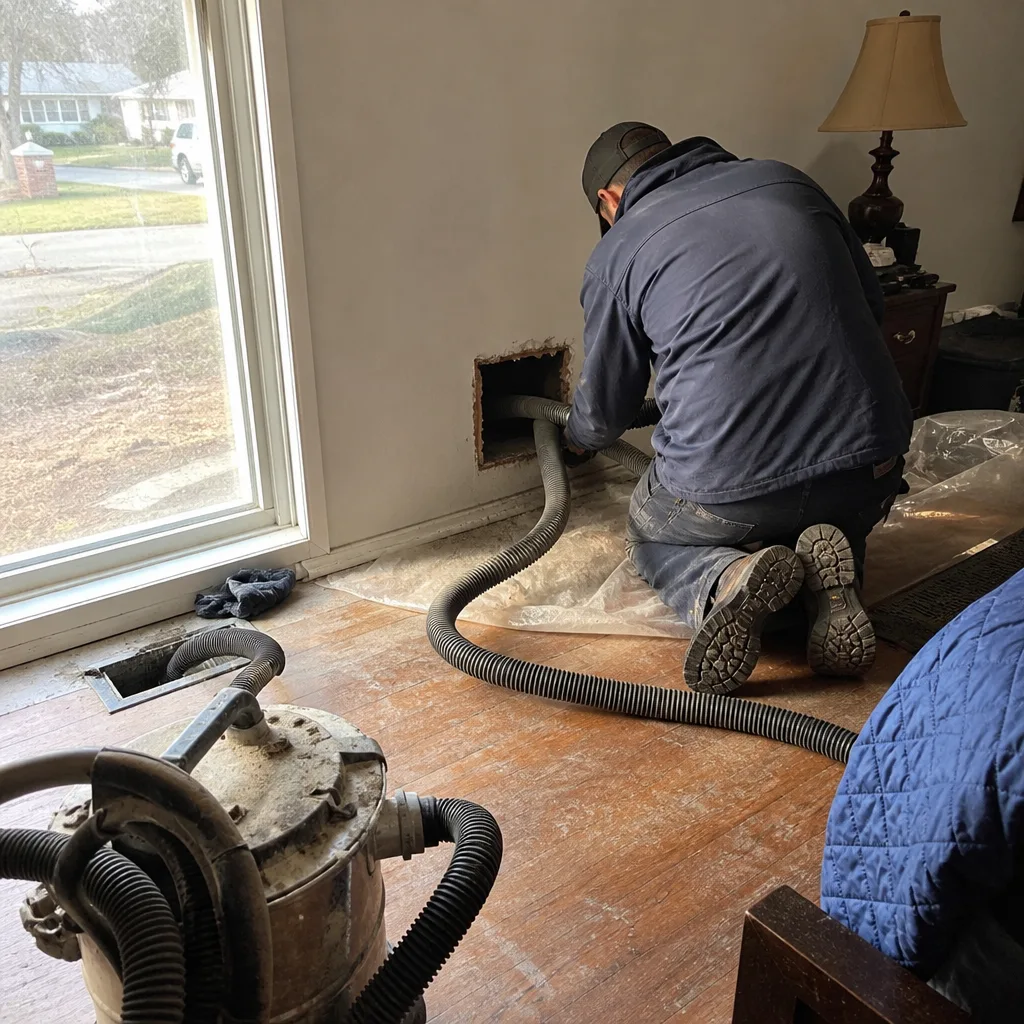 Before
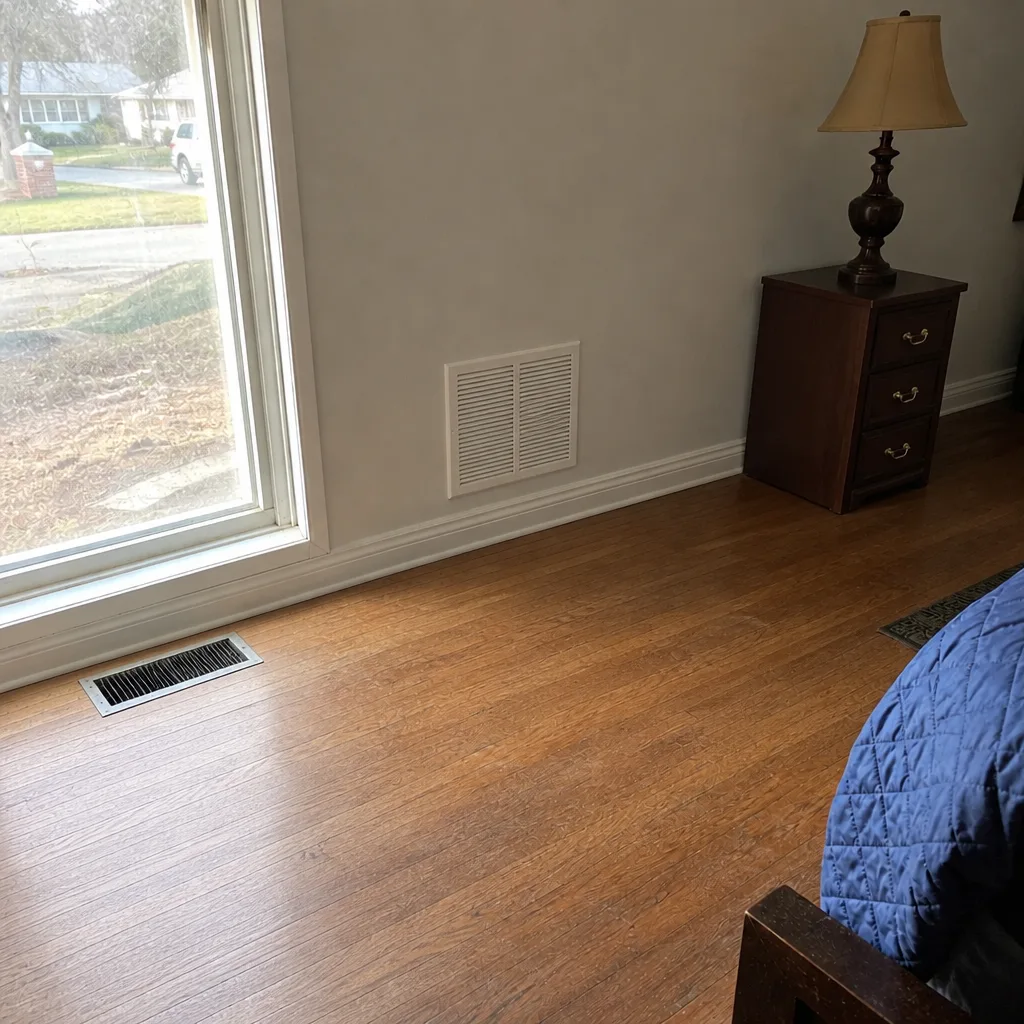 After
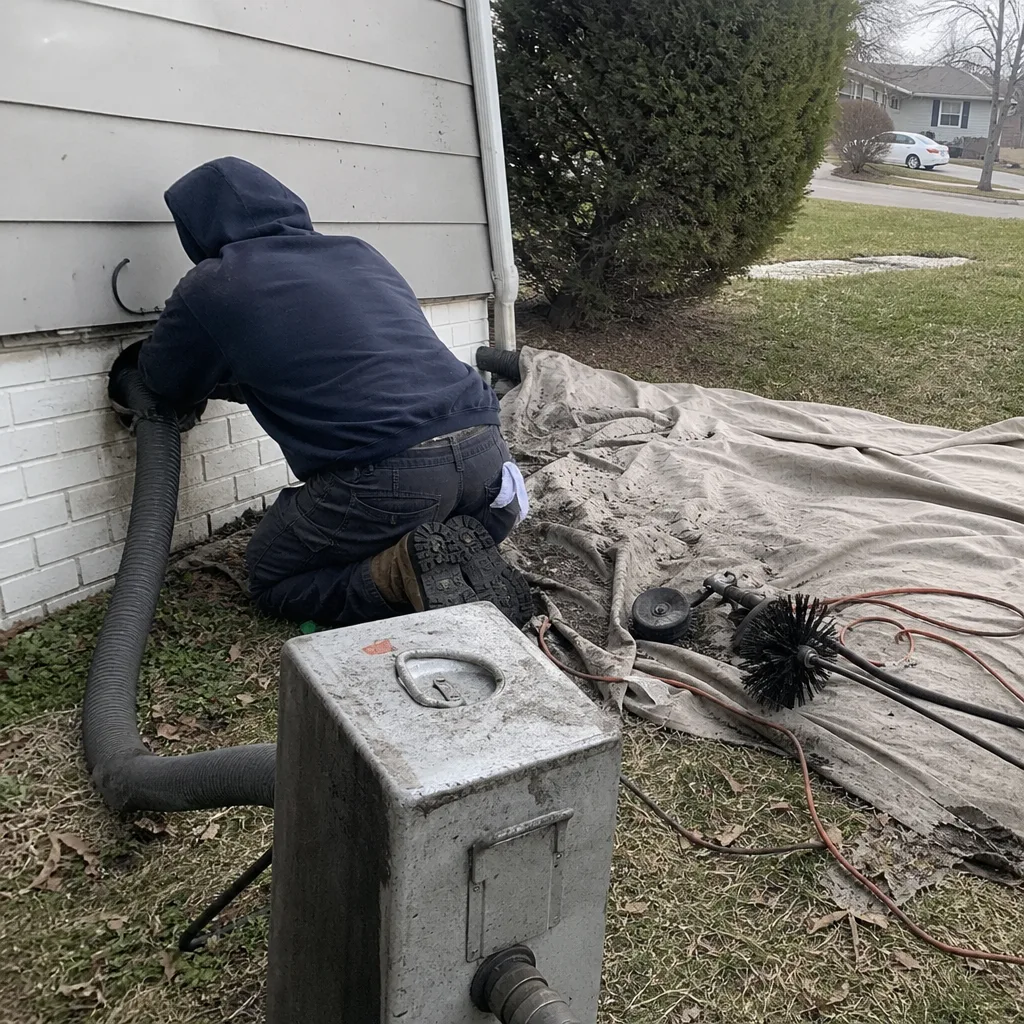 Before
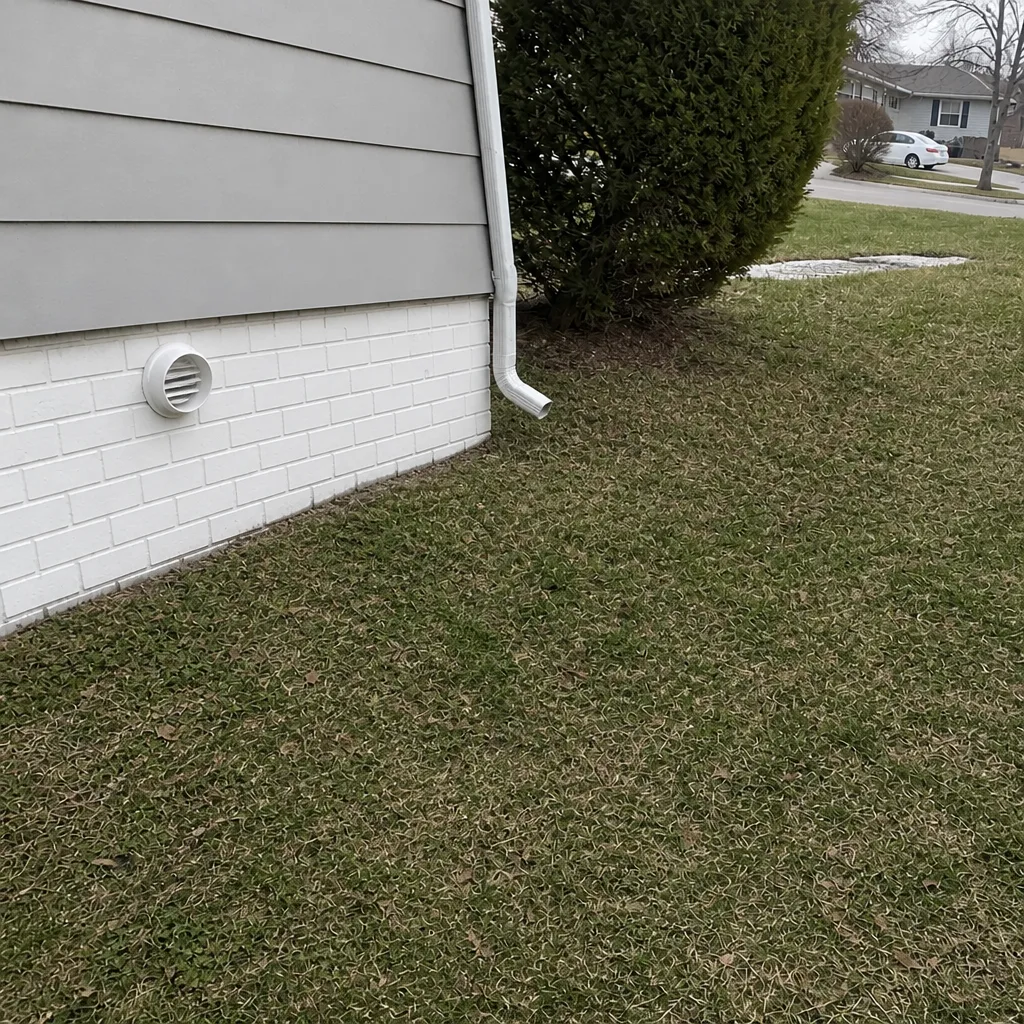 After
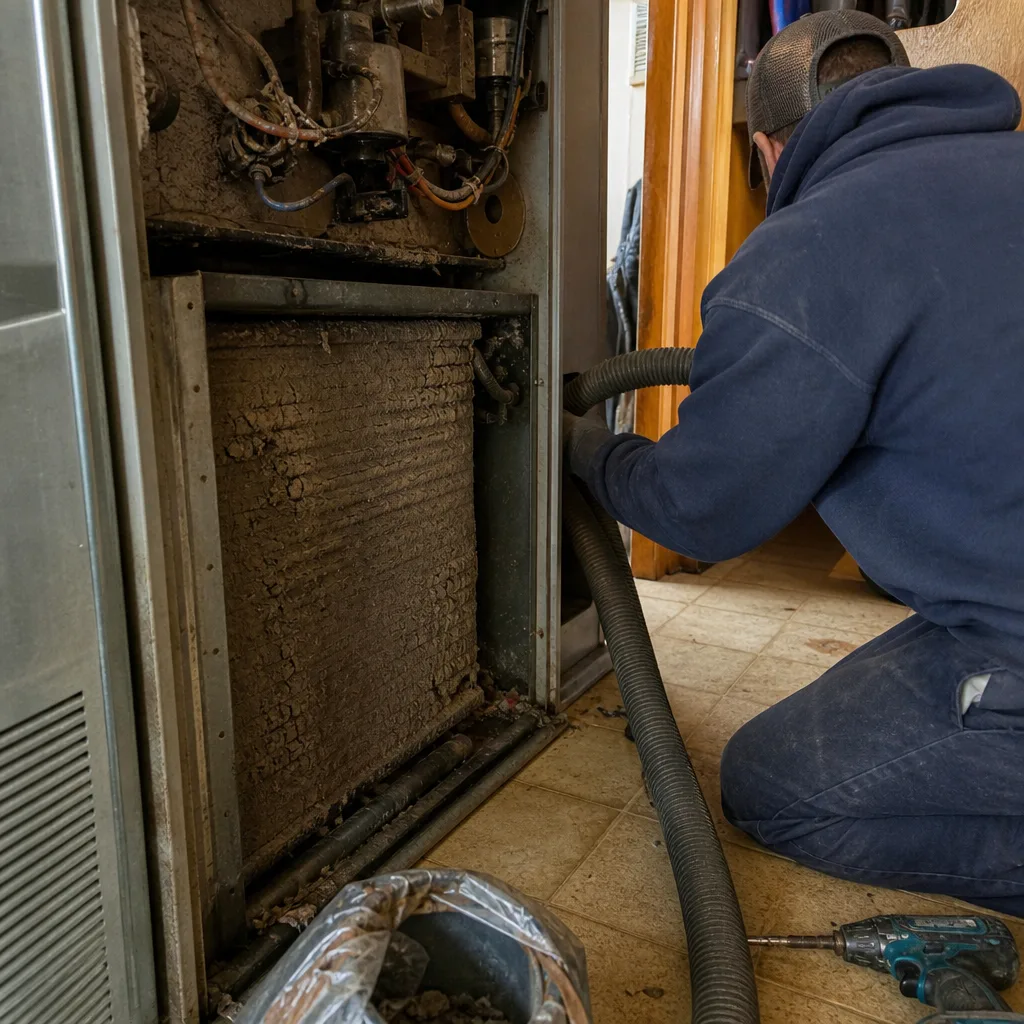 Before
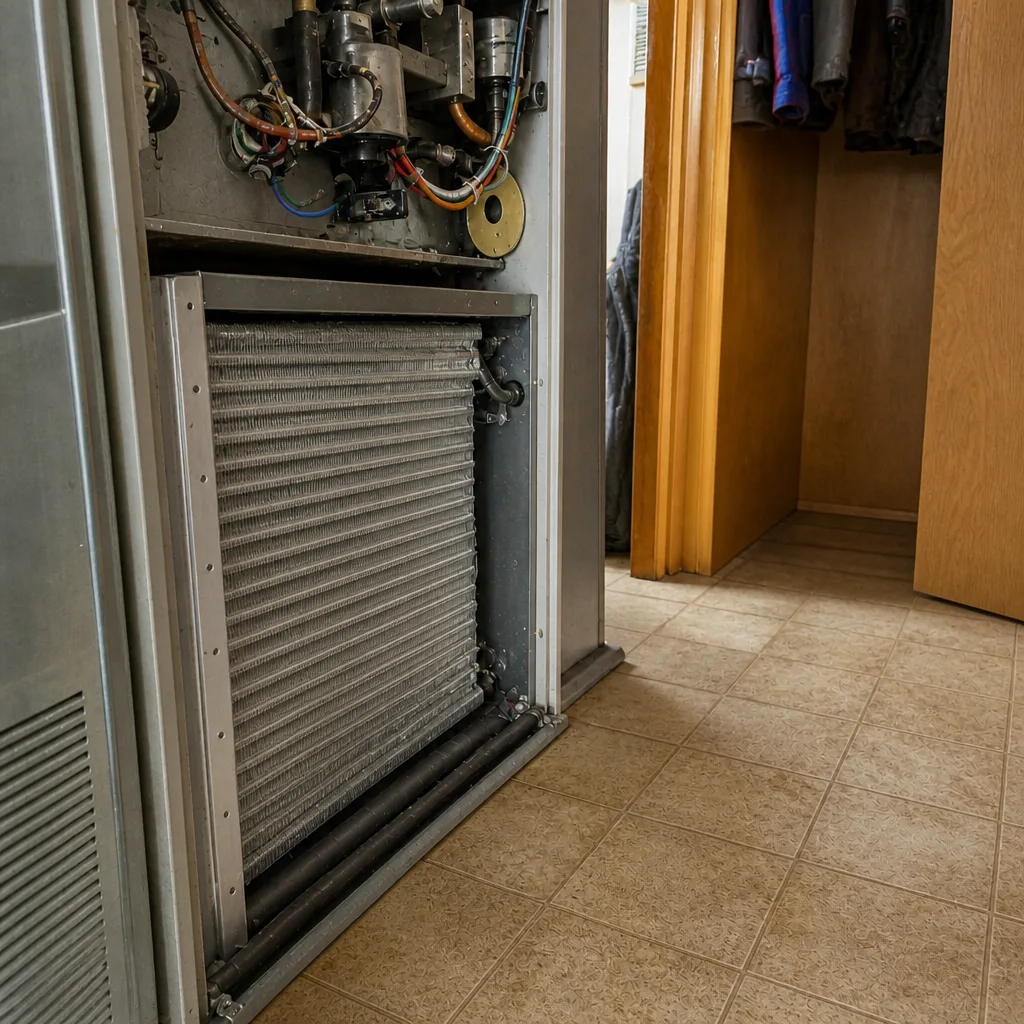 After
When to Call a Professional
Call a professional when the cloth test shows heavy or dark buildup that isn’t improving with filter changes, when a musty smell persists through a filter swap, when return grilles show filter bypass or a side-loaded dust pattern, or when room temperatures spread by more than a few degrees on a steady day. Also call if you’ve noticed visible liner breakdown inside a supply register, soot or oily residue on the cloth test, or if you’re moving into a Taylorsville home and don’t know the last time the system was cleaned. These are the situations where self-diagnosis has run its course and an inspection makes more sense than another round of guesses. Taylorsville Air Duct Cleaning offers free estimates in Taylorsville – call (855) 658-5265. Our technicians have up to 13 years of experience, and we use Rotobrush and Nikro systems with Abatement Technologies HEPA containment on every job. We answer 24/7. Fast dispatch from 7am to 7pm, Sunday through Friday.
Frequently Asked Questions
The white cloth test is the fastest separator. If the cloth comes back with heavy dark buildup after 24 hours, you likely have a contamination problem that cleaning addresses. If the cloth is light and the real symptom is a musty smell or uneven temperatures, or you see filter bypass on the return grille, the problem is likely moisture, filtration, or duct integrity – and cleaning alone won’t fix it. Call (855) 658-5265 for an exact quote on an inspection – estimates are free.
Cleaning that didn’t address the source leaves the source in place. A leaking return duct, a filter housing that bypasses, a moisture source feeding biological growth, or construction dust still being drawn into the system will re-contaminate cleaned ducts within months. Cleaning without the diagnostic step is the single most common reason a cleaning doesn’t hold. Call (855) 658-5265 to talk through what your system is doing – estimates are free.
No – in our experience it’s usually a moisture problem with the ducts only acting as the delivery path. The source is typically the coil drain pan, a whole-house humidifier, or air pulled from a damp crawlspace into the return. Cleaning without fixing the moisture source means the smell returns. Call (855) 658-5265 for an assessment that includes finding the moisture source – estimates are free.
Usually it’s duct integrity, not duct cleanliness. A leaking duct joint, an undersized run to that room, a crushed flex duct, or a closed damper all deliver less air than the room needs. Cleaning won’t change the temperature spread because the airflow loss happens before the air reaches the register. Sealing and repair will, and we handle HVAC cleaning plus duct sealing as one visit. Call (855) 658-5265 for an exact quote – estimates are free.
The cheapest quotes typically cover a superficial pass with consumer-grade vacuum equipment, without containment and without the agitation that actually lifts settled debris off duct surfaces. Professional-grade cleaning uses rotary agitation and HEPA containment, which is slower and heavier equipment – and it’s what makes the cleaning hold. Ask what machines will be on site before you book. Call (855) 658-5265 for a Taylorsville estimate – estimates are free.
There’s no single schedule that suits every home. Homes with pets, recent construction, allergy sufferers, or a history of moisture issues usually need cleaning more often than a low-occupancy home with no pets. The diagnostic matters more than the calendar: if the cloth test shows heavy buildup, it’s time; if it doesn’t, waiting is fine. Our technicians have up to 13 years of experience reading these signals in Taylorsville homes. Call (855) 658-5265 for an exact quote – estimates are free.
The Bottom Line
Duct problems aren’t one thing. Contamination, filtration failure, and pressure imbalance look alike from the living room and require completely different fixes. The diagnostics in this guide – the cloth test, the return-grille read, the room-to-room temperature check, and the filter confirmation – separate the three in an evening and stop you from buying a cleaning you don’t need or a cleaning that won’t hold. In Taylorsville, musty smells point at moisture sources outside the ducts, uneven rooms point at duct integrity, and return-grille bypass points at a sealed filter cabinet. Fix the category, not the symptom, and the problem stays fixed. When you’re ready, a proper inspection with professional-grade equipment – rotary agitation, HEPA containment, and the option to seal and repair on the same visit – is the next step, and it’s the one that actually resolves the problem.
Call (855) 658-5265 for a free estimate. We answer 24/7. Fast dispatch from 7am to 7pm, Sunday through Friday, closed Saturday.
Written by the team at Taylorsville Air Duct Cleaning.