
Last updated November 23, 2026
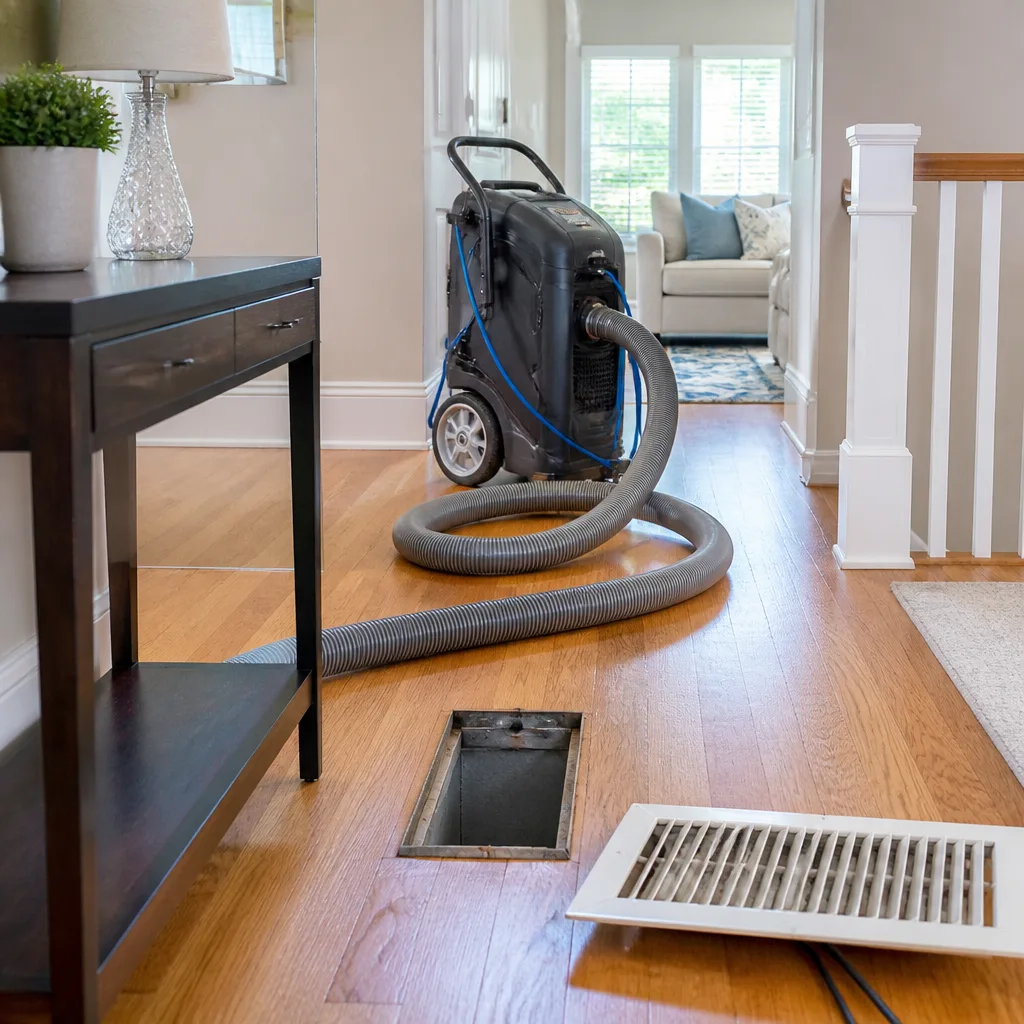 Whole-home duct cleaning
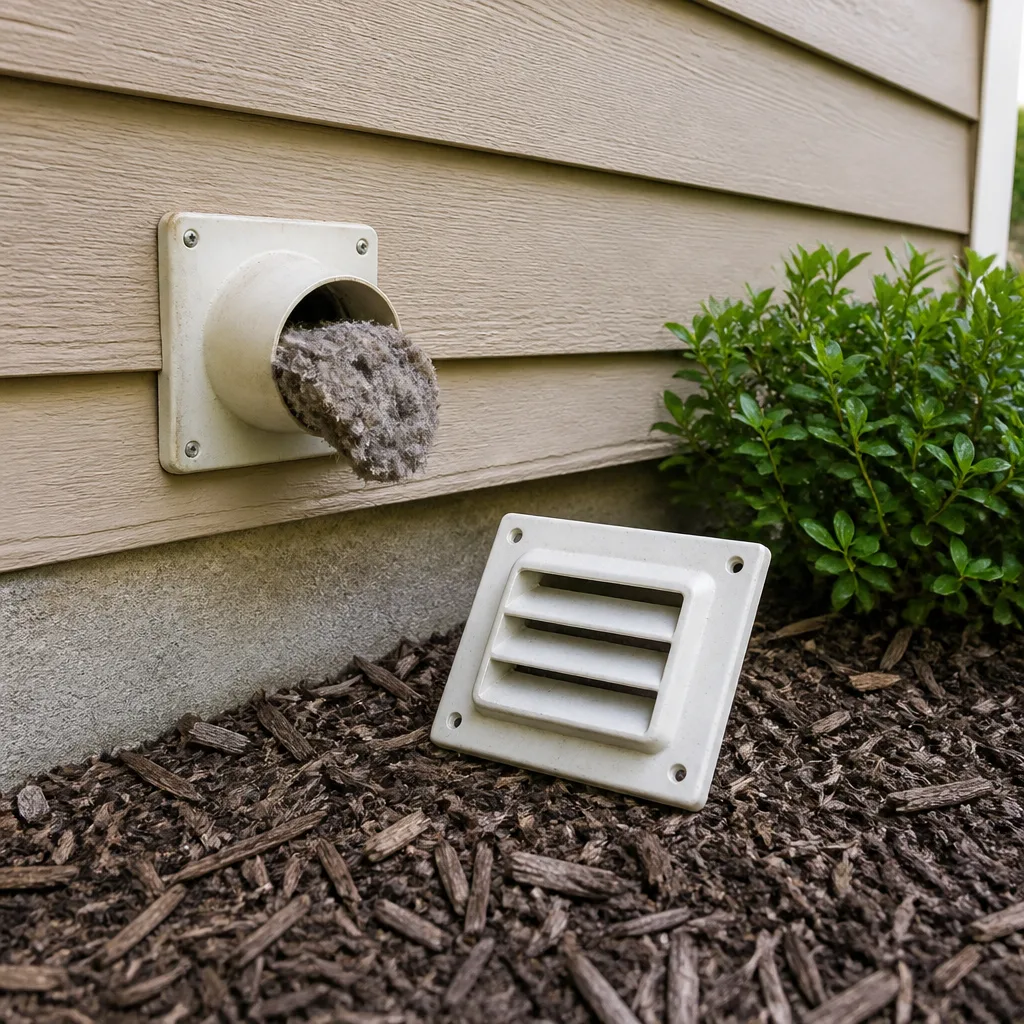 Dryer vent cleaning
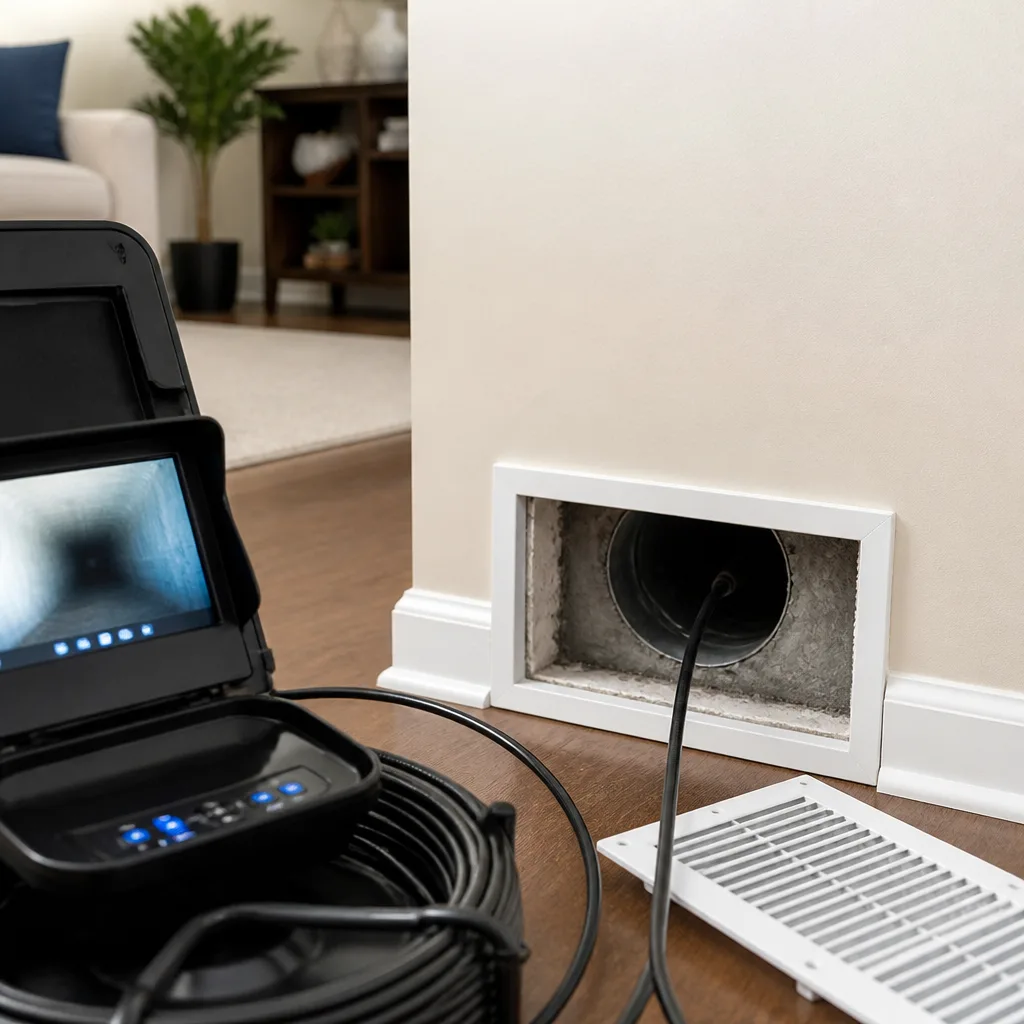 Camera inspection
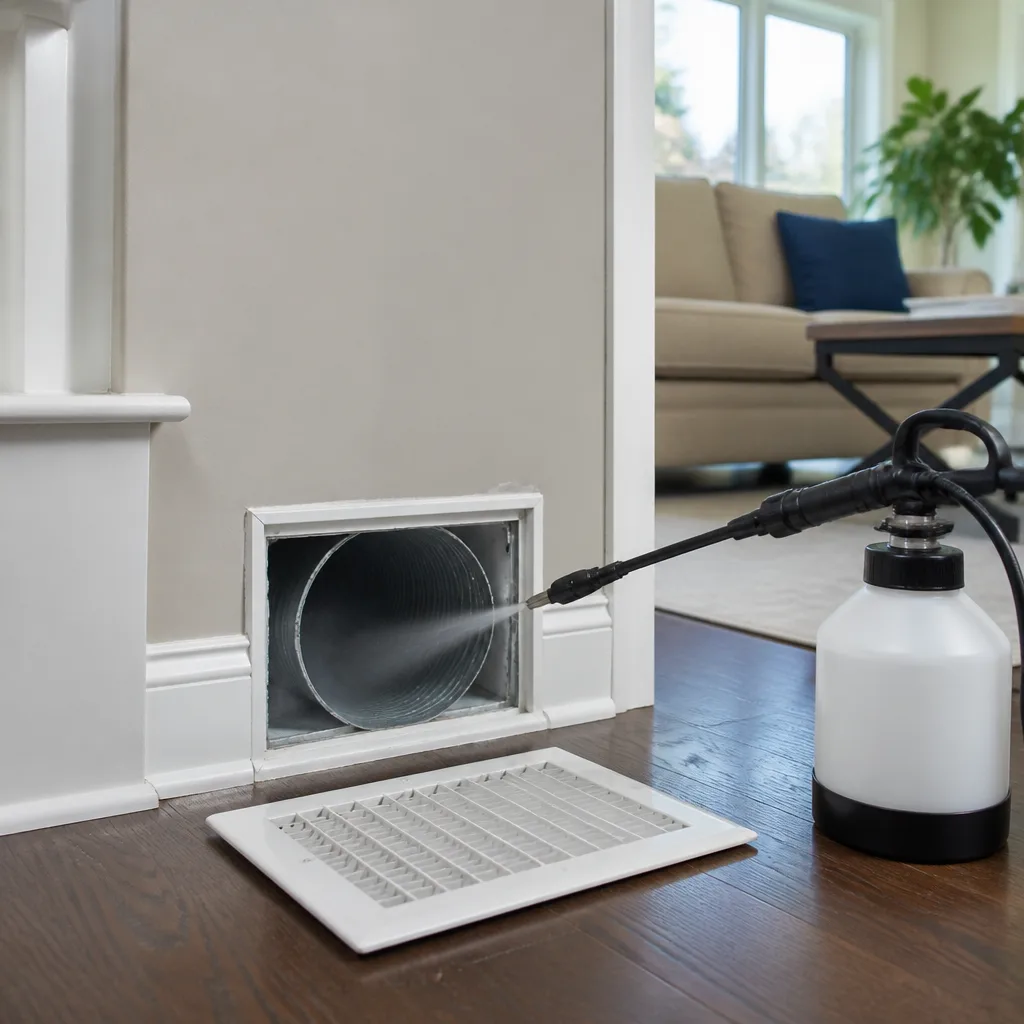 Sanitizing & deodorizing
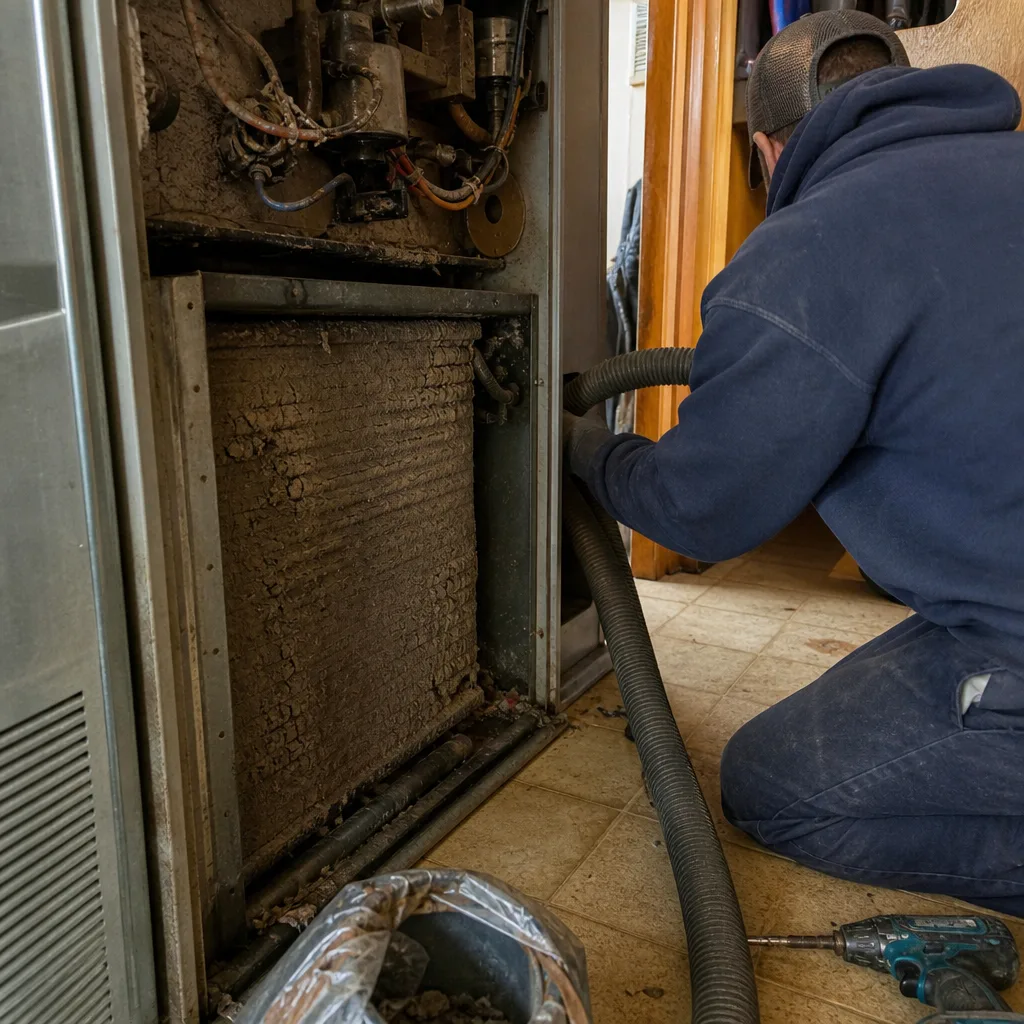
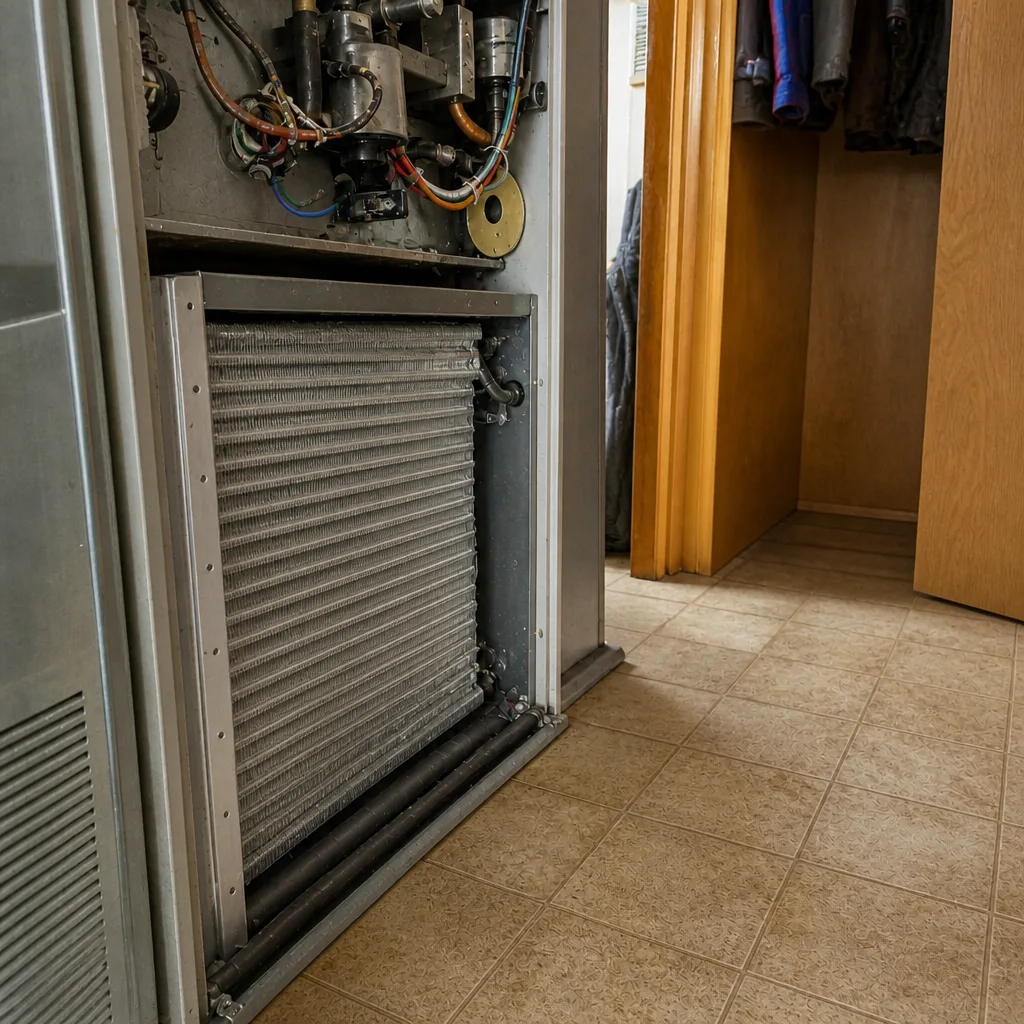
Whole-system duct and dryer vent check with before-and-after photos - you see exactly what came out of your vents
That "$99 whole-house special" is a bait ad - the real number appears once they are in your hallway, or the "clean" is a shop-vac at the register. We photograph the inside of your ducts before and after instead.
Air Duct Cleaning Emergency Preparedness Guide for Taylorsville Homes
After a kitchen fire, most families focus on what they can see: the scorched cabinet, the smoke-stained ceiling, the smell that clings to the curtains. Here’s what surprises people. The duct system is usually the largest contaminated surface left in the house, and it keeps working against you every time the furnace or air conditioner kicks on. Smoke particulate and combustion byproducts settle inside the trunk lines and branch runs, then redeposit onto every surface in every room with each HVAC cycle. We’ve seen this pattern enough times to say it plainly: the duct system should be one of the first calls after the fire department leaves, not an afterthought weeks later. This guide walks through what to do in Taylorsville for three scenarios that actually happen here, how the sequencing of remediation matters, and what documentation you need before a contractor touches your system or an adjuster approves a scope.
Quick Answer
After a fire, flood, or wildfire smoke event in Taylorsville, shut the HVAC system off completely and keep it off until a professional inspects and cleans the ductwork. Running the system circulates contamination through the whole house and pushes soot and smoke residue deeper into duct linings and the air handler, which multiplies both the cleaning scope and the cost. Duct cleaning should be scheduled within 24 to 72 hours of the event for a true emergency response, and the work should finish with documented verification before anyone reoccupies the space.
Styles & brands we work with
- Whole-home duct cleaning
- Dryer vent cleaning
- Camera inspection
- Sanitizing & deodorizing
Table of Contents
- Why Your Duct System Becomes the Contamination Reservoir
- The Three Taylorsville Scenarios: Fire, Flood, and Wildfire Smoke
- How to Shut Down and Isolate Your HVAC System Correctly
- Insurance Documentation: What Your Adjuster Will Ask For
- Emergency Response vs. Standard Remediation Scope
- Post-Remediation Verification: What You Should Receive
- Preparing Before an Event Happens
- The Equipment Difference That Shows Up in the Result
Why Your Duct System Becomes the Contamination Reservoir
A duct system in a typical Taylorsville home moves hundreds of cubic feet of air per minute. That’s exactly why it’s so useful during normal operation, and exactly why it’s a liability after a contamination event. When a house fire produces smoke, the HVAC system grabs soot and combustion byproducts and deposits them along the interior walls of every trunk and branch. Those deposits don’t sit still. Each heating or cooling cycle lifts fine particles back into the airstream and redistributes them.
The same logic applies to wildfire smoke during Utah’s red-air days. The Wasatch Front’s summer and fall smoke events send fine particulate into homes through every gap, and once it’s inside, the HVAC system becomes the mechanism that spreads it uniformly. Flooding works a different way, but the result is similar. Water that reaches duct runs, crawl space ductwork, or a basement air handler introduces moisture into a dark, enclosed environment. That’s the setup for mold colonization, not just damp debris.
What most homeowners underestimate is how much surface area is involved. The interior of a residential duct system can equal several hundred square feet, most of it out of sight. A visible cleaning of registers and nearby ductwork does almost nothing for the contamination sitting twenty feet back.
- Fire events: soot, char, and combustion byproducts settle into duct linings and the air handler
- Flood events: moisture intrusion into basement or crawl space ductwork creates mold growth conditions
- Wildfire smoke: fine particulate accumulates in the same ductwork that recirculates your home’s air
- Secondary contamination: even a small localized event spreads through the system with every HVAC cycle
That’s why a proper air duct cleaning after a contamination event isn’t comparable to a routine maintenance cleaning. The scope, the equipment, and the verification steps are different in every way.
The Three Taylorsville Scenarios: Fire, Flood, and Wildfire Smoke
Scenario 1: House Fire or Smoke Event
A fire event deposits combustion residue in three places: visible surfaces, hidden cavities like wall voids and attic spaces, and the HVAC system. Most restoration contractors address the first two and treat the HVAC system as a line item to be negotiated separately. Here’s the protocol that actually works:
- Shut the HVAC system off at the thermostat and at the breaker before remediation begins
- Seal registers temporarily so contamination doesn’t migrate further while other restoration proceeds
- Have the duct system professionally cleaned with HEPA-level extraction before the air handler is restarted
- Clean or replace the air handler components and the filter after duct cleaning, not before
- Verify with the equipment and documentation described later in this guide
The order matters more than most people realize. If a general contractor cleans the air handler and installs new filters before the ductwork is cleaned, all of that new material is contaminated the moment the system restarts.
Scenario 2: Basement or Crawl Space Flooding
Taylorsville’s older homes often have duct runs in crawl spaces and basements. When a water heater fails, a supply line bursts, or summer monsoon storms drive water into a foundation, those duct runs can take on moisture. Water intrusion in a crawl space is the classic setup for biological growth inside ductwork. If any duct run was submerged or saturated, that duct run needs inspection and probably replacement rather than cleaning. What looks dry on the surface doesn’t tell you what’s happening inside insulated flex duct.
Scenario 3: Wildfire Smoke Infiltration
Red-air days on the Wasatch Front push fine particulate into homes, and that particulate builds up in ductwork over a season. If you’ve been running the HVAC system with windows closed during a heavy smoke event, your duct system has been acting as a particulate filter, and it’s now holding what it captured. After repeated smoke events, a professional cleaning makes a measurable difference in what’s circulating. Pair the cleaning with high-efficiency filtration and, if you’re making a longer-term investment, Aprilaire or Honeywell air quality components that help capture particulate going forward.
For more on this topic, our page on HVAC cleaning covers what happens to the air handler and coils during these events.
How to Shut Down and Isolate Your HVAC System Correctly
Shutting down an HVAC system sounds simple, and it mostly is, but there are a couple of details most homeowners miss. The goal is to stop air movement through the system entirely so contamination stays where it landed rather than being spread to every room.
- Turn the thermostat to OFF at the wall unit. Do not set it to fan-only, which is different from off.
- Kill power at the breaker labeled for the furnace or air handler. This ensures no scheduled cycle can fire while you’re working in the area.
- Close supply registers in rooms away from the contamination source to reduce cross-migration.
- Cover or seal the return air grille nearest the contaminated area with plastic sheeting and tape if contamination is heavy.
- Note the filter type and size on the filter frame – you’ll need this for replacement, and adjusters often ask.
- Do not remove the filter and run the system “to see if it helps” – running without filtration accelerates contamination of the air handler.
Leave the system off until a trained technician has inspected the ductwork. We can’t overstate this. A single heating cycle after a fire event can redistribute soot that would otherwise have been cleaned in one pass. The system doesn’t need to be running for damage to occur – it needs to be off for damage to stop accumulating. If you’re unsure whether your system is truly off, call (855) 658-5265. We answer 24/7.
The other part of isolation is documentation. Before anything is touched, photograph every affected room, every register face, and the filter. Adjusters need a visual record of pre-work conditions, and once cleaning starts, that record can’t be recreated.
Insurance Documentation: What Your Adjuster Will Ask For
Duct cleaning after a covered loss is often a legitimate part of a homeowner’s claim, but it’s frequently missed because nobody asks. When you file, mention ductwork contamination specifically rather than leaving it to be discovered. Adjusters handle hundreds of claims and they’ll scope what you describe. If you don’t describe the duct system, it may not appear in their scope.
The documentation package that supports a duct cleaning line item typically includes:
- Pre-work photographs of affected registers, air handler, and duct interiors if accessible
- Written description of the contamination source (fire, water, smoke) and affected square footage
- Written scope from the cleaning contractor detailing what will be cleaned, how, and with what equipment
- Itemized estimate separating cleaning, sanitizing, and any repair or sealing
- Equipment specifications for the cleaning platform used (HEPA-level extraction, containment, agitation tools)
- Post-work documentation including before-and-after photographs and any applicable verification results
Here’s a point most homeowners don’t know to ask about. Insurance adjusters approve based on scope, and scope is negotiated. When the cleaning estimate includes specific equipment details – Abatement Technologies HEPA containment, for example, or the type of agitation tooling used – that supports the scope more effectively than a one-line invoice. We can work with your insurer directly and provide the documentation they need to process the claim. That’s not a sales pitch; it’s just how a claim moves faster.
One more item worth flagging. If your policy has a separate mold endorsement or a limited mold coverage provision, water intrusion in a crawl space needs to be raised explicitly with the adjuster before remediation begins. Cleaning before you’ve confirmed coverage can complicate the claim.
What If the Adjuster Offers a Cheaper Scope?
Ask them what equipment the alternative contractor will use. If the answer doesn’t include HEPA-level extraction and containment, the scope is likely underpowered for the contamination volume. You can request a second opinion estimate, and most adjusters will accept one. The documented equipment difference is what helps move that conversation forward.
Emergency Response vs. Standard Remediation Scope
The word “emergency” gets used loosely in this trade. It’s worth being precise about what qualifies, because the response timeline changes based on whether the event is still active.
Emergency response (within 24 to 72 hours): This is a fire event with active soot deposition, standing water in basement or crawl space ductwork, or a smoke event where the HVAC system was running at the time of contamination. In these scenarios, waiting increases the scope of contamination, which increases the cost of remediation.
Standard remediation scope: This is a cleaning after a resolved event – the fire is out, the water is dried, the smoke event has passed – that needs to be done but isn’t time-critical in the same way. The scope is usually broader than a routine cleaning, but the sequencing is less urgent.
The difference isn’t just timeline. Emergency scopes often include containment deployment to prevent contamination from spreading while the work proceeds. Standard scopes may be scheduled normally with the same cleaning equipment but without urgency-driven containment staging.
When you call after an event, ask what equipment will be used and how containment is managed during the work. A legitimate operation will explain this clearly. If the answer involves shop-vac-grade suction and a promise to “do the best we can,” that’s not an emergency response. It’s a cleaning visit dressed up as one.
Our phone line is answered around the clock. We answer 24/7. Fast dispatch from 7am to 7pm, Sunday through Friday. Call (855) 658-5265 and describe the event. The more specific you can be about when the event occurred and whether the HVAC system was running, the more useful we can be.
Post-Remediation Verification: What You Should Receive
If someone cleans your ductwork after a fire or water event and hands you an invoice with no verification, you don’t actually know what was done. You know what was billed. That distinction matters, and it’s the reason we insist on before-and-after photographs for every cleaning we’re a part of.
What a Taylorsville homeowner should receive after emergency duct cleaning:
- Before-and-after photographs of duct interiors from at least two locations in the system
- Written summary of the cleaning scope performed with the equipment used indicated
- Air quality test results when the scenario calls for them – most commonly after fire or biological contamination events
- Clearance documentation if a restoration contractor or insurer requires it before reoccupation
- Recommendations for follow-up – a second pass after several weeks is sometimes appropriate after heavy contamination
Air quality testing after a fire or biological event typically measures particulate counts and, in some cases, volatile organic compounds in the air. The goal is to confirm that the contaminants measured before cleaning have been reduced to levels consistent with normal indoor occupancy. If you had a baseline test done before cleaning, the comparison is even more useful. If not, the post-cleaning result should be adequate to establish that the system is safe to run again.
Clearance documentation usually comes from the restoration contractor rather than the cleaning company, but we can coordinate with the restoration team so the documentation package is complete. What we can’t do is tell you the space is safe to reoccupy before the testing confirms it, so the verification step is not one to skip.
There’s a practical check that’s easy to overlook. Run the HVAC system for several cycles after cleaning and see whether the smoke or musty odor returns. If it does, the cleaning may have missed something in the system, or the air handler components weren’t cleaned at the same time. That’s worth a call before the window closes.
Preparing Before an Event Happens
The best time to think about duct system preparedness is when nothing has happened yet. There are several steps that make post-event remediation faster and less expensive.
- Locate your breaker panel and label the HVAC breakers now. Fumbling for the right breaker while smoke is filling the house is the wrong time to figure it out.
- Photograph your ductwork, air handler, and filter setup and store the images in cloud storage. You’ll need them if you ever file a claim.
- Note your filter size and type on a sticky note near the air handler so you can replace quickly.
- Keep a roll of plastic sheeting and quality painter’s tape in the hall closet or garage – the same supplies used for containment staging at home scale.
- Have a professional inspection done so you know the condition of your system before an event. Rotted flex duct connections and disconnected joints make contamination worse.
- Confirm whether your homeowner’s policy covers duct cleaning as part of a loss claim. Ask your agent now, before you need the answer.
We recommend a professional inspection as part of routine maintenance every few years, and our Taylorsville Air Duct Cleaning page covers how that works. During an inspection, a technician can identify damaged duct connections or sealing issues that would make contamination spread faster during an event, and can address them before they matter. Duct repair and sealing are part of our service menu for exactly this reason – not a separate contractor referral.
One last preparedness note specific to Taylorsville: if you’re on a property with older ductwork or a crawl space system, have the duct run inspected after any water intrusion into the crawl space. Not all water events are obvious. A slow leak or a single heavy storm can saturate insulation around a duct run without leaving visible evidence in the living space.
The Equipment Difference That Shows Up in the Result
Two cleaning crews can visit the same home, charge for duct cleaning, and produce very different results. The variable is almost always the equipment.
Standard shop-vac grade suction captures large debris but leaves fine particulate behind, and it recirculates what it does capture into the room. Professional-grade platforms do the opposite. A Rotobrush rotary brush system, the same technology used in commercial duct cleaning, agitates debris from duct surfaces physically. Nikro HEPA vacuum extraction captures the dislodged material with certified-grade suction that traps particles down to 0.3 microns. Abatement Technologies HEPA containment equipment deploys on-site to protect indoor air while the work proceeds, so what gets dislodged doesn’t end up on your furniture.
That combination is why emergency cleaning after a fire or flood event is a different job from a routine cleaning. The contamination load is higher, the particles are finer, and the consequences of recirculation are real. A shop-vac approach after a smoke event doesn’t just fail to help – it can redistribute contaminants that had settled.
For customers who want longer-term protection after a smoke event, Aprilaire and Honeywell air quality components extend the work beyond the cleaning visit. Whole-home filtration, ventilation, and indoor air quality controls from these brands help capture the particulate that filtration alone won’t catch. Our dryer vent cleaning service also deserves a mention in this context, since a fire event often prompts homeowners to address every fire-safety item in the home at once. A clean dryer vent is one of the lowest-effort, highest-impact fire-safety measures available.
Common Mistakes to Avoid
- Running the HVAC system “to see if it helps” after a fire or smoke event. It never helps. It redistributes contamination deeper into the system and makes the cleaning scope larger. Keep the system off until a technician inspects it.
- Cleaning the air handler before the ductwork. New filters and cleaned coils get recontaminated the moment the system restarts if the ducts haven’t been cleaned first. The sequence is ductwork first, components second.
- Accepting a verbal scope with no written documentation. Adjusters need itemized estimates with equipment detail. Verbal-only scopes get denied or reduced, and homeowners are left covering the difference.
- Skipping post-work verification. Without before-and-after photos and, where applicable, air quality testing, you don’t actually know whether the system is safe to run. Insist on documentation.
- Assuming crawl space ductwork is fine because the crawl space looks dry. Insulated flex duct can hold moisture internally for weeks without showing it. If the crawl space flooded, have the duct run inspected.
- Underinsisting on HEPA-level extraction after a fire event. Shop-vac-grade equipment leaves fine particulate behind. The result looks clean and isn’t.
- Forgetting dryer vent safety after a fire event. Lint accumulation in dryer vents is a common fire-safety concern. If you’re addressing fire risks after an event, add the dryer vent to the checklist.
- Filing the claim without mentioning ductwork. Adjusters scope what homeowners describe. If you don’t specifically say “the ductwork is contaminated,” it may not appear on the claim.
See the difference
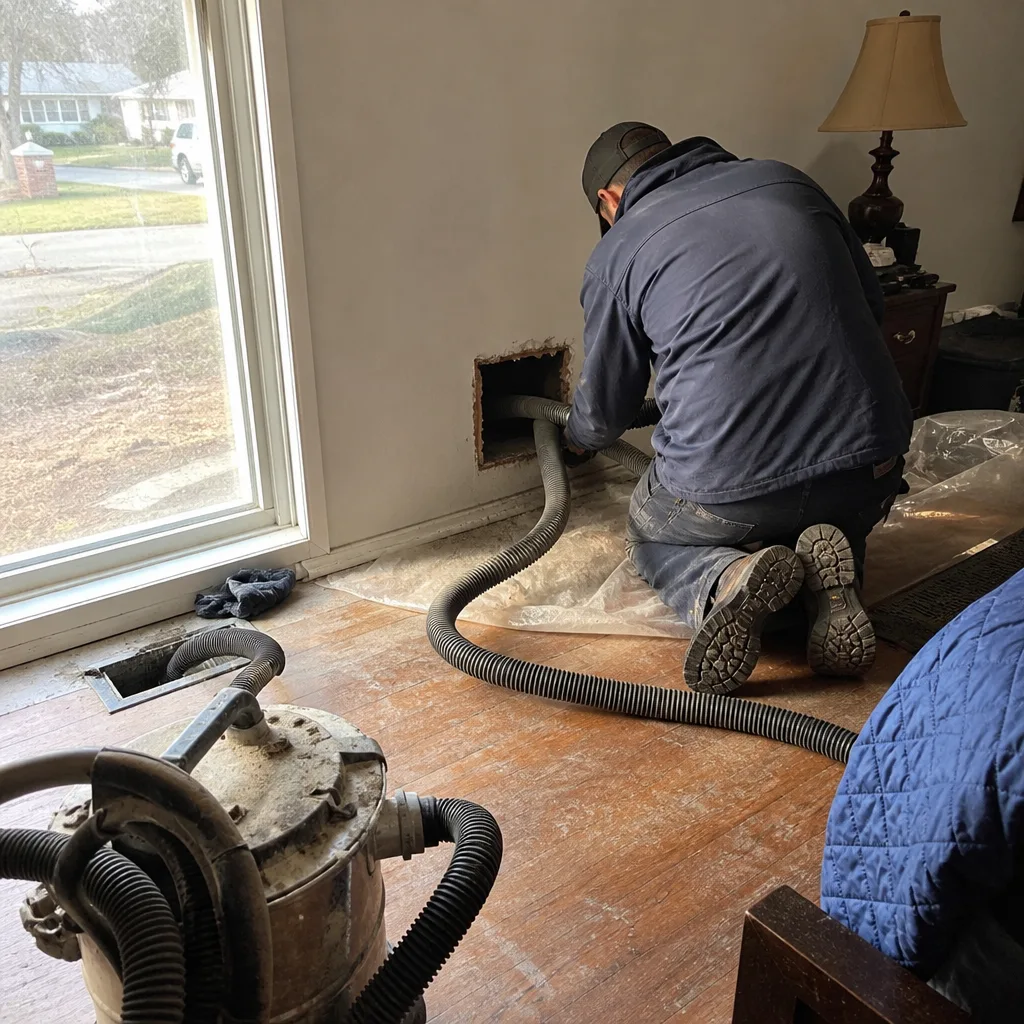 Before
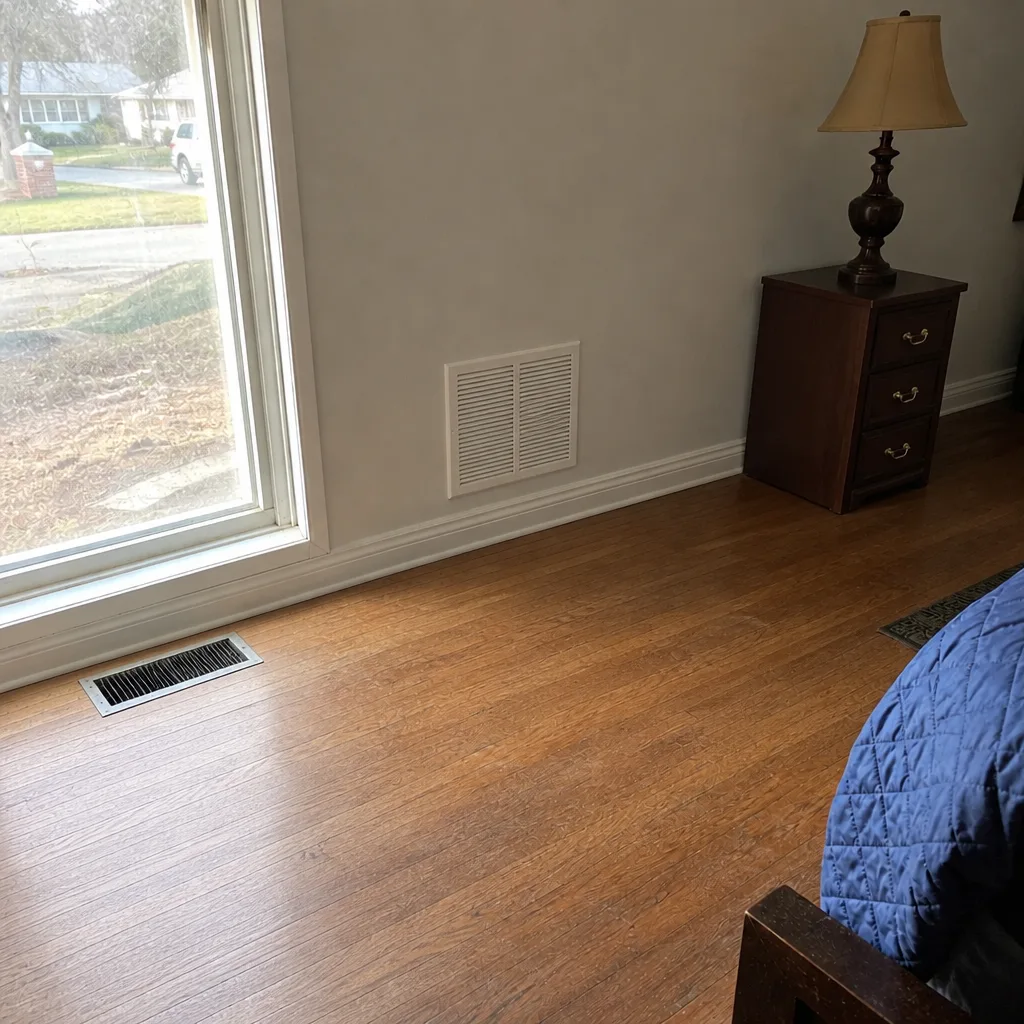 After
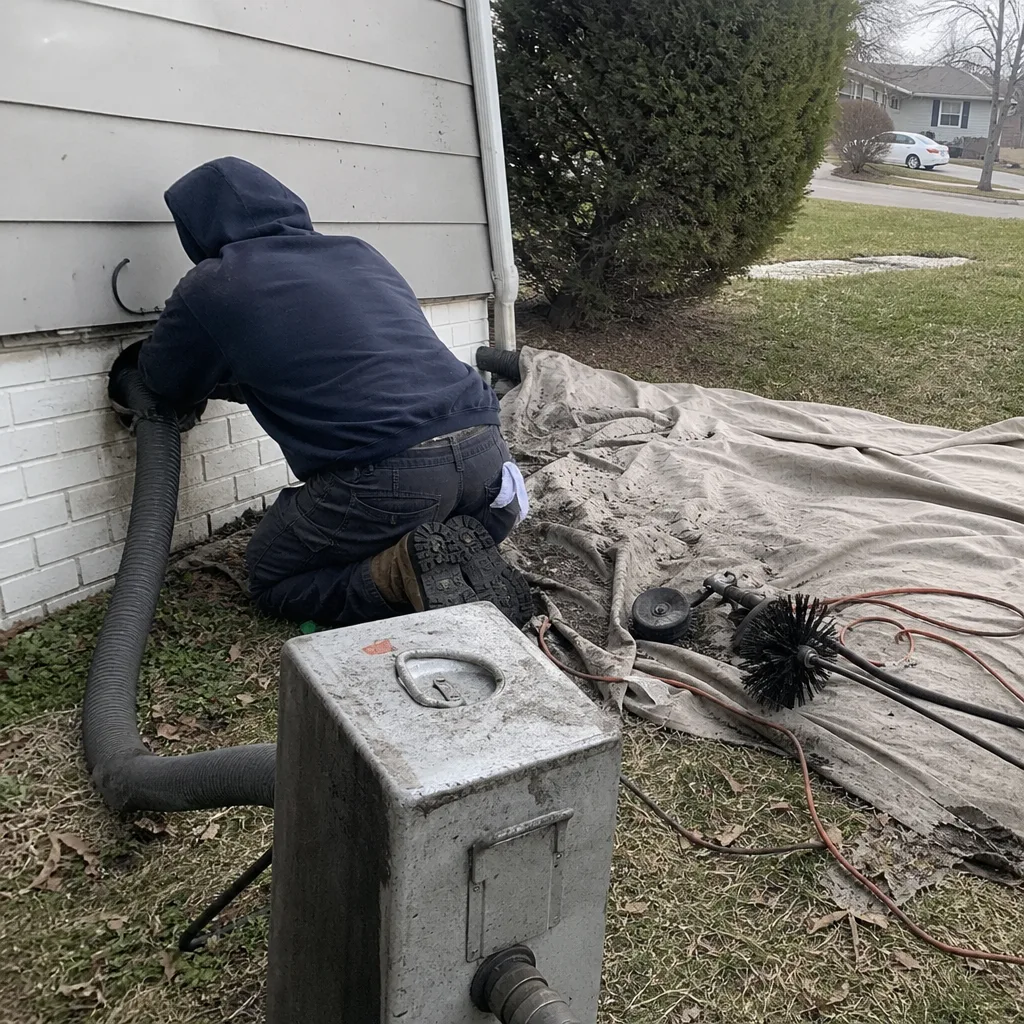 Before
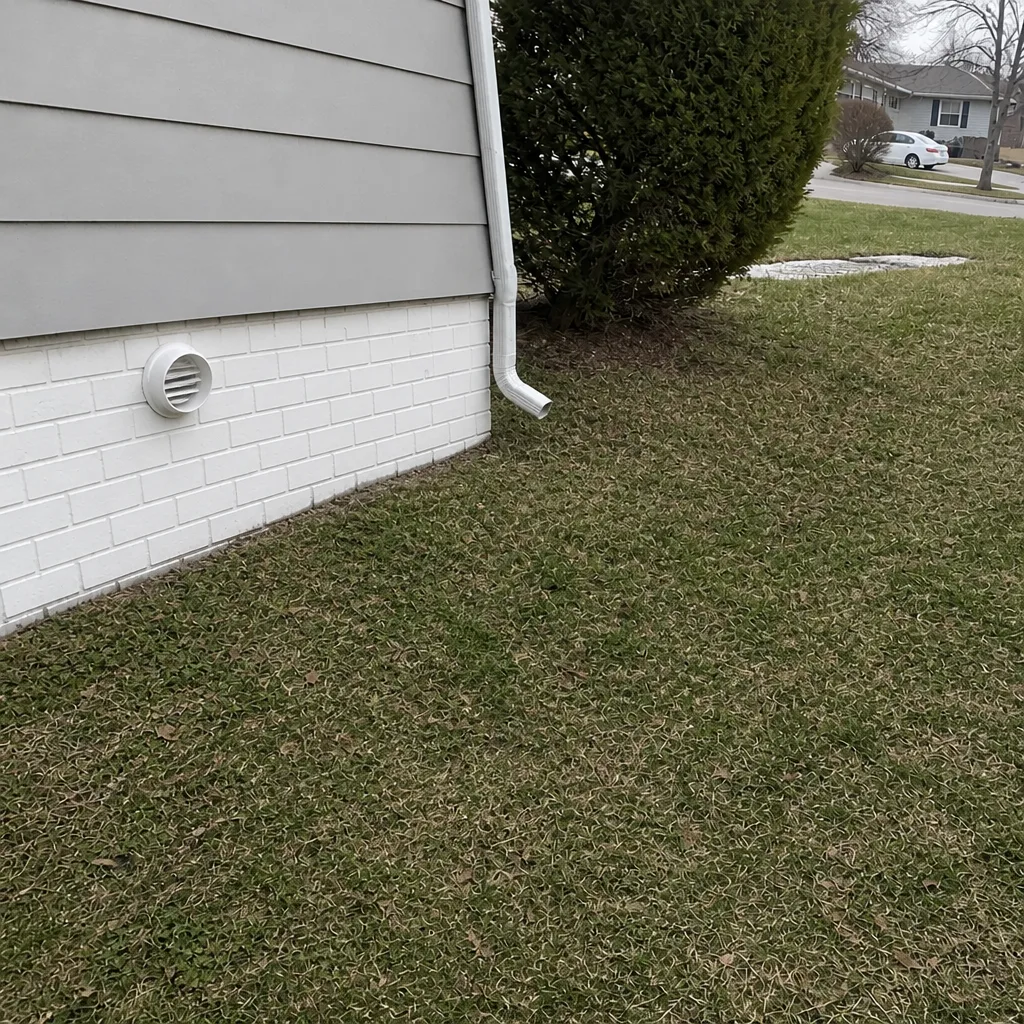 After
 Before
 After
When to Call a Professional
Call a professional after any contamination event where the HVAC system was running during the event or was exposed to soot, water, or smoke infiltration. That includes kitchen fires, chimney smoke backup, water intrusion into a basement or crawl space that reached duct runs, and any extended period during which your home was closed up during a heavy wildfire smoke event on the Wasatch Front. Also call if you notice a persistent smoke or musty odor that returns after each HVAC cycle – that’s the system telling you contamination is still in the ducts. Taylorsville Air Duct Cleaning offers free estimates in Taylorsville, and our team can walk through the scope, the equipment, and the documentation you’ll need for an insurance claim. Call (855) 658-5265. We answer 24/7. Fast dispatch from 7am to 7pm, Sunday through Friday.
Frequently Asked Questions
Within 24 to 72 hours is the target after a fire event where the HVAC system was exposed to smoke or soot. The system should stay off until cleaning and verification are complete. Waiting longer doesn’t just delay the work; it allows soot deposits to settle more deeply and makes the cleaning scope larger. Call (855) 658-5265 to schedule – estimates are free.
Often, yes, when the ductwork was contaminated as part of a covered loss. Coverage depends on your specific policy, and duct cleaning is frequently omitted unless the homeowner brings it up. Mention ductwork contamination explicitly when you file, and ask the adjuster to include it in the scope. We can work with your insurer directly to provide the itemized estimate and equipment documentation they need.
Emergency duct cleaning after a contamination event typically costs more than routine cleaning because the scope is larger and includes containment, deeper agitation, and verification. The written estimate sets the final price, and the estimate itself is free. Call (855) 658-5265 for an exact quote based on your system’s configuration and the contamination event.
No. A HEPA filter in the return air stream captures some particulate in the air that passes through it, but it doesn’t clean the interior surfaces of the ductwork where contamination has already settled. Fine soot deposits on duct surfaces keep re-entering the airstream even with a high-quality filter installed. The ductwork has to be cleaned professionally, and the filter is then part of the ongoing protection afterward.
Emergency cleaning responds to an active or recent contamination event, typically within 24 to 72 hours, and includes containment deployment and verification documentation that standard cleaning doesn’t require. Standard cleaning addresses accumulated dust and debris as part of ongoing maintenance, with a smaller scope. The equipment used is often the same; the scope and the documentation are different. Call (855) 658-5265 and describe the situation, and we’ll tell you which one applies.
Look for signs of water intrusion: stains on insulation, soft spots in the duct wrap, musty odor in rooms served by those ducts, or visible moisture after heavy rain. If the crawl space had standing water that reached the duct runs, assume the ductwork needs inspection. A technician can inspect internally and confirm whether cleaning is sufficient or replacement is necessary. The inspection is the only reliable way to know.
The Bottom Line
After a fire, flood, or wildfire smoke event, the order of remediation is as important as whether it happens at all. Shut the HVAC system down immediately, keep it off, document pre-work conditions, and have the ductwork professionally cleaned with HEPA-level extraction before the air handler is restarted. Verify the work with before-and-after documentation and, where applicable, air quality testing before reoccupying the space. Raise the ductwork contamination specifically with your insurance adjuster so it appears in the scope. If you’re unsure whether your situation calls for emergency cleaning or standard remediation, a free estimate is the simplest way to find out.
Call (855) 658-5265 for a free estimate. We answer 24/7. Fast dispatch from 7am to 7pm, Sunday through Friday.
Written by the team at Taylorsville Air Duct Cleaning.