
Last updated November 23, 2026
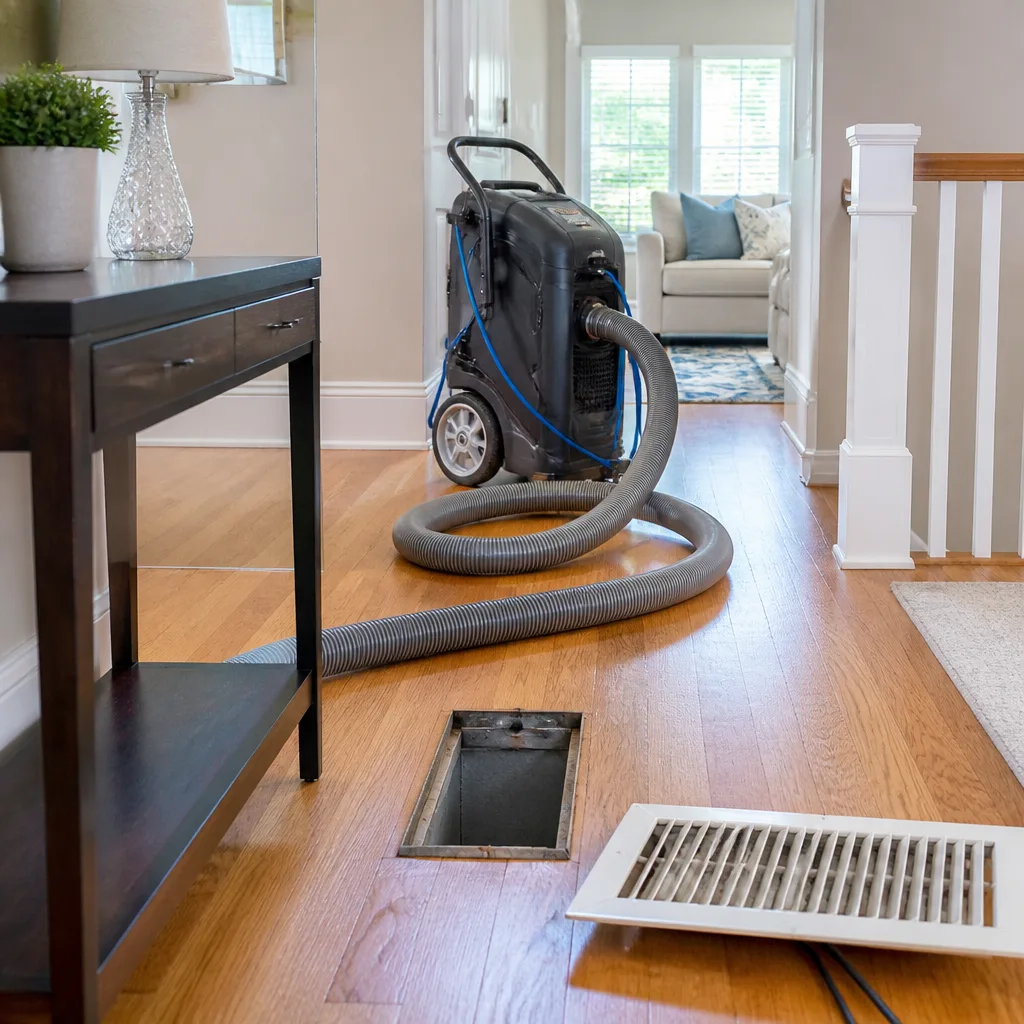 Whole-home duct cleaning
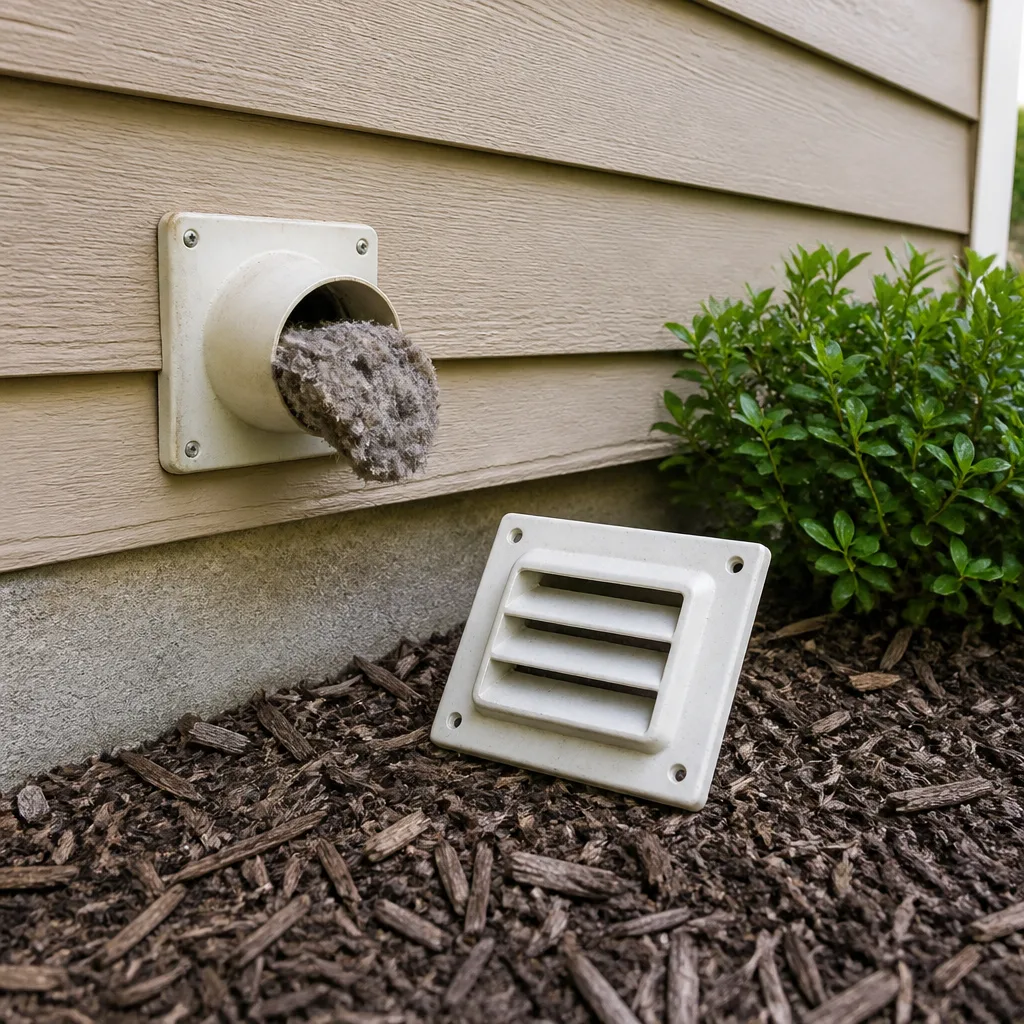 Dryer vent cleaning
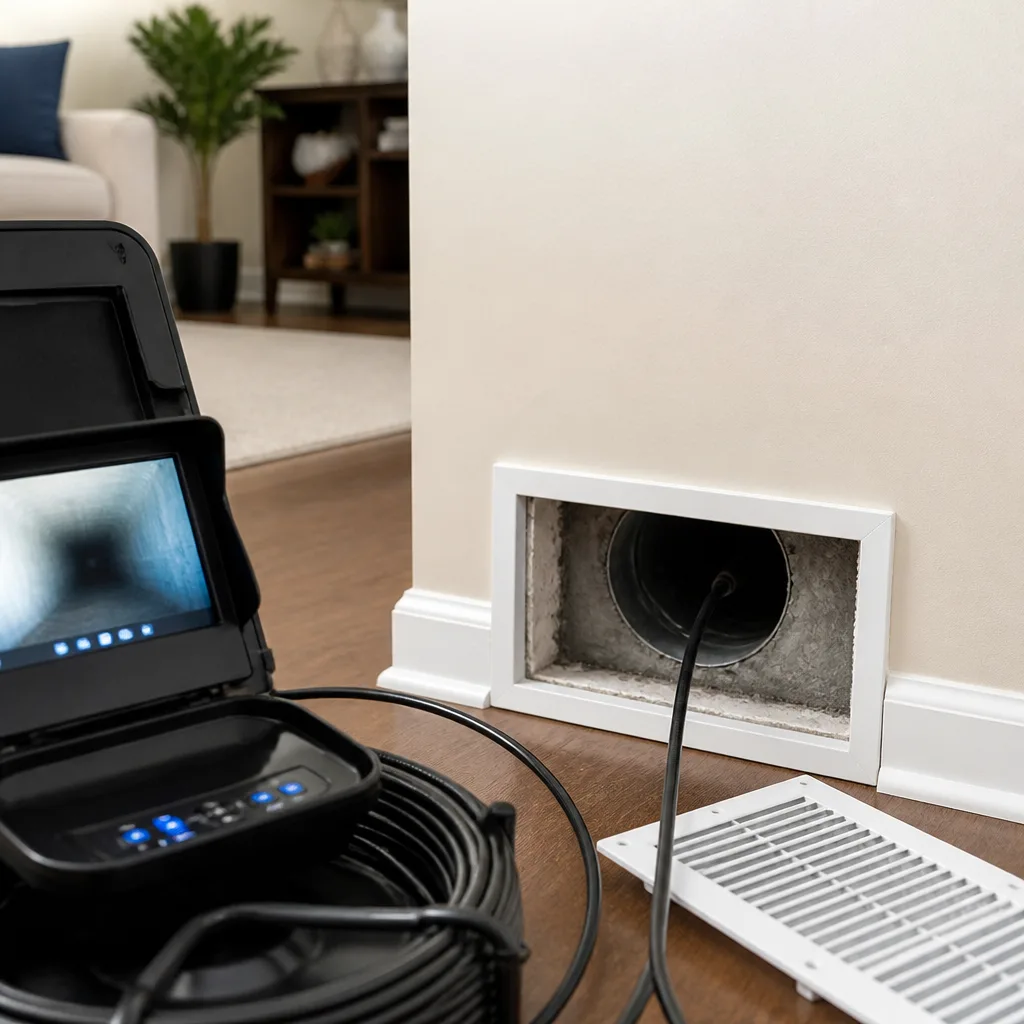 Camera inspection
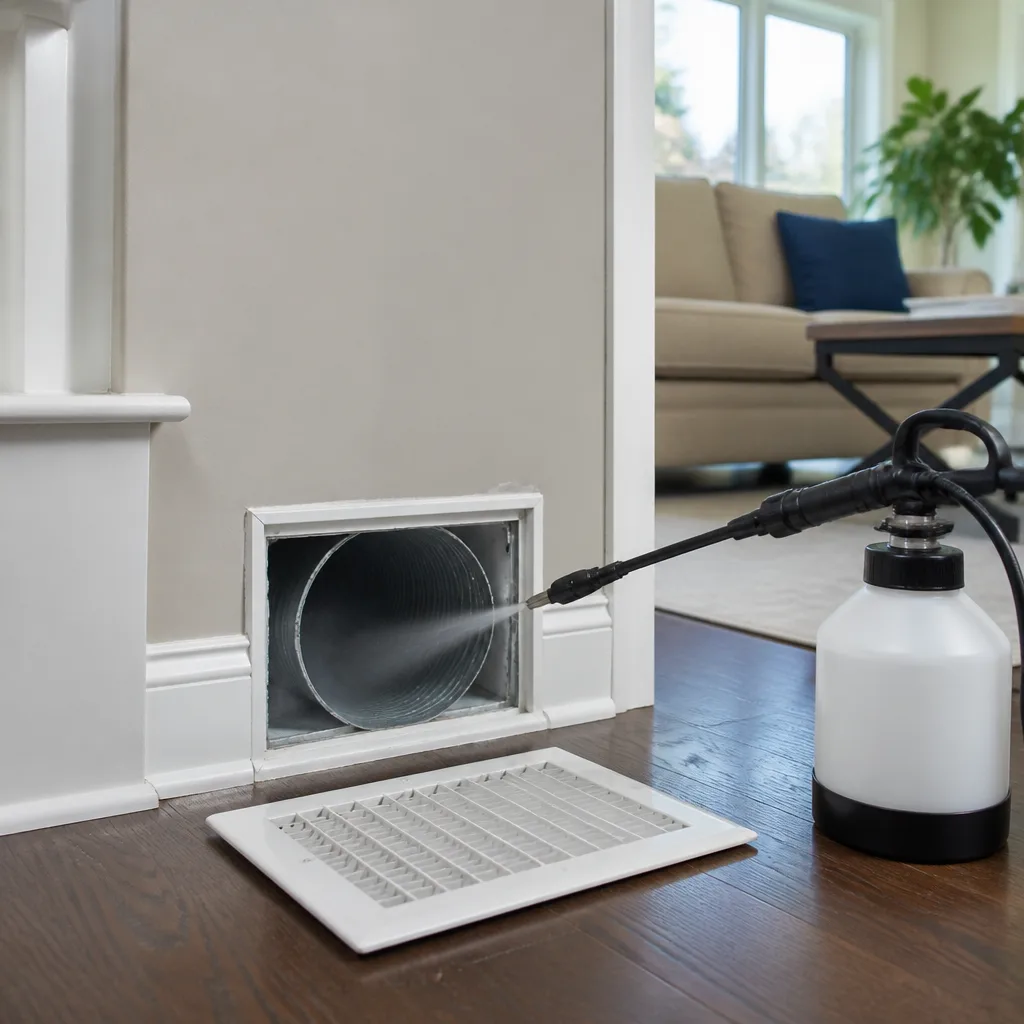 Sanitizing & deodorizing
Whole-system duct and dryer vent check with before-and-after photos - you see exactly what came out of your vents
That "$99 whole-house special" is a bait ad - the real number appears once they are in your hallway, or the "clean" is a shop-vac at the register. We photograph the inside of your ducts before and after instead.
Seasonal Air Duct Cleaning Care for Taylorsville: Year-Round Homeowner’s Guide
Most air duct cleaning advice tells you to schedule service every three to five years and then forget about it. That guidance falls apart in Taylorsville. Depending on which side of the valley your home sits on, which season you’re in, and how many hours a week your system actually runs, your ductwork can load up with debris in a single winter or stay reasonably clear for two years. The calendar on the wall matters far less than what’s happening inside your HVAC system. This guide breaks down how each Taylorsville season loads your ducts differently, and how to build a cleaning schedule around your home instead of a generic rule of thumb.
Quick Answer
There’s no single correct interval for air duct cleaning in Taylorsville. The right schedule depends on which seasonal load your specific home faces heaviest: winter inversion particulate in valley-floor neighborhoods, spring construction dust on the city’s expanding edges, summer wildfire smoke that bypasses standard filtration, or fall pre-heating accumulation. A home-specific calendar built on HVAC run hours and local seasonal load beats any generic “every 3-5 years” recommendation.
Styles & brands we work with
- Whole-home duct cleaning
- Dryer vent cleaning
- Camera inspection
- Sanitizing & deodorizing
Table of Contents
- Why the Standard “Every 3-5 Years” Advice Fails in Taylorsville
- Winter: Inversions and Return Duct Contamination
- Spring: Construction Dust on Taylorsville’s Expanding Edges
- Summer: Wildfire Smoke, Sub-Micron Particles, and Filtration Gaps
- Fall: The Pre-Heating Case for Cleaning
- How to Build a Home-Specific Seasonal Calendar
- What a Seasonal Inspection Actually Checks
- Common Mistakes to Avoid
Why the Standard “Every 3-5 Years” Advice Fails in Taylorsville
Generic duct cleaning intervals assume a stable environment. Most American homes don’t live in one, and Taylorsville homes especially don’t. Salt Lake Valley geography does something specific to the air here: cold air sinks and gets trapped under warmer air above, holding pollution close to the ground for days at a time. That’s the inversion pattern that shapes winter air quality across the valley, and it turns ductwork into the deposition surface for whatever your HVAC pulls in during those weeks.
Meanwhile, a national cleaning guide written for a homeowner in a temperate climate with no wildfire season and no valley inversion has nothing useful to say about your system. It also has nothing to say about the spring construction timetable on Taylorsville’s west and south edges, or about the difference between a home on the valley floor and one slightly higher. Generic advice is generic because it can’t account for local conditions.
Here’s what actually drives duct loading in a Taylorsville home:
- HVAC run hours. A system that runs eight hours a day moves eight times more air than one that runs one hour a day. Run hours are the single biggest variable in how fast ducts load up, and Taylorsville’s hot summers and cold winters push run hours higher than the national average.
- Return duct placement. Low-wall and floor returns near carpet, pets, or entryways collect more debris than high-wall returns in the same home.
- Seasonal outdoor load. What your system pulls in changes dramatically between an inversion week in January and a clean-air week in April.
- Filtration match. A high-MERV filter protects the system and the ducts. A low-MERV filter protects neither, and the difference matters most during smoke season.
- Home age and recent renovation. A home that’s had a bathroom remodel or a kitchen addition pulls fine drywall dust into the return system for weeks afterward, regardless of how clean the ducts were before.
Put all that together and the “every 3-5 years” rule starts to read like an average of wildly different situations. Some Taylorsville homes genuinely need cleaning every 18 months. Others can go four years without issue. The variable isn’t time. It’s seasonal load.
Winter: Inversions and Return Duct Contamination
During a bad inversion week, outdoor PM2.5 (fine particulate under 2.5 microns) can climb well past 55 micrograms per cubic meter in the Salt Lake Valley. That’s the number that matters for ductwork, not just for lungs. When your HVAC runs in recirculation mode during an inversion, the return system is drawing air from inside the house, but the house itself is being fed outdoor air through door gaps, attic bypasses, and fresh-air intakes. That particulate load finds duct surfaces and settles.
Homes near the Taylorsville valley floor sit closest to the trapped air layer, so they see the visible symptom first: grayish dust on ceiling fan blades, a fine film on horizontal surfaces that returns within days of dusting, and a return register filter that loads up in weeks instead of months. Homes slightly higher on the east bench generally see less of this. Either way, the accumulation happens inside ductwork whether you can see it or not.
We’ve seen the pattern clearly in our duct work across Taylorsville: return ducts run visibly dirtier by late winter than the supply side, because returns are the intake point for the whole system. That’s also why a winter inspection should always check return duct contamination before doing anything else.
What winter-specific care looks like:
- Check return registers and grilles through January and February. Visible dust on the return grille is the easiest early indicator that duct surfaces are loading.
- Replace filters on a run-hour schedule, not a calendar schedule. During inversion weeks your system runs more, so filters load faster. Check monthly through winter.
- Watch for the “re-dusting” pattern. If dust returns to furniture within days of cleaning, particulate is being re-released from the system, which usually means cleaning is due.
- Book cleaning for late winter or early spring if you’ve had a heavy inversion winter, so you’re not carrying that accumulation into the cooling season.
One note on safety while you’re inspecting: the return-side work touches the same system as the furnace itself. If you open the air handler cabinet to look at the blower, don’t touch electrical components with the power on. That’s work for a trained technician.
Spring: Construction Dust on Taylorsville’s Expanding Edges
Spring in Taylorsville is construction season, and the homes closest to new residential development see the effect immediately. New-build periods bring drywall dust, exterior soil, concrete cutting fines, and insulation fibers into the air. Much of that drifts into neighboring homes and gets pulled into HVAC systems through return intakes and open windows. A home two lots away from a new build can load its ducts faster in one spring than in two normal years.
Drywall dust is the worst of it. It’s fine, alkaline, and it doesn’t settle out of the air the way heavier soil particles do. It travels through the return system, coats duct surfaces, and sticks. It also coats blower wheels and evaporator coils, which is where the real efficiency loss happens: a blower wheel caked in drywall dust moves less air, and less air means longer run times to reach the same temperature setpoint.
Homes on Taylorsville’s western and southern residential edges, where ongoing subdivision work is most active, tend to see this most. Interior renovations do the same thing inside the house. A bathroom or kitchen remodel in March can put more drywall dust into the system than the neighborhood did.
Spring-specific steps:
- Close windows during active demolition or drywall work next door.
- Set the system to run fan-only for short periods during heavy indoor dust events, with a fresh filter in place, to catch airborne debris before it settles in ductwork.
- After any interior renovation that involved drywall, schedule a system cleaning before the cooling season starts.
- Inspect the evaporator coil area for dust buildup after the first warm week; that’s when the pattern shows up if dust is present.
- Have the blower wheel inspected at the same time, since it’s the component that most affects airflow after drywall dust accumulation.
Drywall dust that reaches your evaporator coil becomes a wet mat once the AC starts running, and that mat becomes a spot where biological growth can start. That’s the bridge into our Air Quality & Sanitizing service, which addresses the biological side that a standard cleaning leaves alone. If a coil has been wet-dusty all summer, cleaning the ducts and not sanitizing them misses half the problem.
For more on how a full system cleaning handles coil and blower contamination, see our page on HVAC cleaning.
Summer: Wildfire Smoke, Sub-Micron Particles, and Filtration Gaps
Wildfire smoke particles are mostly sub-micron: smaller than 1 micron, and often below 0.3 microns. That matters because standard furnace filters are rated by MERV, and MERV capture rates drop off sharply at the smallest particle sizes. A MERV 8 filter catches most pollen and dust but lets the majority of sub-micron smoke particles through. Once smoke passes the filter, it either deposits on duct surfaces or recirculates through the home.
That’s the summer problem specific to the Salt Lake Valley: smoke from regional fires drifts in for days at a time, outdoor particulate climbs, and homes with the windows closed are drawing that air into the system through normal infiltration. Recirculation mode doesn’t eliminate it. It just means your ductwork becomes the collection surface for whatever the filter didn’t catch.
Standard duct cleaning removes what’s already on the duct surfaces, which is useful but doesn’t address why the contamination happened. Fixing the summer problem means three things working together:
- Upgrade the filter, correctly. A MERV 13 filter catches far more sub-micron smoke than a MERV 8. But higher MERV means higher pressure drop across the filter, which stresses the blower if the system wasn’t designed for it. Check with a professional before upgrading.
- Protect the evaporator coil. The AC coil runs wet in summer. If smoke particulate reaches it, it sticks to the wet surface and becomes a growth medium. Regular cleaning keeps the coil surface protected.
- Run a portable air cleaner during smoke events. This reduces the particulate load reaching the return system in the first place, which is the cheapest intervention in the whole equation.
Our technicians have up to 13 years of experience in this system, and the standard summer inspection covers filter fit, coil condition, and duct surface load. If you’re using a Honeywell or Aprilaire filtration appliance, the summer check should verify media condition and cabinet seal; a filter that looks fine but has a leaky cabinet gasket is bypassing air, which defeats the purpose entirely.
If wildfire season is your primary concern, our air duct cleaning service includes HEPA-level extraction through Nikro and Rotobrush equipment, which pulls smoke-loaded particulate out of the system rather than dislodging it into the room.
Fall: The Pre-Heating Case for Cleaning
The single most underrated reason to clean ducts in Taylorsville is what happens when you turn the heat on for the first time in the fall. A furnace that’s been idle all summer holds a season’s worth of settled dust and particulate on the heat exchanger, the blower, and the duct surfaces. When the system fires up, everything that settled during the cooling season gets lifted in one concentrated dispersal. In a home that hasn’t been cleaned, that first week of heating can put more dust into the air than the previous three months combined.
The visible symptom is the burnt-dust smell that shows up on the first cold evening. The less visible symptom is what comes out of the supply registers during that first week: a full load of accumulated particulate that gets broadcast into every room.
Fall timing matters because you want the system clean before the first heating cycles, not after. A cleaning in early October does something a cleaning in January can’t: it removes the accumulation before it disperses, rather than cleaning up after dispersal.
The pre-heating checklist for Taylorsville homeowners:
- Have ducts cleaned before the first heating cycle if the system ran high-load all summer (smoke season).
- Replace the furnace filter just before the first heating run, not in the middle of winter.
- Have the heat exchanger inspected at the same time, since cleaning access and inspection access overlap.
- If your dryer vent hasn’t been cleaned this year, schedule it too; the fall is the natural time to handle both in one visit.
- Check for any dust visible on supply registers after the first week of heating; visible dispersal usually means the system carried more load than expected.
If you have a dryer vent that’s been neglected through the summer laundry load, fall is the right time to have it cleaned. Our dryer vent cleaning service covers the fire-safety side that HVAC-only contractors often leave out of scope.
Fall is also when the “wait until next year” instinct is strongest. That’s the wrong instinct, but we understand why it happens. The system isn’t running much, the house feels settled, and nothing urgent is visible. The dispersal problem during the first heating week is the counterargument, and it’s the one we’d give any Taylorsville homeowner who’s on the fence.
How to Build a Home-Specific Seasonal Calendar
The best duct cleaning schedule is one built around your specific home and its run hours. Here’s a step-by-step method for building that calendar:
- Track HVAC run hours for one month. Most smart thermostats log this. Note summer peak hours and winter peak hours separately, since they’re different numbers. A home that runs eight hours a day in January loads duct surfaces far faster than one that runs two.
- Identify your heaviest seasonal load. Look at three inputs: indoor air quality trends in your neighborhood (inversion frequency for valley-floor homes, construction activity for edge-of-town homes, smoke events for all homes), visible dust pattern in your home, and filter change frequency. The pattern usually points clearly to one season.
- Set a cleaning anchor near that season. If winter inversion is your major load, clean in late winter or early spring, right after the heaviest weeks. If summer smoke is the load, clean in early fall before the heating season. If spring construction, clean in late spring or early summer. The anchor is where the cleaning benefits you most.
- Add a secondary check at the opposite season. A brief inspection (return register and blower access) six months after the anchor tells you whether the accumulation rate justifies another cleaning or whether the interval can stretch.
- Adjust after the first year. If you needed cleaning twice in the first year, either your filtration needs upgrading or the cleaning should be scheduled earlier in the load season. If you didn’t need it at the twelve-month mark, your interval can extend.
- Re-anchor after any major event. A renovation, a wildfire smoke event, a construction project next door, or a new pet all change the load pattern. Rebuild the calendar from the new baseline.
For most Taylorsville homes, the practical result is a cleaning every 18 to 30 months, with the cleaning timed to the heaviest season for that specific home. That’s meaningfully different from the generic 3-5 year interval, and for a valley-floor home facing a heavy inversion winter, it can be tighter still.
What a Seasonal Inspection Actually Checks
A seasonal inspection should be more than a look at the return grille. The following areas are what a trained technician checks, and knowing what they check helps you understand what a cleaning is actually buying:
- Return duct surface load. Visually and by camera. The return side usually shows contamination before the supply side.
- Supply register dust pattern. If supply registers show dust immediately after cleaning, either the supply ducting is dirty or the register itself is the source.
- Blower wheel condition. A drywall-dusted or pet-dander-loaded blower wheel moves less air. Even a moderate coating cuts airflow noticeably and costs run hours.
- Evaporator coil surface. Wet-dusty coil surfaces become growth media during the cooling season. Cleaning removes the deposit; sanitizing addresses what’s already growing.
- Filter cabinet seal. A filter that “fits” but has a leaky cabinet gasket bypasses unfiltered air around the media. Small detail, real impact.
- Duct joint integrity. Loose joints leak conditioned air into the attic or crawl space and pull attic dust into the ductwork. If joints are compromised, cleaning should be followed by sealing.
- Dryer vent transition duct. A crush-damaged or disconnected transition duct at the dryer is one of the more common findings on inspection, and it’s a genuine fire-safety issue, not a duct efficiency issue.
That last point connects cleaning, repair, and sealing into one continuous job. Our duct repair and sealing service exists so a customer doesn’t need a second contractor to fix what inspection uncovers, which is one of the practical reasons we’re set up for lifecycle work rather than a single service visit.
On the equipment side, the professional standard in a Taylorsville inspection is a system that physically agitates duct surfaces and extracts the dislodged debris at HEPA level simultaneously. We run Rotobrush rotary brush systems for the agitation step and Nikro HEPA vacuum extraction for the capture step, with Abatement Technologies containment equipment deployed on-site so the dislodged particulate is captured inside the work zone rather than recirculating through the home. Shop-vac-grade equipment can’t produce the same result; the suction doesn’t reach the fine particulate and the brush doesn’t exist. Professional-grade equipment isn’t a marketing point, it’s the physical reason the job succeeds or fails.
Common Mistakes to Avoid
- Following a fixed “every 3-5 years” calendar regardless of conditions. A Taylorsville home near construction or on the valley floor can need cleaning in half that interval. Base your schedule on the actual seasonal load your home sees, not on a number in a national guide.
- Skipping fall cleaning because the system seems fine. The accumulated load from summer doesn’t show up until the first heating week, when it disperses all at once. Cleaning before heating season is the right sequence; cleaning afterward cleans up what already happened.
- Upgrading to a very high-MERV filter without checking system capacity. A MERV 13 filter catches far more sub-micron smoke than a MERV 8, but the pressure drop is real. A system not engineered for it can lose airflow, which pushes run hours up and stresses the blower. Check with a professional first.
- Cleaning the ducts without addressing the coil or blower. Dust on the coil and blower is not cleaned by an air duct extraction pass alone. If the coil is wet-dusty, meaningfully cleaning the system means touching the coil and blower as well.
- Cleaning when sealing is what the system actually needs. Leaky duct joints pull attic dust into the ductwork continuously. Cleaning a leaky system and skipping sealing means re-contamination in months. Inspection should tell you which work is required before cleaning is scheduled.
- Treating sanitizing as optional for a home with a wet-coil history. If the coil has stayed wet and dusty through a full summer, biological growth on the coil and duct surfaces is a real possibility. A standard cleaning removes surface deposit; sanitizing addresses the biological side separately.
- Ignoring the dryer vent because it’s “not HVAC.” Dryer vent cleaning is a fire-safety service, and dryer vent fires are preventable. The spring and fall inspections should both check the transition duct at minimum.
See the difference
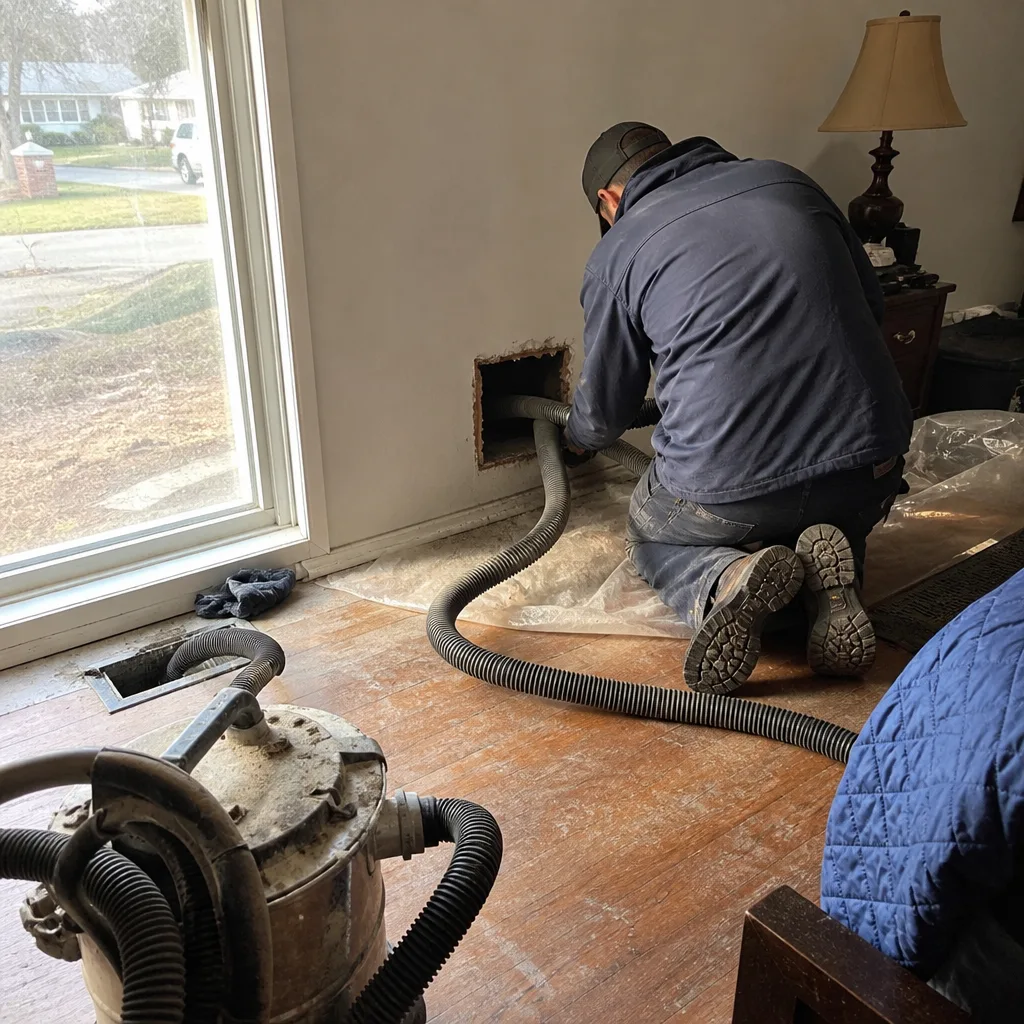 Before
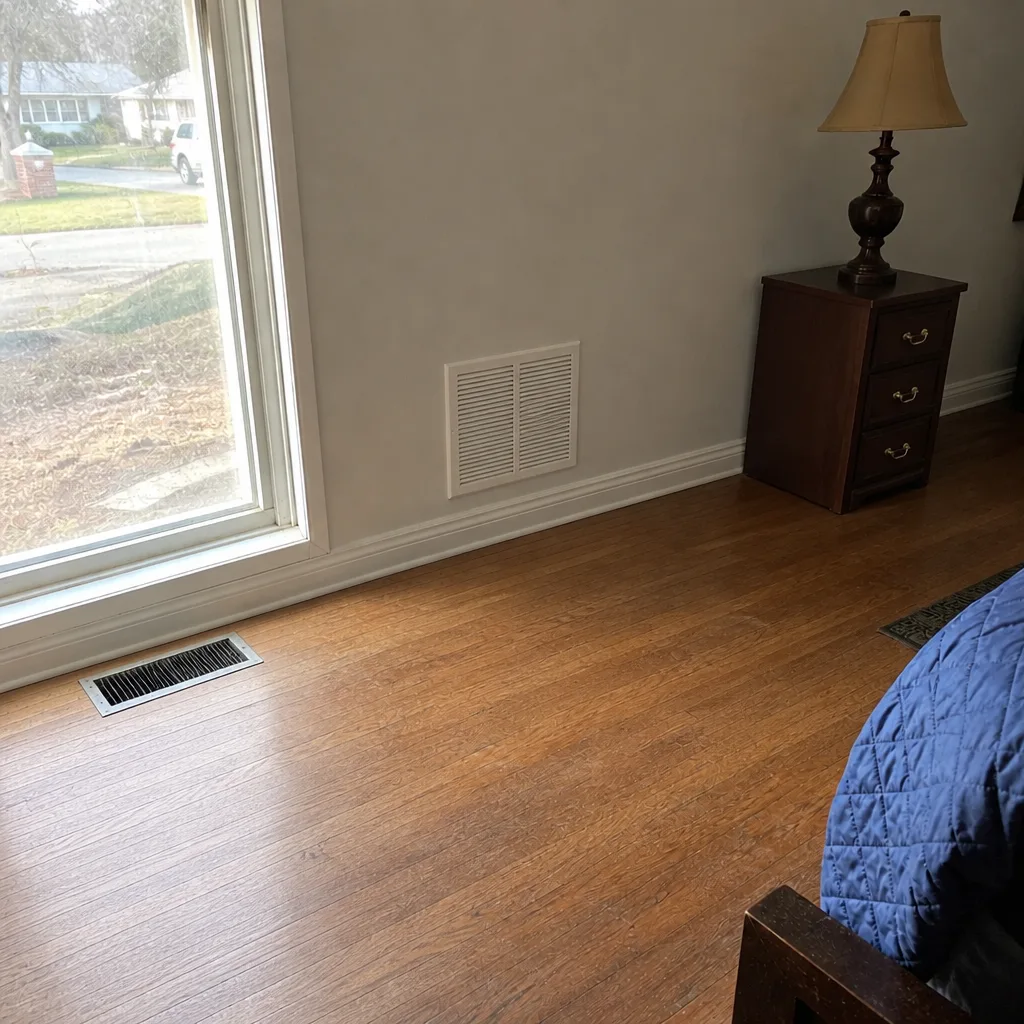 After
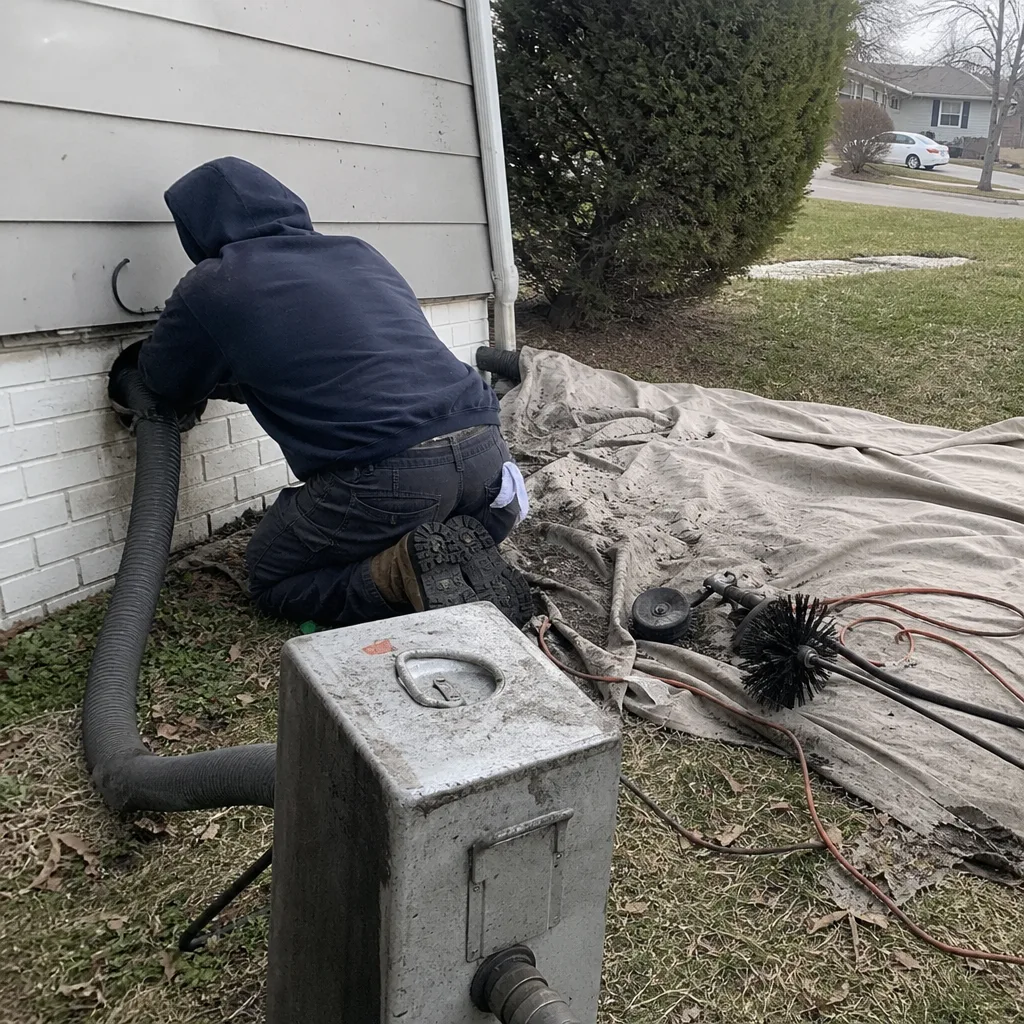 Before
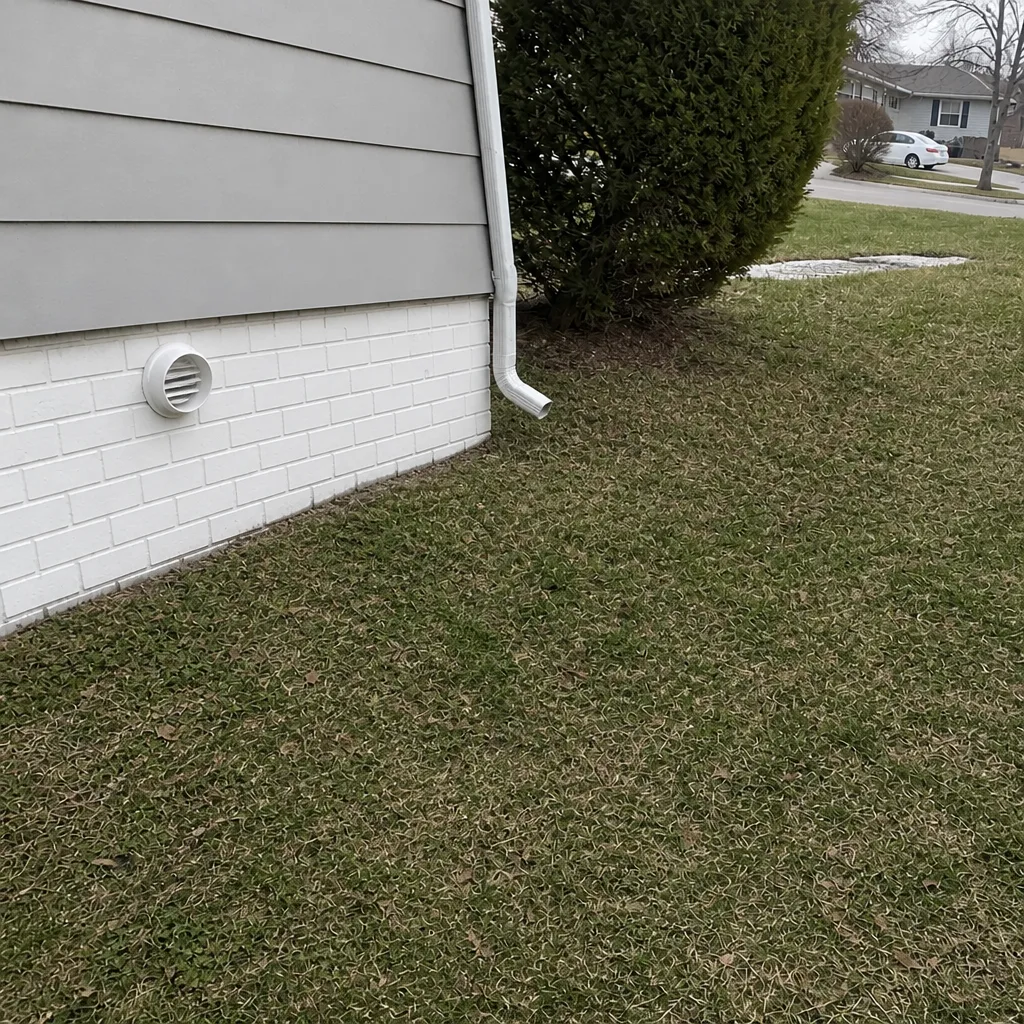 After
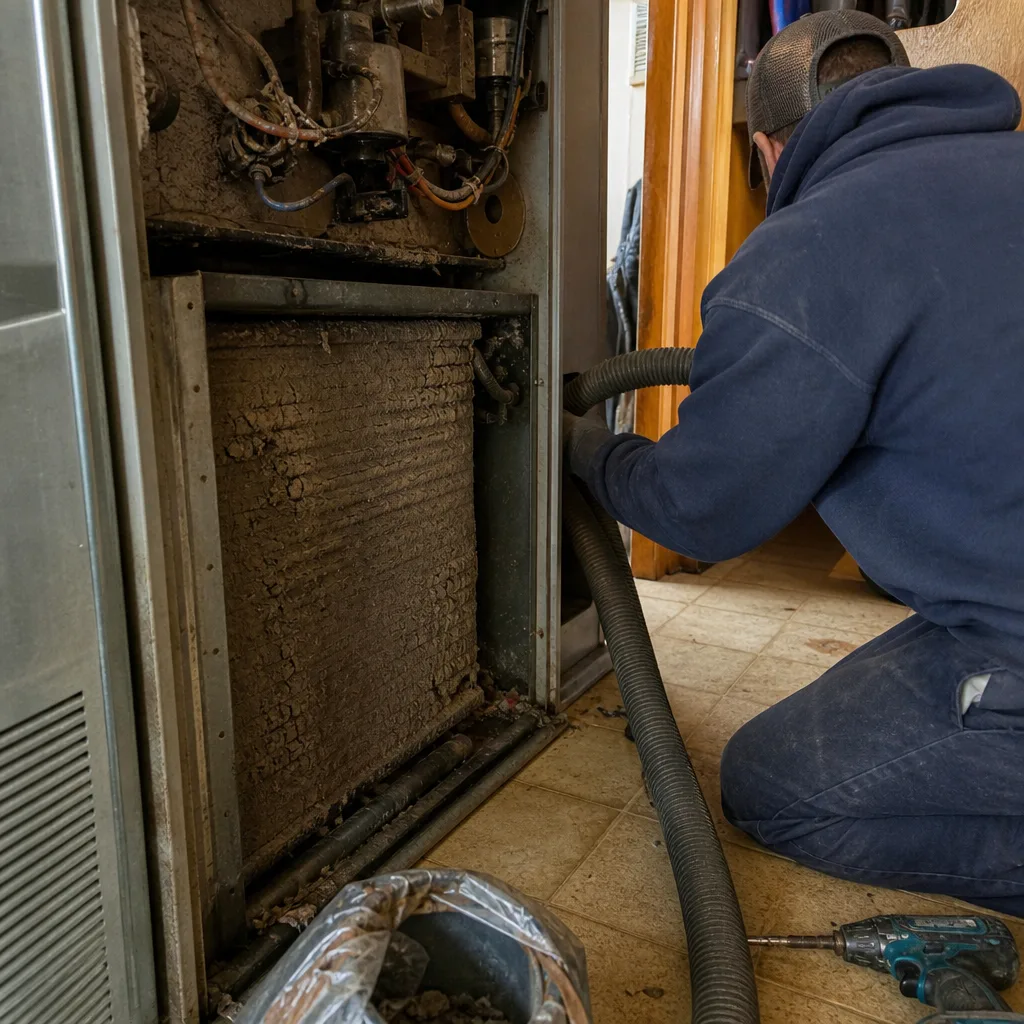 Before
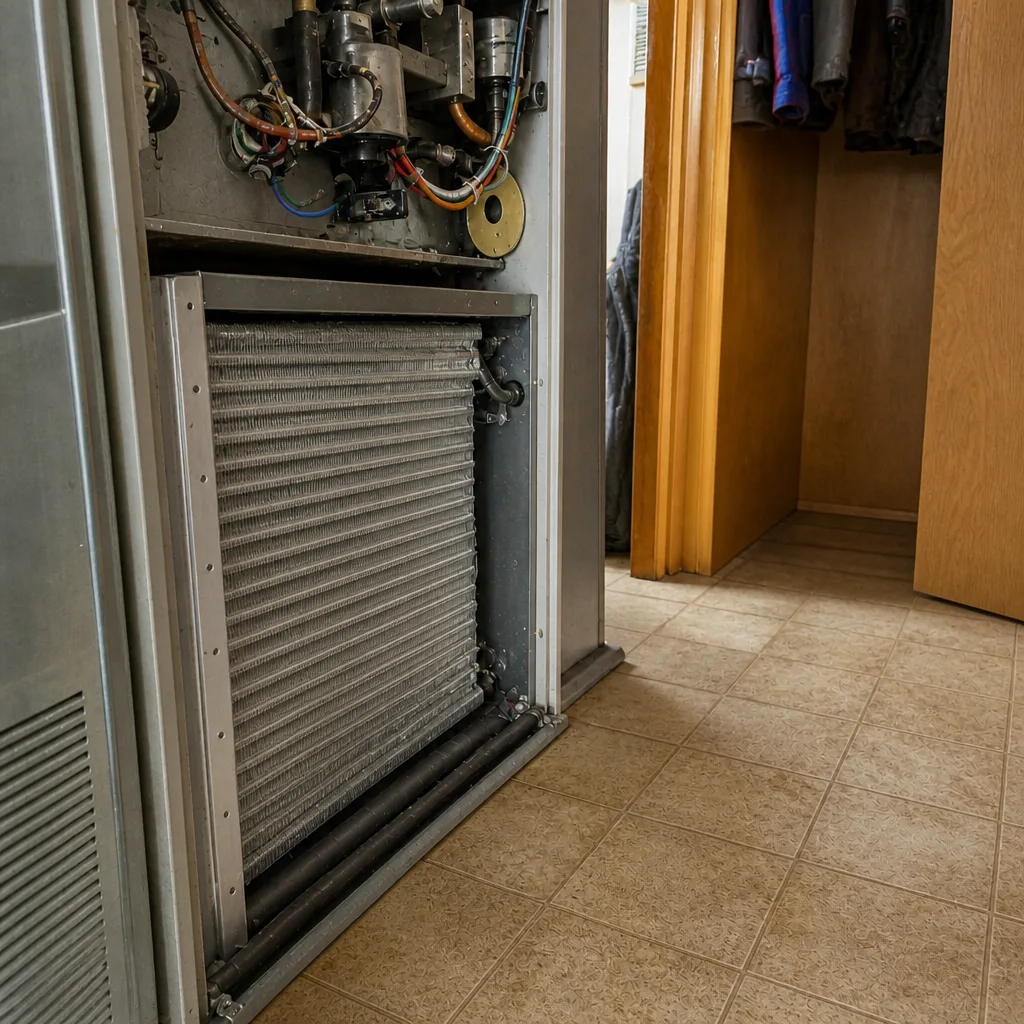 After
When to Call a Professional
Some duct work is genuinely DIY-able: replacing filters, checking return grilles, cleaning the exterior of a supply register. Most of it isn’t. Call a professional when you see fine dust returning to horizontal surfaces within days of dusting, when the first fall heating cycle produces a burnt-dust smell, when you’ve just moved into a Taylorsville home and don’t know the cleaning history, when a renovation has put drywall dust into the air, when a return register won’t seal, when airflow to a room has dropped noticeably, or when the system has been through a smoke season or a heavy inversion winter without a cleaning.
Taylorsville Air Duct Cleaning offers free estimates in Taylorsville. Call (855) 658-5265. We answer 24/7. Fast dispatch from 7am to 7pm, Sunday through Friday.
Frequently Asked Questions
Every 18 to 30 months for most Taylorsville homes, with the cleaning timed to the home’s heaviest seasonal load rather than the calendar date. Homes near new construction, on the valley floor, or with pets and allergy sufferers usually sit at the shorter end of that range, while homes with stronger filtration and lower run hours can stretch toward 30 months. Call (855) 658-5265 for an exact quote based on your home.
Winter isn’t a bad time but it’s often a late time for Taylorsville homes, because the heaviest accumulation from inversion season has already been through the system. The better sequence is to clean just after the heaviest weeks, in late winter or early spring, so you’re starting the next season with clean ducts. If a winter inspection shows significant return duct contamination, cleaning is worth doing immediately regardless of season.
That smell is the accumulated dust on the heat exchanger and duct surfaces being burned off during the first heating cycle of the season. A system that ran all summer collected smoke particulate, drywall dust from any renovation, and general settled dust, and the first heat run lifts all of it at once. Cleaning before the heating season removes the accumulation before dispersal; cleaning afterward removes what was already released.
Cleaning removes smoke particulate that’s deposited on duct surfaces, which reduces the ongoing source of smoke odor and recirculation. It does not prevent new smoke from entering during a future smoke event; that’s handled by filtration (MERV rating, cabinet seal) and by running a portable air cleaner. Cleaning and filtration are complementary, and a summer inspection should check both.
Yes, usually, and specifically because you don’t know the previous owner’s cleaning history or recent renovation work. The inspection also often reveals repair items (cracked joints, crushed dryer transition, disconnected flex duct) that need handling before you move furniture in. It’s a cheap way to know what you’re living with.
Estimates are free and the price is set per job by the written estimate, because the work depends on the number of runs, the contamination level, and whether repair, sealing, or sanitizing is included. We don’t cite a per-vent price or a teaser coupon figure. Call (855) 658-5265 for an exact quote. Estimates are free.
The Bottom Line
Generic duct cleaning intervals assume your home lives in a stable environment. Taylorsville homes don’t. Winter inversion particulate, spring construction dust, summer sub-micron smoke, and fall pre-heating accumulation each load the system differently, and the right schedule depends on which of those patterns is heaviest in your specific home. That makes a home-specific calendar built around run hours and seasonal load more useful than any fixed interval. The practical rule: track one month of run hours, identify the heaviest load season, and clean just before that season peaks. Free estimates in Taylorsville start with a call to (855) 658-5265. We answer 24/7. Fast dispatch from 7am to 7pm, Sunday through Friday.
For a fuller view of what our team handles across duct cleaning, repair, sealing, HVAC cleaning, dryer vent service, and air quality work, start with our home page at Taylorsville Air Duct Cleaning.
Written by the team at Taylorsville Air Duct Cleaning.