
Aprilaire Air Duct Cleaning in Taylorsville: A Homeowner’s Guide
Aprilaire equipment is designed to protect your air quality – but if the duct system it connects to hasn’t been properly cleaned, you’re running clean incoming air through a contaminated distribution network. That’s the whole problem in one sentence. A whole-home ventilator or high-MERV media cabinet does its job only when the ducts carrying that air are clean, and Aprilaire systems add duct branches and components that generic cleaning visits routinely miss. If you’d rather not sort through it yourself, call (855) 658-5265 and we’ll walk you through what your system actually needs.
How Is an Aprilaire-Equipped Duct System Different?
An Aprilaire setup isn’t a standard forced-air system with a filter slapped on. It’s a family of components – fresh-air ventilators, energy recovery ventilators (ERVs), bypass humidifiers, and high-MERV media cabinets – each tied into the duct network in a specific way. Cleaning it correctly means understanding those connections before a brush goes in.
The big one is the fresh-air branch. Aprilaire ERVs and fresh-air ventilators pull outdoor air into the house through a dedicated duct that runs from an exterior wall to the ventilator and then into the return side of the system. That branch is separate from your main trunk and branches, and it’s the duct most cleaning crews skip entirely. They don’t recognize it, so they don’t clean it. In our experience that’s a real miss, because a fresh-air intake is exactly where outdoor dust, pollen, and insects collect first.
Homes with an Aprilaire high-MERV media cabinet also tend to behave differently. The thicker filtration catches far more particulate before it reaches the supply ducts, so supply runs often stay cleaner. The trade-off shows up near the air handler, where tighter filtration and higher humidity can encourage biological growth on the coil and in the plenum. Cleaner supplies, dirtier mechanicals. A technician who doesn’t know Aprilaire equipment will clean the wrong end of the system.
Why Do Cleaning Crews Skip the Aprilaire Fresh-Air Duct?
Because it doesn’t look like part of the HVAC system. The fresh-air branch ties into an exterior wall, runs through a separate path, and often connects to a ventilator box the crew has never been trained on. Many cleaners work from the supply and return registers only, and that branch has neither.
Here’s what a complete Aprilaire-aware cleaning should include:
- The dedicated fresh-air intake duct – brushed and vacuumed end to end, with the exterior hood and screen checked for debris and nesting.
- The ventilator or ERV core and cabinet – inspected, with the core and filters cleaned per the manufacturer’s guidance.
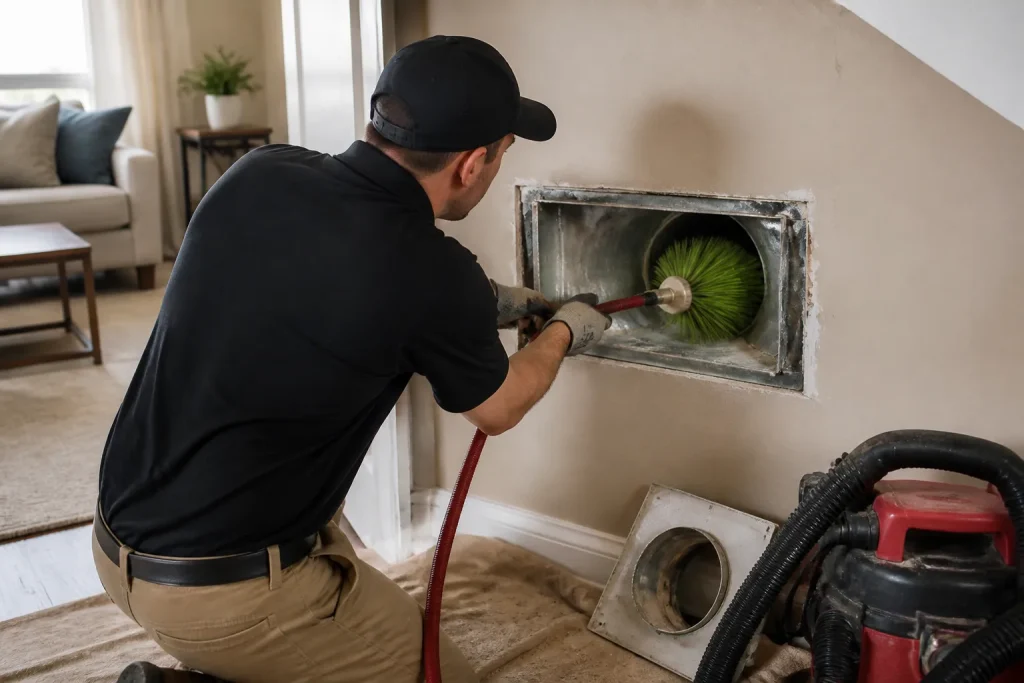
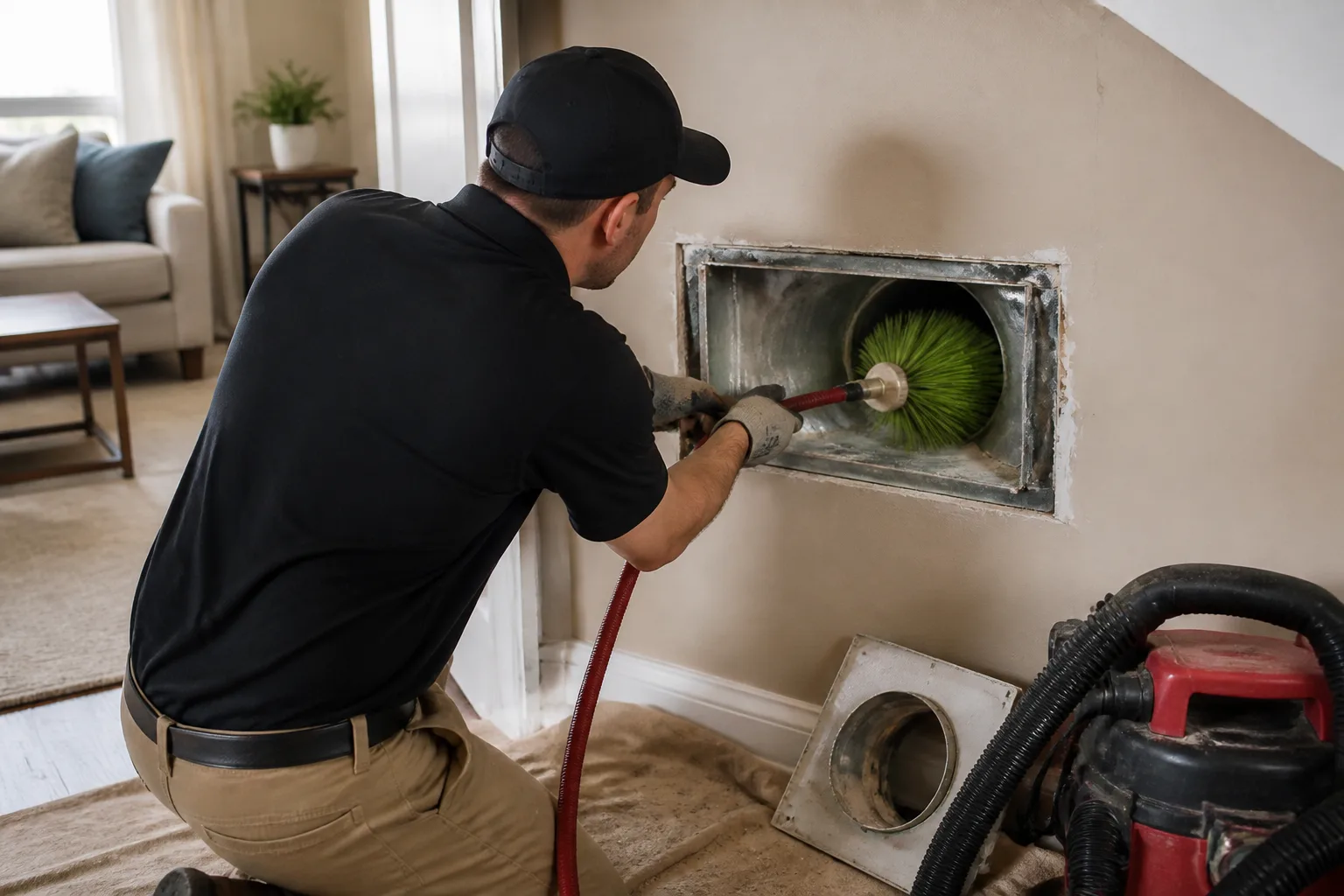
- The main supply and return network – cleaned with a rotary brush system that agitates debris loose, paired with HEPA-level extraction so it doesn’t end up back in the room.
- The air handler, coil, and plenum – where Aprilaire-filtered homes tend to collect the growth that never made it past the cabinet.
We use Rotobrush rotary brush equipment and Nikro HEPA extraction because the fresh-air branch and the mechanicals demand real agitation and real capture, not a shop-vac pass. Abatement Technologies containment keeps dislodged particulate from recirculating into the living space during the job. For a Taylorsville home running an Aprilaire ventilator, that containment matters more than usual, because the system is actively moving outdoor air while you work.
What Should a Technician Do Differently Around an Aprilaire Bypass Humidifier?
Disconnect it, inspect it, and clean around it – not through it. An Aprilaire bypass humidifier sits on a duct with a bypass damper and a saddle valve feeding water to the unit. Two things go wrong if a cleaning crew ignores it.
First, the bypass damper. When it’s left open during cleaning, vacuum pressure and brush agitation can pull water-pan residue, mineral scale, and standing moisture into the duct. The damper should be closed and the unit isolated before the ducts are cleaned, then reopened and tested afterward.
Second, the saddle valve area. A saddle valve pierces the water line and is a common slow-leak point. Mineral deposits and moisture near that connection feed biological growth right at the humidifier’s duct tap-in – a spot that stays damp and gets overlooked. A thorough job disconnects the humidifier, inspects the bypass duct and the tap-in, cleans the scale and growth, and checks that the water connection isn’t weeping before the unit goes back online.
If the humidifier is old, scaled, or leaking, that’s a repair conversation, not a cleaning one. Because our scope covers HVAC cleaning alongside duct cleaning and repair, the same visit can flag the problem instead of handing you a phone number for someone else.
What’s the Correct Cleaning Sequence for an Aprilaire System?
Clean the distribution ducts first, service the Aprilaire unit second. It sounds backwards, and that’s the point most crews get wrong.
The reasoning is simple: cleaning the ducts dislodges debris, and some of it will settle downstream. If you clean and reinstall the Aprilaire media cabinet or ventilator core before the ducts are clean, you’re pushing that newly loosened dust straight into a fresh filter or core. The right order:
- Contain and set up – HEPA containment on the openings, negative pressure established in the work zone.
- Agitate and extract the duct network – rotary brushing through supplies, returns, the trunk, and the fresh-air branch, with HEPA extraction pulling debris out.
- Clean the mechanicals – air handler, coil, plenum, and humidifier tap-in.
- Service the Aprilaire components – inspect and clean the ventilator core, replace the media cabinet filter, re-isolate and test the bypass humidifier.
- Confirm airflow – verify the system is moving air correctly before the visit closes.
Get this order wrong and the homeowner pays for a cabinet that’s dirty again the same day. Get it right and the Aprilaire equipment starts doing the job it was bought to do. If your ducts need repair or sealing before a cleaning makes sense, we handle that too, so the job doesn’t stall halfway through. You can read more about our air duct cleaning process for the equipment and steps involved.
How Do You Confirm Your Aprilaire System Is Working After a Cleaning?
Ask for the readings, not just a shrug and a nod. A correctly cleaned Aprilaire-equipped system should show measurable signs of recovery.
- Airflow at the registers – noticeably stronger and more even across rooms, not just the ones closest to the air handler.
- Static pressure – a technician should check total external static pressure across the air handler before and after. High static pressure means the system is fighting restriction; a clean system reads closer to the equipment’s design range.
- Humidifier operation – the bypass damper moves freely and the unit cycles on call for humidity.
- Ventilator function – the ERV or fresh-air unit runs on its control and the core is seated correctly.
- Filter condition – a fresh high-MERV media cabinet filter seated properly, with the correct MERV rating for your equipment.
Aprilaire and Honeywell controls should respond normally afterward. If something’s off – a damper that won’t seat, a ventilator that won’t run – it’s a repair item, and better caught on the day of the cleaning than a season later.
When Should You Call a Pro Instead of DIY?
Rotary brushing, HEPA extraction, containment, and static pressure testing aren’t a homeowner job. Neither is anything involving the air handler, coil, or electrical connections. The fresh-air branch is also easy to damage if you don’t know how it’s routed. Our technicians have up to 13 years of experience, and they know what an Aprilaire installation looks like from the inside.
Call us when you notice weak airflow, musty odors after a season of running the ventilator, visible dust streaking at the registers, or if you’ve just bought a Taylorsville home with Aprilaire equipment and no service history. We can tell you in one visit whether you need cleaning, repair, or sealing – and because we cover all three, you’re not chasing a second contractor. Same-day service is often available, and the estimate is free.
Related services in Taylorsville: if your dryer is venting slowly, we also handle dryer vent cleaning while we’re on site. For a full picture of what we offer, visit Taylorsville Air Duct Cleaning.
The Bottom Line
Aprilaire equipment protects your air only if the ducts it feeds are clean, and that means cleaning the fresh-air branch, the media cabinet, and the bypass humidifier connections alongside the main network. Clean the ducts before you service the unit. Ask for static pressure readings and a before-and-after look at what came out. A home in Taylorsville running an Aprilaire ERV or high-MERV cabinet deserves a technician who recognizes the equipment and cleans it in the right order.
If you’re in Taylorsville and need help, Taylorsville Air Duct Cleaning offers free estimates – call (855) 658-5265. We answer 24/7, with fast dispatch from 7am to 7pm, Sunday through Friday.
Frequently Asked Questions
Typical whole-system duct cleaning runs from about $300 to $600, and an Aprilaire-equipped home with a fresh-air branch and humidifier to service often lands in the upper half of that range. A media cabinet filter replacement is a separate line item. The written estimate sets the final price, and the estimate itself is free – call (855) 658-5265 for an exact quote.
The media cabinet filter and ventilator core come out during the job, and the bypass humidifier is disconnected and isolated. The ductwork itself is cleaned in place. A crew that doesn’t remove or isolate these components is skipping steps that protect both your equipment and the cleaning result.
Most homes benefit from a cleaning every three to five years, and an Aprilaire system with a fresh-air intake may need the intake branch checked more often since it pulls outdoor air year-round. Homes with pets, allergies, or recent remodeling should shorten that interval. Call (855) 658-5265 and we’ll give you an honest read on your system.
Odors usually trace back to the humidifier tap-in, the coil, or the ventilator core – spots a supply-and-return-only cleaning skips. Biological growth near the air handler is common in tightly filtered homes. A sanitizing service that addresses mold, bacteria, and odor at the source is the fix when a standard cleaning doesn’t clear it. Call (855) 658-5265 for a free estimate on the right approach.
Written by the team at Taylorsville Air Duct Cleaning.
Need Air Duct Cleaning Help?
Call Taylorsville Air Duct Cleaning - the local pro we connect you with is licensed and insured, with free written estimates in Taylorsville.
(855) 658-5265